FizzClean Review: the Foam Works. The Missing Label Is the Problem.
FizzClean is an effervescent powder that foams up the bowl for twenty minutes and gets flushed away. The mechanism is real and unremarkable, which is a compliment. What is remarkable is that across five storefronts and five currencies, not one of them tells you what is in the sachet — and for a bathroom chemical, that is the specification that matters most.
Published · Facts checked against the official product page
Key takeaways
- The mechanism is ordinary chemistry and it works: a gas-releasing agent lifts surfactant up the bowl walls, so the cleaner reaches above the waterline and under the rim without a brush. That is genuinely the hard part of cleaning a toilet.
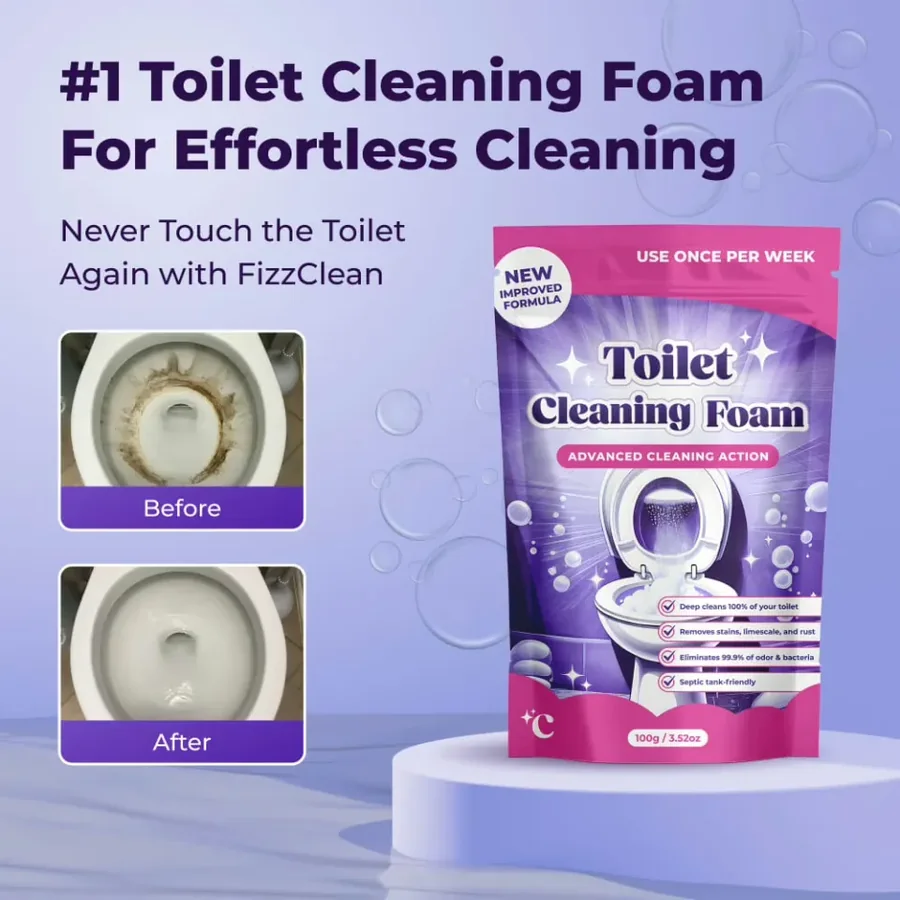
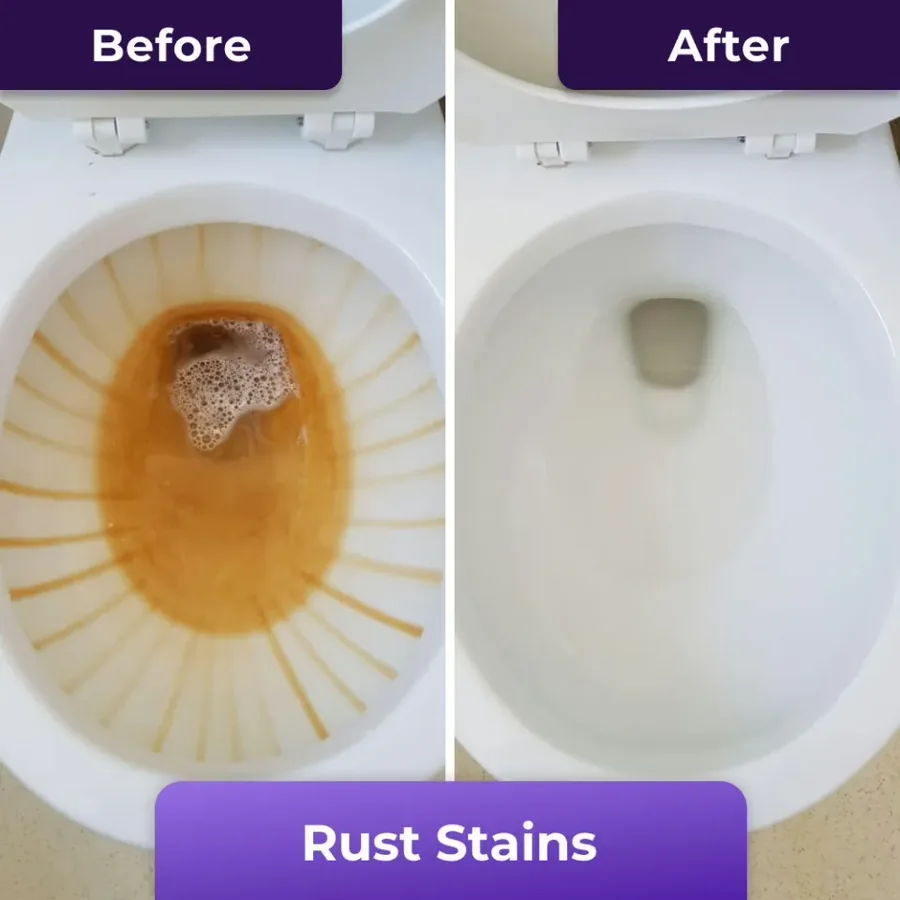
- What it will not do is match the rust photographs. Twenty minutes of contact shifts organic soil and light limescale; heavy rust staining is iron bonded into the glaze and usually needs repeated acid contact and mechanical help.
- No storefront publishes an ingredient list. That is not pedantry for a bathroom chemical — without it you cannot know what the product must not be mixed with, and acid plus bleach is a real accident, not a theoretical one.
- The «eliminates 99.9% of bacteria» line on the pack is a biocidal claim. In the US that needs an EPA registration; in the EU, authorisation under the Biocidal Products Regulation. No registration number appears anywhere on the page.
Cleaning a toilet is annoying for a specific reason: the dirty parts are the parts liquid cleaner runs straight off. Under the rim, above the waterline, the back of the bowl — gel clings for a few seconds and then heads for the water.
FizzClean is one answer to that, and it is an old and sound one. Pour in the powder, it releases gas, the gas carries surfactant up the walls and holds it there for twenty minutes. Then you flush. No brush, and more importantly, no scrubbing the part you cannot see.
The chemistry is unremarkable. That is a compliment: most of what we cover needs a paragraph explaining why the mechanism might not work, and this one doesn't.
What twenty minutes of foam can and cannot do
It will lift organic soil, biofilm, fresh limescale and the general grey-brown discolouration that builds up between cleans. That covers most of what makes a toilet look dirty, and it covers it without a brush, which is the whole proposition.
What it will not do is match the rust photographs on the page. Heavy iron staining is not sitting on the glaze; it is bonded into it. Shifting that takes an acid with repeated contact time, usually with mechanical help, and often more than one attempt. A single twenty-minute soak producing the pictured result would require a formula aggressive enough that «safe for plumbing and septic tanks» would be a harder claim to make.
The specification that isn't there
Across five storefronts — US, UK, German, French and Spanish — there is no ingredient list anywhere. Not an INCI panel, not an active-ingredient percentage, not a safety data sheet link.
For most products we cover, a missing spec costs the reader information. Here it costs them something else. Toilet cleaners are built on genuinely different chemistries: acids for scale, oxidisers or chlorine donors for staining and odour. Which one you have determines what you must never combine it with, and acid mixed with a bleach-based cleaner releases chlorine gas — an accident that sends people to hospital every year.
The maker knows the question arrives: their own FAQ carries «Does FizzClean contain bleach?» and «Can I use FizzClean with other cleaning products?». Answering those in prose while withholding the label is the part we would push back on.
The 99.9% line is a regulated claim
The sachet reads «Eliminates 99.9% of odor & bacteria». Killing bacteria is not a cleaning claim, it is a biocidal one, and it is regulated on both sides of the Atlantic: an EPA registration number in the United States, authorisation under the Biocidal Products Regulation in the EU.
No registration number appears on any of the five pages. That does not prove the product is unregistered — it proves the page doesn't say, on a claim where saying is normally mandatory.
Two things we noticed in the plumbing of the site
The same product costs very different money in the same currency. Germany and France sell it at €12.99–€17.99 per sachet. Spain sells it at €15.29–€25.59. Same product, same euro, roughly 45% more in Madrid than in Munich.
The images are named for a different brand. The files the storefront itself serves are called things like Hero_4_Natural-Ingredients_toilet_foam_NuroClean.jpg. The same creative package — and, one assumes, the same sachet — is sold under at least two names. That is normal in white-label retail and worth knowing before you decide this is a proprietary formula.
And the counting doesn't settle: the header says 4.7 from «1000+ verified reviews», a badge says «8K+ happy customers», the panel says «over 75,000+ happy customers», and a heading says «over 4,000 5-star reviews». The German version says 3,000 where the English says 4,000. We publish none of them.
Strengths and trade-offs
What works in its favor
- A mechanism that genuinely solves the annoying part — reaching above the waterline without a brush.
- Twenty minutes, unattended, which fits how people actually clean.
- Once a week per the pack — maintenance, not rescue, which is the right use.
- A stated 30-day window, more than enough for a weekly consumable.
Honest limitations
- No ingredient list on any of five storefronts.
- A biocidal claim with no registration number.
- The rust photographs oversell what one soak does.
- No single sachet — the checkout starts at two.
Auf Deutsch: diese Bewertung gibt es auch auf Deutsch — FizzClean Test und WC-Reiniger Kaufberater, mit den deutschen Preisen und der EU-Biozidfrage.
The verdict on FizzClean
As weekly maintenance for a toilet you already keep reasonably clean, this is a sound and slightly boring product that does the tedious part for you. Buy the smallest pack, use it alone with the window open, and judge it on the rim rather than on the rust. What we would do before ordering — and what costs nothing — is email the seller for the safety data sheet. A cleaning chemical that won't tell you what's in it is asking for a trust it hasn't earned, and the answer takes them one attachment.
Frequently asked questions
Does effervescent toilet foam actually work?
Yes, and the reason is unglamorous. Cleaning a toilet is hard because the dirty parts — under the rim, above the waterline — are exactly where liquid cleaner runs off fastest. An effervescent powder releases gas that carries surfactant upward and holds it against those surfaces long enough to work. That is a real solution to a real problem, and it is why this format has existed for decades.
Will it remove rust stains like the photos?
Probably not to that degree. Those before-and-after images show heavy iron staining, which bonds into the ceramic glaze and typically needs an acid with repeated contact time, often plus mechanical work. Twenty minutes of foam will lift organic soil, fresh limescale and general discolouration — a visibly cleaner bowl, not a resurfaced one.
Is it safe with my septic tank?
The pack says yes and we have no reason to doubt the intent. But «septic safe» is a claim about the formula, and no formula is published — so the claim can't be checked against anything. If you're on a septic system and want certainty rather than reassurance, ask the seller for the safety data sheet.
Can I use it with bleach or another cleaner?
Don't, and this is the one piece of advice in this review we'd give regardless of the product. Because the ingredients are unpublished, you cannot know whether combining it with another toilet product creates something harmful. Acid plus a chlorine-based cleaner releases chlorine gas. Use it alone, with the window open, and not on the same day as anything else.
What does the guarantee cover?
Thirty days, money back, stated on the badge and repeated in the Why Choose panel. For a consumable that's a reasonable window — one sachet a week means you'll have used four by the time it closes, which is more than enough to judge.
Related reading
More reviews →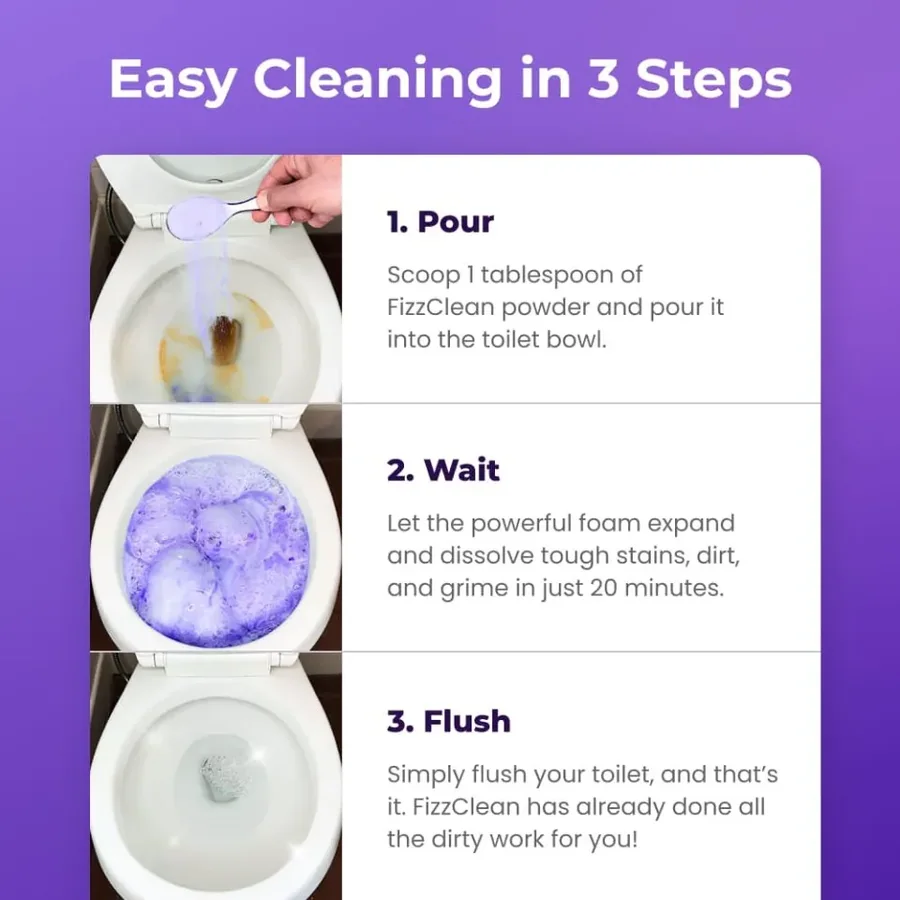
Toilet Cleaner Buying Guide 2026: Match the Chemistry to the Stain
Acid, oxidiser, enzyme or foam — four chemistries, four jobs. How to pick by the stain you actually have, and the combinations that are genuinely dangerous.
Why Fizzing Cleaners Fizz — and What the Bubbles Are Actually For
The bubbles aren't scrubbing. They're transport. How effervescence solves the real problem in toilet cleaning, and why the fizz says nothing about strength.
One Product, Five Storefronts, Five Prices — and No Label
Cleaning products are now launched across five markets at once from one creative package. What that model does to pricing, to labelling, and to the buyer.