The bubbles are transport, not scrubbing
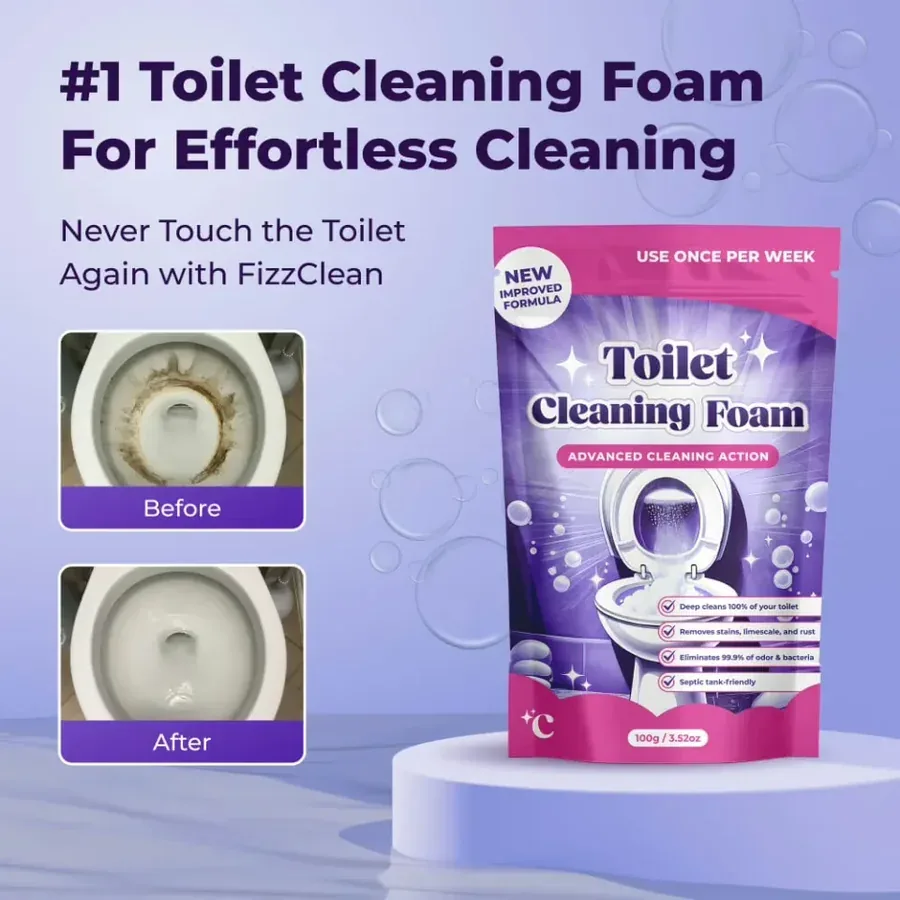
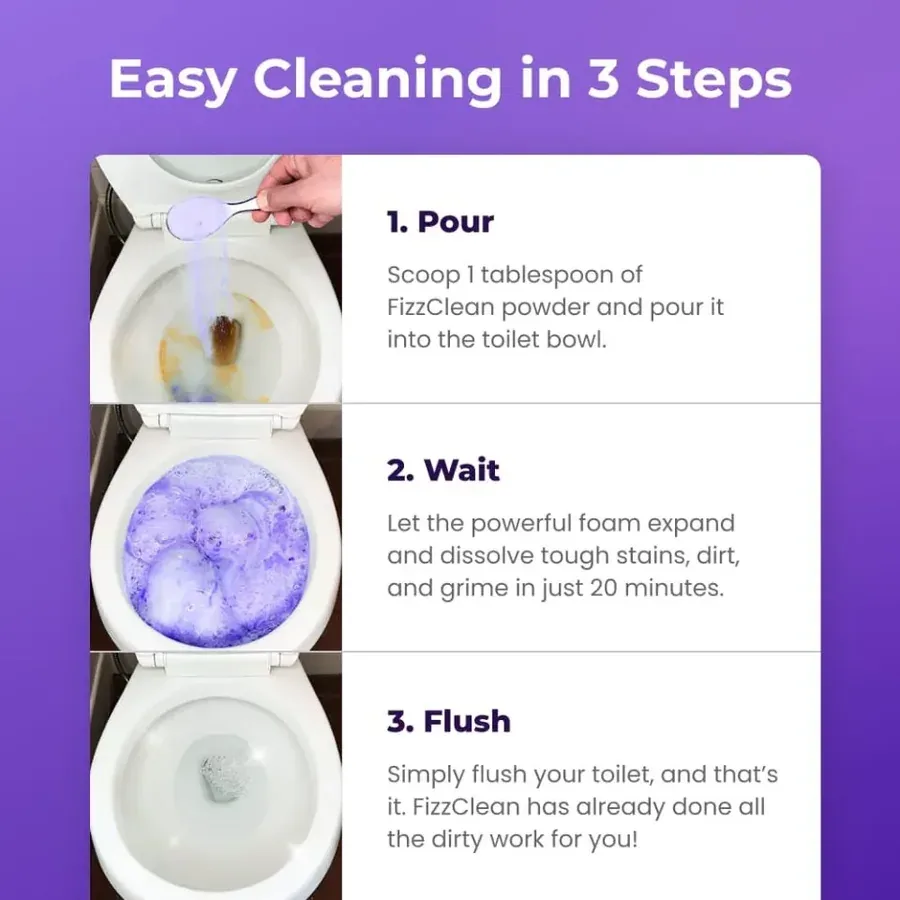
Pour the powder in, it releases gas, the gas carries cleaner up the bowl walls and holds it there for about twenty minutes, then you flush. No brush — and, more to the point, no scrubbing the parts you cannot see.
- Reaches above the waterline and under the rim without a brush
- 100 g sachet; the pack says to use it once a week
- About 20 minutes of contact, unattended
- 30-day money-back guarantee
⚠ The label that isn't on any of the five storefronts
Across the US, UK, German, French and Spanish stores there is no ingredient list anywhere. For most products a missing spec costs you information; for a bathroom chemical it costs you something else. Toilet cleaners are built on genuinely different chemistries — acids for scale, oxidisers or chlorine donors for staining — and which one you have decides what it must never be combined with. Acid mixed with a bleach-based cleaner releases chlorine gas. Until you know what is in the sachet: use it alone, ventilate, and never on the same day as another toilet product.
What twenty minutes of foam does
It lifts organic soil, biofilm, fresh limescale and the general discolouration that builds between cleans. That is most of what makes a toilet look dirty, and it covers it in the places a brush struggles to reach.
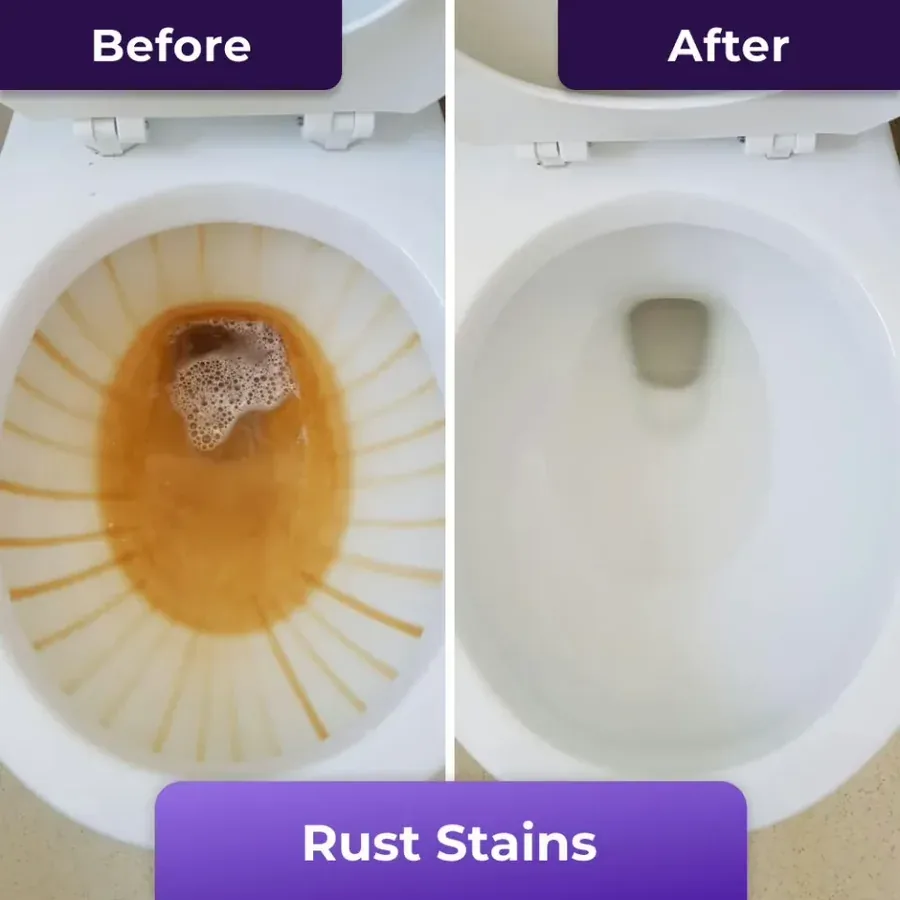
What it will not do is match the rust photographs. Heavy iron staining is bonded into the glaze, not sitting on it, and shifting that takes acid with repeated contact and usually mechanical help. One twenty-minute soak producing that result would need a formula aggressive enough that «safe for plumbing and septic tanks» would be harder to claim.
Read it as weekly maintenance rather than rescue. That is also how the pack itself describes it.
The numbers, plainly
- Format
- Effervescent powder, 100 g sachet
- Contact time
- About 20 minutes, then flush
- Frequency
- Once a week, per the pack
- Pack claims
- Removes stains, limescale and rust; eliminates 99.9% of odour and bacteria; septic-tank friendly
- Ingredient list
- Not published on any of the five storefronts
- Biocidal registration
- No EPA number or EU BPR authorisation shown, despite the 99.9% claim
- Smallest package
- Two sachets — there is no single-unit option
- Guarantee
- 30-day money-back
The two blanks are linked. A claim to kill 99.9% of bacteria is a biocidal claim, regulated on both sides of the Atlantic — and a registration number is normally how a page carries it.
The same product costs very different money in the same currency. Germany and France sell it at €12.99–€17.99 per sachet; Spain sells it at €15.29–€25.59. Roughly 45% more in Madrid than in Munich, for the identical item. Before ordering, it is worth opening a neighbouring market's version of the page.
And the brand is a layer. The image files the storefront itself serves are named for a different brand — the same creative package is sold under more than one name. That is ordinary white-label retail, and it is useful to know before reading the formula as proprietary.
Pricing on the official store
Prices as listed at each official checkout. There is no single-sachet option in any market — the smallest package is two.
US prices shown. UK runs £17.99 / £15.95 / £13.99 / £12.99; Germany and France run €17.99 / €15.95 / €13.99 / €12.99; Spain runs €25.59 / €21.95 / €18.95 / €15.29. Prices are set by the merchant and rotate.
Check current pricing → Opens the official FizzClean store · We may earn a commission
Buying from elsewhere? 🇬🇧 UK store · 🇩🇪 German store · 🇫🇷 French store · 🇪🇸 Spanish store
Each store prices independently — the German and Spanish pages differ by about 45% in the same currency.
Questions worth asking
Does effervescent foam actually work?
Yes, and for an unglamorous reason. A toilet is hard to clean because the dirty parts — under the rim, above the waterline — are exactly where liquid runs off fastest. Gas carries surfactant upward and holds it there long enough to act. It's a real solution to a real problem.
Will it remove rust stains like the photos?
Probably not to that degree. Rust is iron bonded into the ceramic glaze and typically needs an acid with repeated contact, often with mechanical help. Expect a visibly cleaner bowl, not a resurfaced one.
Can I use it with bleach or another cleaner?
Don't. Because the ingredients are unpublished, you cannot know whether combining it with another product creates something harmful — and acid plus a chlorine-based cleaner releases chlorine gas. One product per session, window open.
Is it safe for a septic tank?
The pack says so and we have no reason to doubt the intent. But it's a claim about a formula that isn't published, so there's nothing to check it against. If you're on a septic system, ask the seller for the safety data sheet.
Why is there no single sachet?
The checkout starts at two in every market. For a weekly consumable that's less objectionable than it is on hardware — two sachets is a fortnight — but it does mean the entry price is double what the per-unit figure suggests.
Weekly maintenance, done without a brush
Sound chemistry doing the tedious part. Ask for the safety data sheet before you order — it costs the seller one attachment.
Go to the official store → We may earn a commission at no extra cost to you