Why Fizzing Cleaners Fizz — and What the Bubbles Are Actually For
Effervescent cleaners look like the fizz is doing the work. It isn't — the gas is a delivery system, carrying surfactant to the parts of a bowl that liquid cleaner runs straight off. Understanding that explains why the format exists, why more fizz doesn't mean more cleaning, and why the label underneath still decides everything.
Published · Facts checked against the official product page
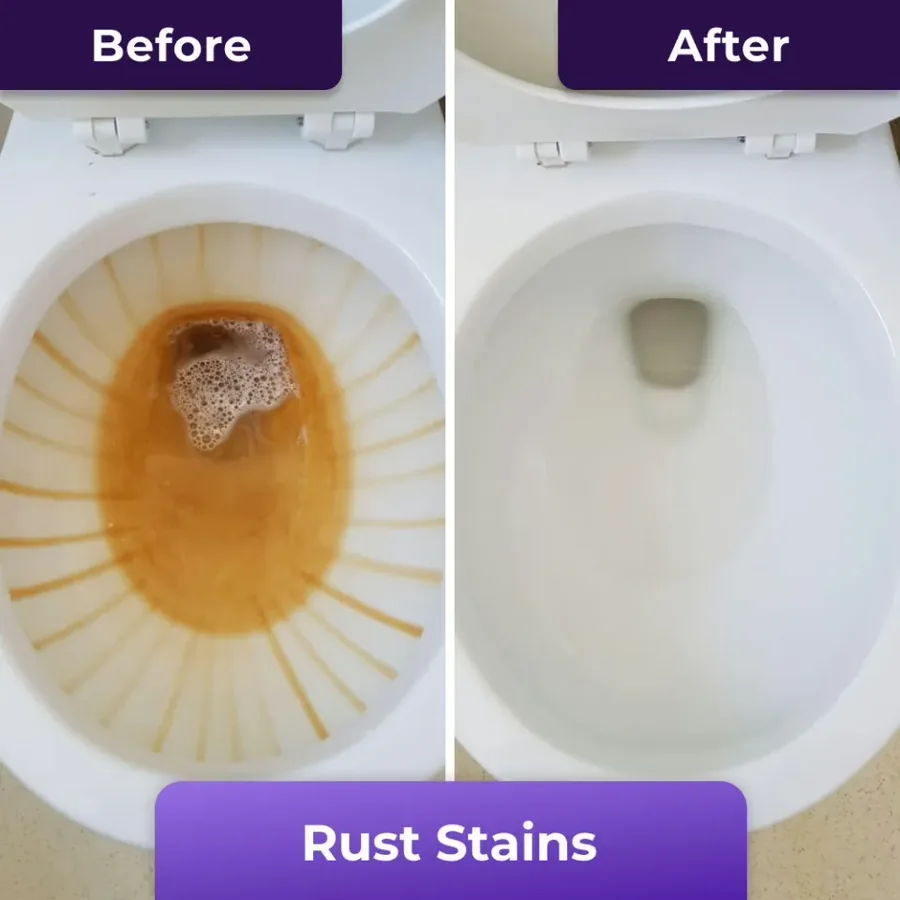
Key takeaways
- The gas is transport, not abrasion. Bubbles carry surfactant up the bowl walls and hold it against surfaces where liquid cleaner would run off in seconds.
- Effervescence is usually a carbonate meeting an acid — the same reaction as baking soda and vinegar, released slowly by a dry powder dissolving.
- More visible fizz does not mean more cleaning power. The foam is the vehicle; the active ingredient underneath is what removes anything.
- Which is why an unpublished ingredient list matters even when the mechanism is sound: the fizz tells you nothing about what you're actually applying.
Drop the powder in and the bowl erupts. It looks like the cleaning is happening right there, in the fizz. It isn't. Understanding what the bubbles are actually for explains both why this format works and why it tells you nothing about how strong the product is.
The problem effervescence solves
A toilet is dirtiest exactly where cleaner cannot stay. Under the rim, on the vertical walls, above the waterline — gravity gives a liquid a few seconds on those surfaces before it heads for the water. Gels last longer, which is why they exist, but they still run and they still don't reach under a rim you can't see.
Gas solves the staying-there problem. Bubbles form throughout the water, rise, and carry surfactant with them, plastering it against every surface on the way up and holding it there while the reaction continues. The cleaner ends up where you couldn't have put it by hand.
What's making the gas
Almost always a carbonate or bicarbonate meeting an acid. Both sit inert in a dry powder; add water and they react, releasing carbon dioxide. It's the baking-soda-and-vinegar reaction, metered by how quickly the granules dissolve — which is why a good formulation fizzes for minutes rather than seconds.
The bubbles themselves do no cleaning. They have no meaningful abrasive effect on glaze. They are a lift.
Why more fizz isn't more clean
Foam volume is a formulation decision: more gas-generating agent, more surfactant, more drama. It is also the most visible thing about the product, which makes it the easiest thing to optimise for.
What removes anything is the active ingredient riding on the foam — an acid for scale, an oxidiser for organic staining. A spectacular fizz carrying a weak active does less than a modest one carrying a strong one, and you cannot tell them apart by watching.
Which is the whole reason the label matters even when the mechanism is sound. The fizz is a vehicle; you still need to know the passenger. Our FizzClean review looks at a product where the vehicle is well built and the passenger is undeclared across five storefronts.
Getting more out of any of them
Lower the water level first where you can — a bowl full of standing water dilutes whatever you add. Apply and then leave it alone; agitating early collapses the foam and ends the contact time you paid for. And treat the stated wait as a minimum rather than a suggestion, because on scale in particular the difference between ten minutes and twenty is most of the result.
Which chemistry to reach for in the first place is the subject of the toilet cleaner buying guide.
Frequently asked questions
Do the bubbles scrub?
No, and this is the most common misunderstanding in the category. Gas bubbles have no meaningful abrasive effect on ceramic glaze. What they do is lift and hold liquid cleaner against vertical and overhanging surfaces — they're a delivery mechanism, and a clever one.
What makes the fizz?
Almost always a carbonate or bicarbonate meeting an acid. Kept dry in a powder they sit inert; add water and they react, releasing carbon dioxide. The same reaction as baking soda and vinegar, metered out by how fast the granules dissolve.
Does more foam mean a stronger cleaner?
No. Foam volume is a formulation choice — how much gas-generating agent and how much surfactant. A dramatic fizz with a weak active removes less than a modest fizz with a strong one. It's satisfying to watch and tells you nothing.
So why does the format work at all?
Because in a toilet, coverage is the hard part, not chemistry. The dirty areas are the ones liquid can't stay on. Solve the staying-there problem and an ordinary cleaner reaches places a stronger one never touched.
Related reading
More explainers →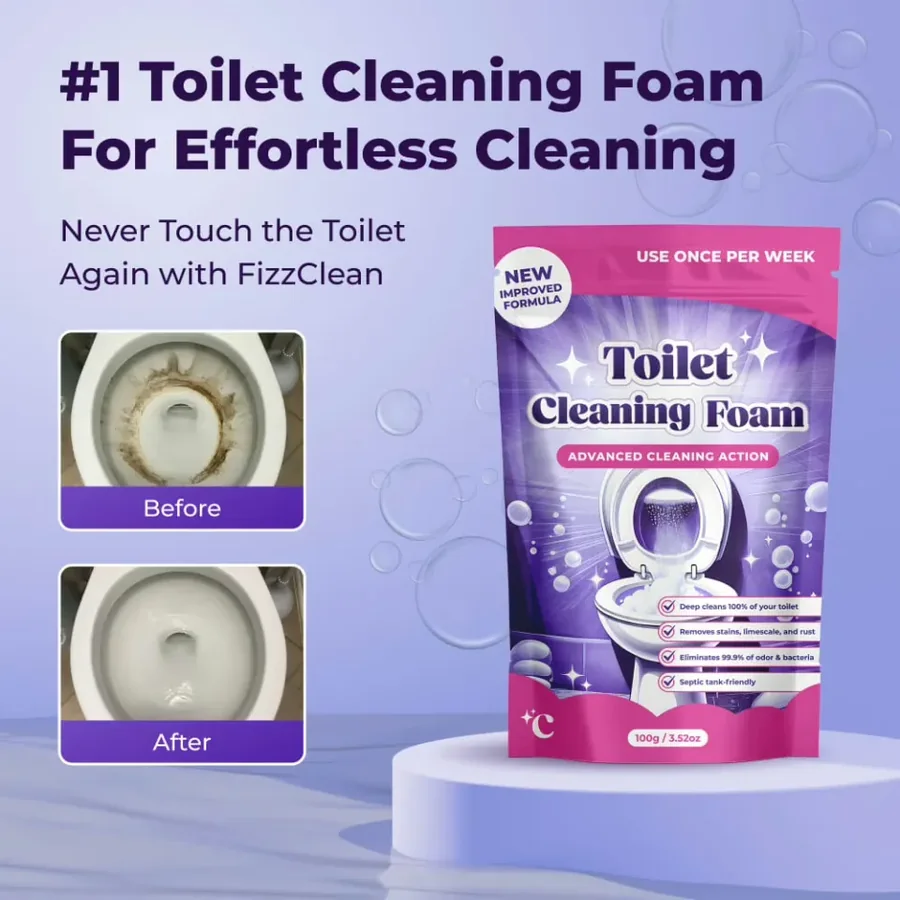
FizzClean Review: the Foam Works. The Missing Label Is the Problem.
An effervescent toilet foam sold in five markets from $15.29. The chemistry is ordinary and effective — but no storefront publishes what's in it.
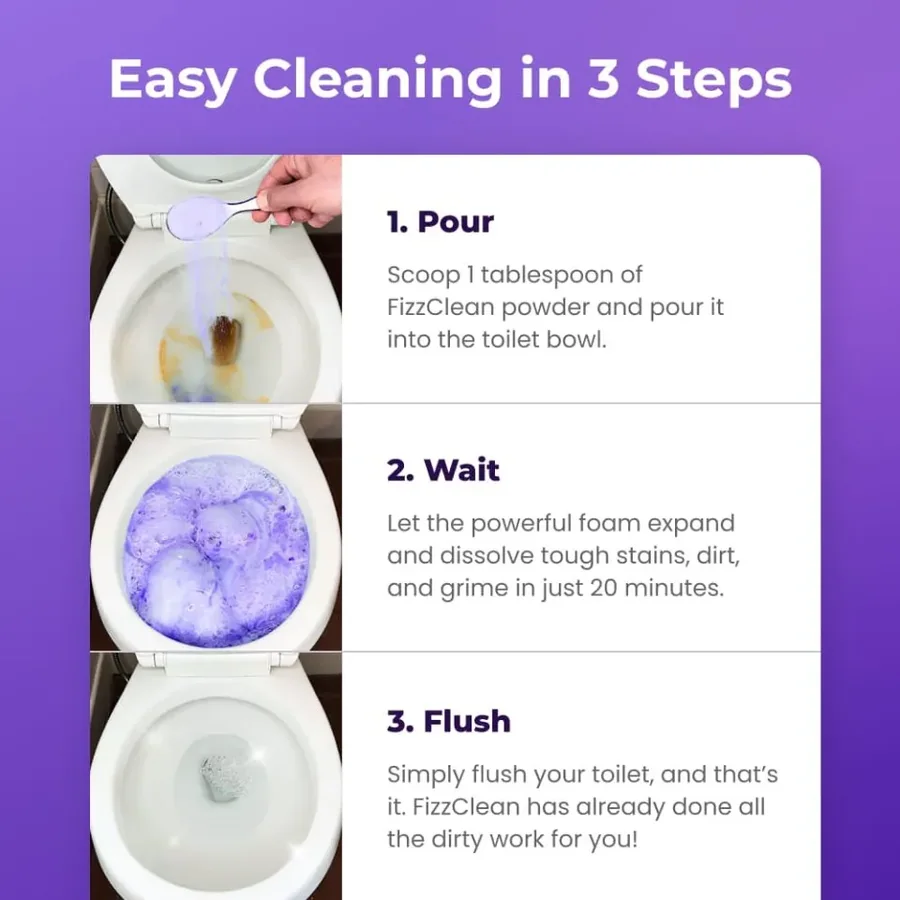
Toilet Cleaner Buying Guide 2026: Match the Chemistry to the Stain
Acid, oxidiser, enzyme or foam — four chemistries, four jobs. How to pick by the stain you actually have, and the combinations that are genuinely dangerous.
One Product, Five Storefronts, Five Prices — and No Label
Cleaning products are now launched across five markets at once from one creative package. What that model does to pricing, to labelling, and to the buyer.