Life-Safety Devices Are Being Sold Like Gadgets. The Missing Line Is Certification.
Detection hardware has entered the direct-response channel, complete with countdown timers and bundle ladders. The format is not the problem. The problem is that a page optimised for conversion has no natural place for a certification number, and that number is what makes a life-safety device a life-safety device.
Published · Facts checked against the official product page
Key takeaways
- Detectors are now sold through the same funnels as kitchen gadgets: bundle ladders, countdown timers, promo codes and a stock counter. The channel changed; the product category did not.
- Certification standards — UL 2034, EN 50291 — routinely do not appear on these pages. A conversion-optimised page has no natural slot for a regulatory number, and it is the one number this category cannot do without.
- The bundle ladder is the one part of the format that fits the product honestly: a house genuinely does need more than one detector, which is rarely true of the gadgets sold the same way.
- Our rule for the category: if the page does not name a standard, treat the device as a supplement to a certified alarm rather than a replacement for one — however good its display is.
Carbon monoxide detectors used to be sold in hardware shops and by electricians. In 2026 they are increasingly sold the way a garlic press is: a bundle ladder, a promo code, a countdown, a stock counter, and a five-star average above the fold.
The channel is not the problem, and it is worth saying that first.
What the format gets right
Direct response reaches people who were never going to walk into a hardware shop and ask about detection standards. A detector in the house beats a better detector in a catalogue, and this channel puts hardware in houses that had none.
The bundle ladder — the part we usually criticise — actually fits this product honestly. A two-storey home with a basement genuinely needs three detectors. That is a rare case where «buy more, save more» matches a real requirement rather than manufacturing one.
What it drops
The certification.
UL 2034 in North America and EN 50291 in Europe define what a domestic CO alarm must detect, at what concentration, within what time. They are the entire difference between a life-safety device and a box with a sensor in it.
And they routinely do not appear on these pages. Not because anyone is hiding them — because a page built to convert has no natural slot for a regulatory number. Every element is doing conversion work: the timer, the ladder, the badge row, the review carousel. A standard reference does none, so it falls off the template.
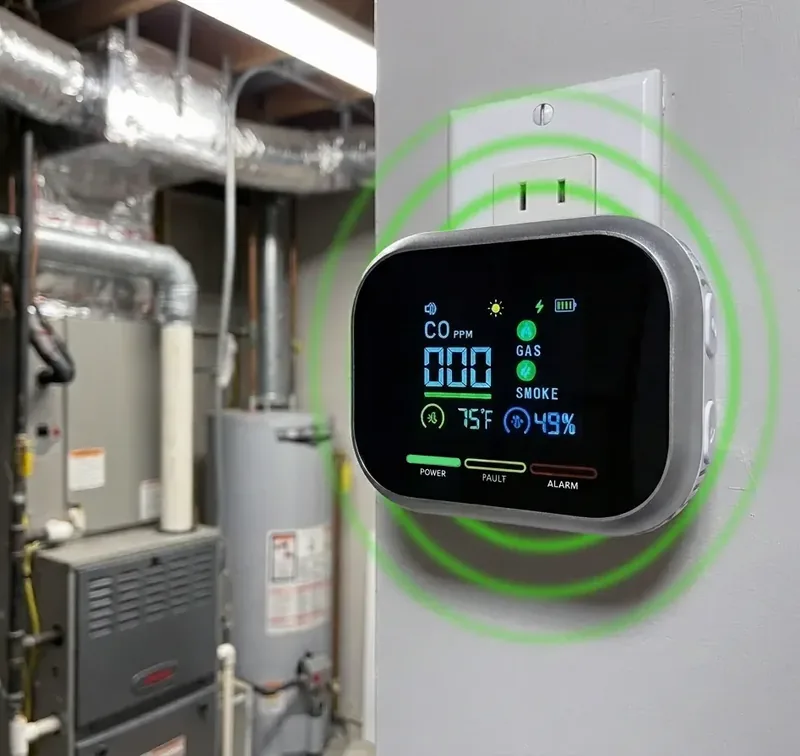
Our CarbonOne Safe review covers a current example — a device whose live ppm readout is a genuinely useful feature, on a page that names no standard.
Why reviews cannot fill the gap
A thousand five-star reviews tell you the device arrived, looked good, and did not false-alarm.
None of them tells you it detects carbon monoxide at the concentration and within the time a standard requires — because no buyer can test that. You cannot verify a CO detector at home without a calibrated gas source. The only people who can are the certification labs, which is the reason certification exists.
Which makes this the one product category where user reviews are structurally incapable of substituting for the specification. That is unusual, and it is worth knowing when a page offers reviews in place of one.
The other number that vanishes
Sensor life. Electrochemical CO sensors expire in roughly five to seven years, and the device keeps working — lights, horn, test button — after they do.
That is bad news for any sales page, because it is an expiry date on something being sold as protection. It disappears from these listings almost as reliably as the certification does, and the two omissions compound: an uncertified device that also outlives its sensor is being trusted twice over on nothing.
How we're covering it
Two rules, applied to every detector on this site.
If the page names no standard, we say so, in the specification table, as «no certification stated» rather than a blank. And we tell readers to treat that device as a supplement to a certified alarm rather than a replacement for one — regardless of how good the display is.
We publish the sensor expiry as a habit, not a footnote. Write the replacement date on the casing the day you install it. It is the cheapest safety measure in this article and the only one that survives you forgetting about it.
The rest of what to check before buying is in the CO detector buying guide.
Frequently asked questions
Is it a problem that detectors sell this way?
Not inherently. Direct response reaches people who would not otherwise have bought a detector at all, and a detector in the house beats a better one in a shop. The problem is specific: the page format has no natural place for a certification number, and unlike a spec sheet it is not expected to.
How can I check certification myself?
Look for UL 2034 or EN 50291 named on the page or the packaging, and check the certifier's own database where one is published. If the page names nothing, email support and ask directly. A seller who cannot answer that question about a life-safety device has answered a different one.
Do the 5-star review counts mean anything?
Not for this. Reviews measure whether the device arrived, looked good and did not false-alarm. None of that tests whether it detects carbon monoxide at the concentration and within the time a standard requires — which is precisely what certification exists to establish and what no buyer can verify at home.
Related reading
More news & trends →
Plug-In vs Hardwired vs Battery CO Detector: What Each One Is Actually For
Three mounting formats, three failure modes, and one question that matters more than all of them: is the device certified to a recognised standard?
Carbon Monoxide Detector Buying Guide 2026: The Spec That Isn't Optional
One specification separates a life-safety device from a gadget with a display. Plus where to mount, what expires, and why the test button lies.
Where to Place a Carbon Monoxide Detector: A Room-by-Room Guide
CO detector placement, room by room: which floors need one, height on the wall, distances from appliances, and the spots that cause false alarms or missed ones.