CarbonOne Safe Review: A Plug-In CO, Gas & Propane Monitor With a Live Display
CarbonOne Safe is the home-safety mover on our US board: a plug-in unit that monitors carbon monoxide, natural gas and propane with a live numeric display, battery backup and self-testing. We like the format — with one non-negotiable caveat about certified alarms.
Published · Facts checked against the official product page
Key takeaways
- CarbonOne Safe monitors three threats from one outlet: carbon monoxide, natural gas and propane — with a live digital readout rather than alarm-only silence.
- Battery backup keeps it monitoring through power cuts (when generator and heater misuse makes CO risk spike), and it self-tests automatically.
- Setup is genuinely tool-free: it plugs into a standard outlet, and the maker rates its lifespan at five years.
- Our standing caveat: use it to supplement, not replace, certified alarms installed per your local code — and verify certification before relying on any detector.
Home safety is a strange corner of trending commerce: products spike not on fun but on fear — a news story, a cold snap, a neighbor's close call. CarbonOne Safe has been climbing our US board for weeks on exactly that pattern, and unlike most viral gadgets, this one addresses a threat that's real, invisible and annually fatal: carbon monoxide.
What it is
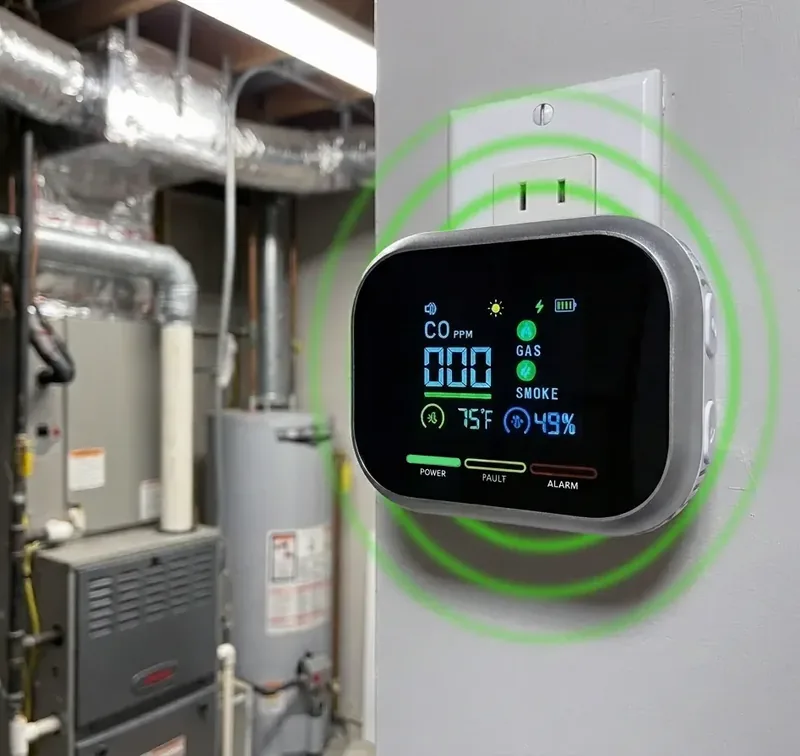
CarbonOne Safe is a plug-in monitor that sits in a standard wall outlet and watches for three gases: carbon monoxide, natural gas and propane. Its defining feature is a live digital display — you see the actual reading, not just a device that's silent until catastrophe. The maker lists battery backup for power cuts, automatic self-testing, a five-year rated lifespan and a five-second, tool-free setup, all backed by a 90-day money-back guarantee.
Why the live display matters
Traditional CO alarms are binary: silence, then siren. A numeric display adds a middle layer — the ability to notice elevated-but-below-alarm readings after running the fireplace, to check the kitchen after a stove issue, or simply to confirm the unit is alive. The self-testing claim complements that; a safety device's worst failure mode is dying quietly, and automatic self-checks plus a visible readout attack that failure mode from both sides.
Battery backup deserves its own paragraph. CO incidents cluster during outages, when people run generators in garages or heat rooms with gas appliances. A plug-in monitor that dies with the grid would miss the riskiest hours; the listed backup keeps it watching precisely then.
Strengths and trade-offs
Working in its favor
- Three gases, one outlet — CO, natural gas and propane in a single unit.
- Live numeric readings instead of alarm-only silence.
- Battery backup + self-testing target the two classic detector failure modes.
- 90-day money-back guarantee — the longest return window on our board.
Honest limitations
- Outlet placement is fixed placement: sockets sit low on walls; follow placement guidance carefully.
- Certification homework is on you — verify the unit's certifications against what your local code requires before relying on it.
- Whole-home coverage means multiple units, which changes the real price.
Who it's for
A sensible buy for households with gas appliances, attached garages, fireplaces or generator owners who want visible readings and an extra layer near bedrooms and kitchens. Not the right sole solution for anyone currently unprotected — start with certified alarms per local code, then add monitoring like this on top.
The verdict on CarbonOne Safe
CarbonOne Safe earns its Editor's Pick as a supplemental layer: live readings, multi-gas coverage, backup power and a 90-day window are a genuinely useful combination at this price. Buy it to see what your air is doing — and keep your certified alarms doing their job alongside it.
Frequently asked questions
What exactly does CarbonOne Safe detect?
Three things: carbon monoxide, natural gas and propane. Most budget detectors handle CO only, so the multi-gas coverage plus a live numeric display is the differentiating combination here.
What happens during a power outage?
It switches to battery backup and keeps monitoring. That matters more than it sounds: power cuts are precisely when portable generators, gas heaters and candles raise household CO risk.
Where should a plug-in CO monitor go?
Follow the maker's placement guidance and your local code. General practice for CO protection is coverage near sleeping areas and on every level of the home — which is also why multi-packs are the sensible way this product is sold.
Does CarbonOne Safe replace my regular CO alarms?
No — and we'd say that about any product in this format. Keep (or install) certified alarms that meet your local regulations, and treat a plug-in display unit as an added layer that lets you see levels, not just hear a siren.
Related reading
More reviews →
Plug-In vs Hardwired vs Battery CO Detector: What Each One Is Actually For
Three mounting formats, three failure modes, and one question that matters more than all of them: is the device certified to a recognised standard?
Carbon Monoxide Detector Buying Guide 2026: The Spec That Isn't Optional
One specification separates a life-safety device from a gadget with a display. Plus where to mount, what expires, and why the test button lies.
Life-Safety Devices Are Being Sold Like Gadgets. The Missing Line Is Certification.
Smoke and CO detectors now sell through the same direct-response funnels as kitchen gadgets — and the standards that define them are dropping off the page.