Melatonin Alternatives: What Actually Helps You Fall Asleep
An evidence-aware tour of melatonin-free sleep aids: which botanicals have signal, which are tradition, where magnesium fits, and why delivery formats like patches are trending.
Published · Facts checked against the official product page
Key takeaways
- The move away from melatonin is usually about morning grogginess, vivid dreams, tolerance concerns or wanting nothing hormone-adjacent — not about melatonin being "dangerous."
- Among botanicals, valerian, chamomile, passionflower and lemon balm have the longest traditions and some supportive (if mixed) research; none is a knockout drug, and that's partly the appeal.
- Magnesium helps most reliably in people who are actually low on it; L-theanine's calm-without-sedation profile makes it a popular stacking ingredient.
- Behavioral levers — consistent wake time, cool dark room, no screens in bed — outperform any supplement and cost nothing; supplements work best on top of them, not instead of them.
Why "melatonin-free" became a selling point
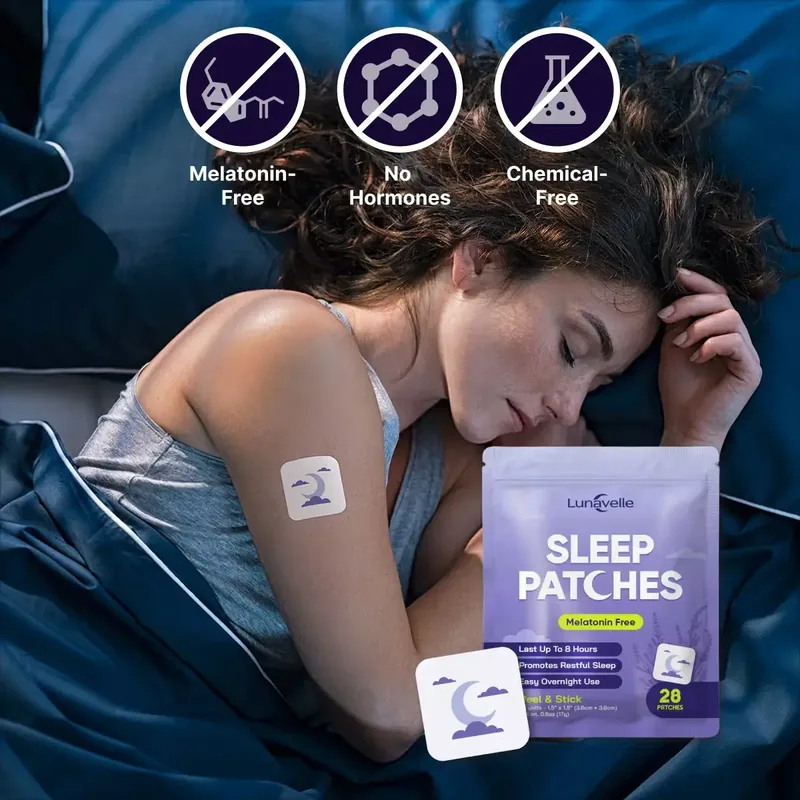
For a decade melatonin was the default answer to bad sleep — cheap, available, natural-sounding. The backlash wasn't a safety scandal; it was an accumulation of small disappointments. Morning fog. Strangely cinematic dreams. Doses in gummies creeping from 0.5 mg to 10 mg. And a quiet unease about taking a hormone every night to do what tea and boredom used to. The market noticed: melatonin-free went from fine print to headline, and formats like Lunavelle Sleep Patches — botanical patches with zero melatonin — are riding exactly that wave across the US and Canada.
The botanical bench, ranked by evidence-comfort
Valerian root has the most research attention of the group: results are genuinely mixed across trials, but it's the botanical most often shown to shorten time-to-sleep, likely via GABA-pathway activity. Chamomile (apigenin) and lemon balm carry centuries of use and a consistent "gently calming" profile in small studies. Passionflower shows similar anxious-evening signal. Further down the certainty ladder sit lavender (mostly aromatherapy data), hops and skullcap — traditional companions with thinner paper trails. None of these will knock you out, and that's precisely why people who dislike sedation choose them.
The non-botanical helpers
Magnesium is the interesting one: it participates in real neurological calming machinery, and supplementation reliably helps people who are deficient — which modern diets make common — while doing less for the replete. L-theanine, the green-tea amino, promotes relaxed alertness rather than sleepiness, which makes it a favorite stacking ingredient for racing-mind evenings. Glycine has a small but tidy literature on subjective sleep quality. You'll find several of these sharing label space with botanicals in the current wave of blends.
The part supplements can't do
Every sleep researcher will tell you the same unprofitable truth: a fixed wake time, a cool dark room, dim evenings and a screen-free bed outperform any capsule, patch or gummy. Supplements earn their keep as the last 10% on top of that foundation — taking the edge off, easing the transition — not as a replacement for it. If sleeplessness is chronic or severe, that's a medical conversation, not a shopping decision.
Why the patch format is trending
Delivery is the category's newest battleground. Patches promise a slow release across the night instead of a single digestive pulse, involve zero sugar (gummies' dirty secret), and offer effortless dose control — peel it off and you're done. The open question, which we press on in our Lunavelle Sleep Patches review, is absorption: transdermal delivery is proven for some molecules and merely assumed for others, and makers rarely publish the numbers. The format's convenience is real either way; go in with calibrated expectations.
Shopping instead of studying? Lunavelle Sleep Patches review — our hands-on style coverage of the trending options in this category.
Frequently asked questions
What works like melatonin but isn't melatonin?
Nothing replicates melatonin's circadian-signal mechanism, which is exactly what melatonin-free products avoid. The alternatives work through relaxation pathways instead: GABA-adjacent botanicals such as valerian and passionflower, calming aminos like L-theanine, and minerals like magnesium.
Why do people stop taking melatonin?
The common reasons: next-morning grogginess, unusually vivid dreams, a sense of needing ever-larger doses, and discomfort with taking a hormone nightly — particularly at the high doses common in gummies.
Do botanical sleep supplements really work?
The honest read: effects are real but modest and person-dependent. Valerian and chamomile show benefit in some trials and not others. They shine for taking the edge off a restless evening, not for treating clinical insomnia — which deserves a doctor, not a supplement.
Are sleep patches better than pills or gummies?
Different, mainly. Patches skip sugar and swallowing, release gradually over hours instead of in one pulse, and make skipping or removing a dose trivially easy. Whether transdermal delivery absorbs each botanical as efficiently as digestion is an open question makers rarely quantify.
Related reading
More explainers →
Sleep Patch vs Melatonin vs Fixing Your Evenings: What Each One Can Do
Melatonin signals timing. Patches deliver botanicals through skin. Neither treats what keeps most people awake — how to tell which is your problem.
Sleep Patch Buying Guide 2026: What Actually Matters (and What's Marketing)
Melatonin or melatonin-free, how to read the ingredient label, patch vs pills, interaction checks and price traps — the complete 2026 buying guide to sleep patches.
Lunavelle Sleep Patches Review: A Melatonin-Free Route to Better Nights?
Lunavelle sleep patches pack 11 botanicals and zero melatonin. Our review covers the ingredients, how the patch format works and who should be cautious.