Do Shower Filters Actually Work? What the Evidence Says
A claims-versus-evidence walkthrough of the filtered shower head category: the chemistry that holds up, the marketing that doesn't, and who actually notices a difference.
Published · Facts checked against the official product page
Key takeaways
- The defensible core claim: common filter media (KDF-55, calcium sulfite, activated carbon) genuinely reduce free chlorine in shower water — that chemistry is well established.
- The stretch: "softening" claims. True water softening removes calcium and magnesium via ion exchange, which a shower-head cartridge is too small to do meaningfully.
- Whether you notice better hair and skin depends on your starting point: chlorinated municipal water plus dry skin or color-treated hair is where users most often report a difference.
- Cartridges are consumables. A filter that is never replaced becomes a plain shower head — factor replacement cost into the real price.
Separating chemistry from copywriting
The filtered shower head is one of e-commerce's evergreen trending products, and the marketing around it mixes solid chemistry with wishful thinking — often in the same sentence. Here is the split that matters.
What holds up
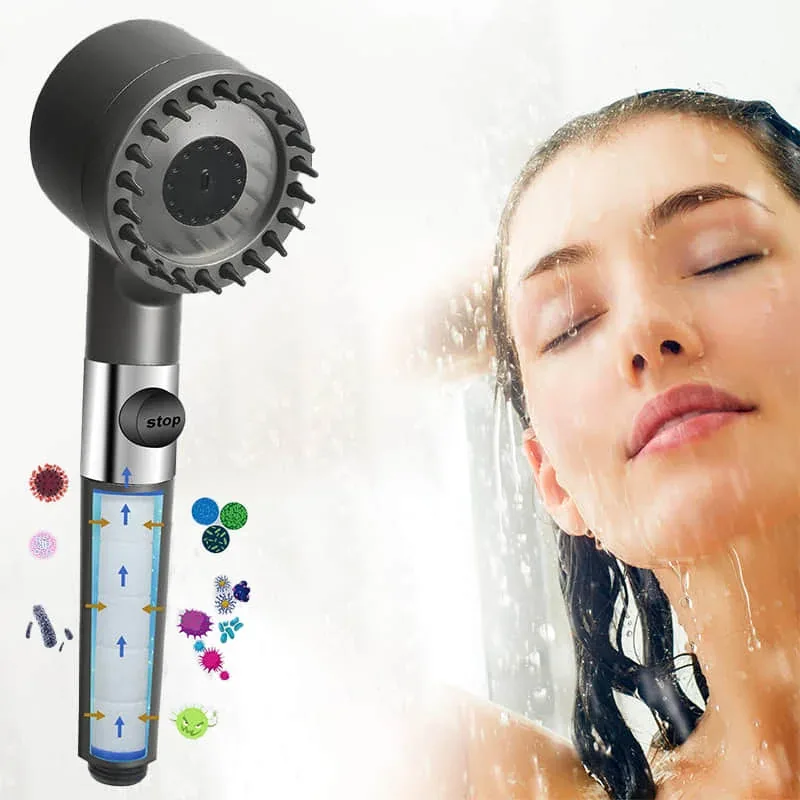
Chlorine reduction is real. Municipal water is chlorinated on purpose, and the standard filter media stack — KDF-55 (a copper-zinc alloy that neutralizes chlorine by redox reaction), calcium sulfite (fast chlorine reduction even in hot water) and activated carbon (adsorption of chlorine and some organic compounds) — is established water-treatment chemistry, not invention. A multi-stage cartridge like the one in IonDrops is built around exactly this stack.
Sediment capture is real, in the coarse sense: mesh stages catch rust flakes and grit from aging pipes, which is why the first weeks in an old building can visibly discolor a new cartridge.
What deserves skepticism
"Softens water" is the category's favorite stretch. Hardness is dissolved calcium and magnesium; removing it takes ion-exchange resin and a regeneration cycle — a machine the size of a small suitcase, not a cartridge the size of a fist. A shower filter will not end limescale on your glass door. Heavy-metal removal claims also need context: contact time at shower flow rates is a fraction of what drinking-water filters get, so real-world reduction is far more modest than lab percentages imply. And "remineralizing" beads for skin benefits sit firmly in the unproven column.
So who actually notices a difference?
The pattern in user reports is consistent with the chemistry: people on heavily chlorinated city water — you can often smell it — with dry skin, eczema-prone skin or color-treated hair notice the most. Chlorine strips sebum and roughens the hair cuticle; remove most of it and those specific complaints ease. If you're on well water or lightly treated supply, the honest expectation is a nicer spray pattern and not much else. Our full shower water filter buying guide covers how to read cartridge specs, and the IonDrops review examines the trending example in this category claim by claim.
The maintenance fine print
Every benefit above lives inside a consumable. Media beds exhaust; an unreplaced cartridge is dead weight that still slows your flow. Before buying any model, price a year of cartridges — that number, not the sticker, is what the filter costs.
Shopping instead of studying? IonDrops review — our hands-on style coverage of the trending options in this category.
Frequently asked questions
What do shower filters actually remove?
Quality multi-media cartridges are effective against free chlorine and coarse sediment, and can reduce some odors. Claims beyond that — heavy metals at shower flow rates, or "softened" water — deserve skepticism.
Do shower filters help with hard water?
Only marginally. Hardness is dissolved calcium and magnesium, which requires ion-exchange softening — a whole-house system's job. A shower filter can reduce chlorine and sediment riding along with hard water, but it will not stop limescale.
Can a shower filter improve hair and skin?
Plausibly, if chlorine is your problem: chlorine strips natural oils and roughs up color-treated hair. Users on heavily chlorinated municipal water report the most noticeable changes; on low-chlorine well water, expect little.
How often should a shower filter cartridge be replaced?
Typically every few months depending on water quality and household size — follow the maker's schedule. An exhausted cartridge filters nothing while still restricting flow.
Related reading
More explainers →
The Device Is the Discount: Subscriptions Are Now Pre-Selected at Checkout
Three products on our board arrive with recurring billing already ticked. We counted what each one costs over a year against its own headline price.
Shower Water Filter Buying Guide: What Actually Matters (and What's Marketing)
Chlorine, hard water, cartridge costs and pressure — what shower filters genuinely do for skin and hair, what they can't, and how to buy one intelligently.
IonDrops Review: The Filtered Shower Head TikTok Swears Fixes Skin and Hair
IonDrops is the viral filtered shower head promising better skin and hair by removing chlorine and impurities. Our review sorts the plumbing facts from the hype.