Europe's Record 2026 Heatwave Triggered a Run on Portable Coolers — and Rewrote How a Continent Buys Cold Air
The summer of 2026 broke European temperature records from Portugal to Poland — and set off one of the most striking consumer stories of the year: a continent-wide run on portable, no-drill cooling devices. Units sold out in minutes, resold for up to five times their price, and spawned real-time stock-tracking websites. This is the data behind the surge, why Europe's housing made it inevitable, and what the moment reveals about how the world will buy cold air from now on.
Published · Facts checked against the official product page
Key takeaways
- Europe's 2026 heatwave was record-breaking and deadly: temperatures hit 45.1°C in Spain and 44.3°C in France, more than 190 million Europeans faced heat above 35°C, and in France 54 of 96 mainland departments were on the highest heat alert — per AFP, Meteo-France and WMO reporting.
- The consumer response was extraordinary: Chinese portable-AC exports to Western Europe rose more than 70% year-on-year in early 2026 (Yicai), one popular model sold 200,000+ units in Europe by late June at double the prior year's pace, and resale prices reportedly reached €1,500–€5,000 for units listed at €699–€900.
- The driver is structural, not just weather: only about 20% of European homes have air conditioning (IEA), and heritage rules, refrigerant caps, noise limits and rental restrictions make traditional installation impractical — which is exactly why no-drill, window-bracket and hoseless formats exploded.
- The same forces are reshaping cooling demand across markets: the winning products are the ones that install without drilling, run on ordinary sockets, and move between rooms — the category TechsTrends has tracked all summer across the US, UK, German and French markets.
For three centuries, Europe told itself a comfortable story: it didn't need air conditioning. The summer of 2026 ended that story in a matter of weeks — with record-shattering heat, deadly consequences, and one of the most remarkable consumer stampedes in recent memory. Across the continent, people didn't just want cold air; they fought for it, tracked it store by store, and paid multiples of retail to secure it. This is the data behind that surge, and what it reveals about how the entire world is about to start buying cooling.
The heat, by the numbers
This was not an ordinary hot summer. Starting abnormally early in late May and recurring in successive waves, the 2026 European heatwave broke all-time records across Spain, France, the UK, Germany and beyond. According to national weather services and World Meteorological Organization reporting, Andújar in southern Spain hit 45.1°C on June 22 — the summer's European high — while the French village of Pissos set a national record at 44.3°C. AFP reported that more than 190 million Europeans were expected to endure temperatures above 35°C, with roughly 381 million seeing 30°C or higher.
In France — the epicentre of the anomaly — national weather service Météo-France placed 54 of the country's 96 mainland departments on the highest heat alert, with Bordeaux forecast to reach 43°C and Paris 39°C. Outdoor events were cancelled, schools shut, transport was disrupted, and office workers were sent home. The World Meteorological Organization has noted that Europe is warming at more than twice the global average — the fastest-warming continent on Earth.
The scramble: sell-outs, stock trackers and €5,000 resales
What happened next turned a weather event into a defining e-commerce story. With demand exploding and installation of conventional AC effectively off the table for most households, buyers rushed the one category that could deliver relief immediately: portable, no-drill cooling units. The result was scarcity on a scale rarely seen outside a product launch.
The reported figures are striking. Chinese exports of portable air conditioners to Western Europe surged more than 70% year-on-year in the first five months of 2026, according to financial outlet Yicai. One widely-covered window-bracket model sold out across Germany, France, Italy and the Netherlands; by late June its maker had reportedly sold more than 200,000 units in Europe — double the prior year's volume, with over 60,000 in Germany alone in the first half of the year. Its official price of €699–€900 was quickly overrun by a frenzied secondary market where units were resold for €1,500 to €5,000. One Austrian buyer reportedly drove 200 kilometres to secure the last available unit; in Germany, a programmer built a paid inventory-tracking website covering 1,171 stores — and at one point, only a single store in the country had stock.
The phenomenon wasn't limited to one brand. TCL's Western European sales reportedly grew more than 27% year-on-year, with France surging over 300%. On JD.com's European platform, air-conditioner sales during the June 19–25 peak reportedly jumped nearly 40× versus the first week of June, while neck-fan and floor-fan sales rose even faster. At Xiaomi's Paris store, customers queued before opening; foot traffic rose 84% and sales 79% in a single week, with restocked fans selling out within half a day.
Why Europe was uniquely unprepared
The surge wasn't just about temperature — it was about a continent whose homes and rules were built for a climate that no longer exists. Only about 20% of European homes have air conditioning, per the International Energy Agency, compared with roughly 90% in the US. And the barriers to fixing that are structural:
| Barrier | What it means for a household |
|---|---|
| Heritage & façade rules | In protected city centres (Paris, Rome, Vienna), drilling into exterior walls or mounting a visible condenser is often simply forbidden. |
| Refrigerant caps | France requires professional inspection for systems holding more than 2kg of refrigerant — pushing buyers toward smaller, self-install units. |
| Noise limits | Germany caps night-time outdoor-condenser noise at around 35 decibels, ruling out many conventional systems. |
| Co-owner approval | Spanish apartment owners reportedly need approval from three-fifths of a building's co-owners; Italy can fine unauthorised outdoor installs heavily. |
| Rental restrictions | Most leases prohibit drilling or permanent modification — leaving Europe's large renter population with almost no traditional option. |
For decades none of this mattered, because the heat didn't demand it. Climate change removed that grace period faster than buildings, landlords or regulators could adapt — and into that gap rushed a new generation of cooling designed specifically to sidestep every one of these barriers.
The cooling that actually works in a heatwave isn't the one bolted to a wall — it's the one you can set up in minutes and move from room to room. TechsTrends has spent all summer testing the no-drill, no-installation cooling devices trending across the US, UK, German and French markets — with honest verdicts on what genuinely cools and what's just marketing. Explore the trending products we've tested →
The formats that won the summer
The devices that sold out shared a common DNA: no drilling, no permanent installation, ordinary plug, portable between rooms. They fall into three families, each suited to a different situation — and each one a category we've reviewed in depth.
| Format | How it cools | Best for | The honest limit |
|---|---|---|---|
| Window-bracket portable AC | Real refrigerant cooling; outdoor unit mounts on the window frame without drilling | Renters wanting true room cooling in any humidity | Higher running cost; needs a suitable window |
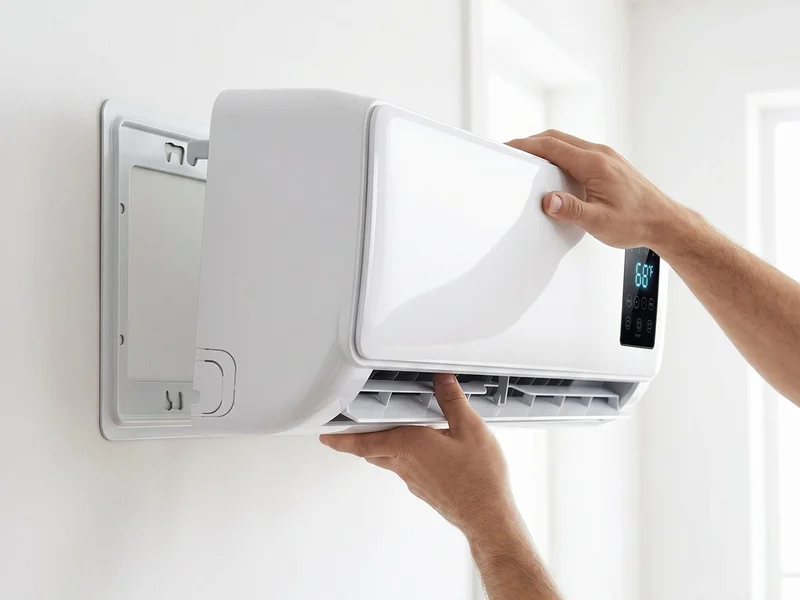
| Wall-mounted no-drill AC | Refrigerant cooling in a slim unit hung on a bracket | Small bedrooms and home offices, renters | One unit per room; sizing matters |
| Hoseless evaporative cooler | Evaporates water to cool the airflow; ~45W, no hose | Dry-climate personal & small-room use, low running cost | Weakens in humid air; not whole-room AC |
| USB personal air cooler | Cools the air right around you, not the room | Desks, bedsides, tight budgets | Personal zone only, not the room average |
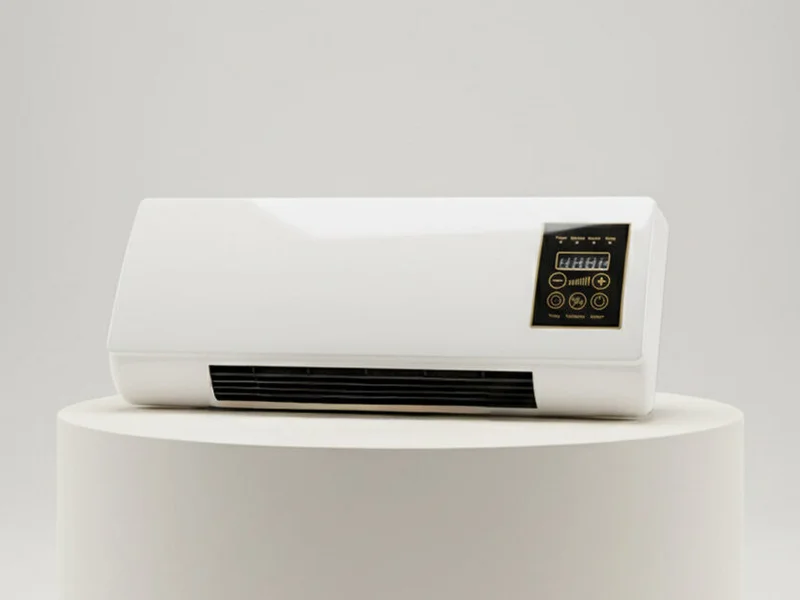
This is precisely the map TechsTrends has been building all season. On the wall-mounted no-drill side, our AerioQ review tests a slim bracket-hung unit for exactly the renter Europe's heatwave exposed. For year-round no-installation units, our Coolizi Coolzy review covers a wall-mounted heater-cooler and why the missing wattage matters, while our evaporative-cooling explainer sets out the humidity rule for the tank-based tier. For personal cooling, the Froza AC review and AiraBreeze review map the desk-and-bedside tier, while our best portable air coolers of 2026 comparison lines the field up head-to-head.
One number every buyer should understand: outlet vs room
The heatwave also produced a wave of disappointed buyers — not because their devices were fake, but because they misread the claims. Nearly every portable cooler advertises a figure like «air up to 20°C cooler», and that number describes the air at the outlet, felt where you sit — not the whole-room average your thermostat reads. Evaporative units add a second variable: they cool best in dry air and weaken as humidity rises, which is why a bone-dry Spanish afternoon and a muggy coastal evening produce very different results from the same machine. Understanding this single distinction — unpacked in our how portable air conditioners work explainer — is the difference between a smart purchase and a return.
What the moment really means
Strip away the record temperatures and the €5,000 resales, and the 2026 European heatwave is a preview. A continent that treated cooling as optional discovered, in a single summer, that it isn't — and that the fastest, cheapest, most rental-friendly path to relief is the portable, no-drill device, not the bolted-in system. That lesson isn't confined to Europe. Hotter summers are pushing the same logic across the US, the UK and beyond: the cooling that wins is the cooling you can own without permission, install without a contractor, and take with you when you move.
That's the shift TechsTrends exists to track — the trending physical products reshaping how people actually live, tested honestly and explained plainly, across every market where the heat is rewriting the rules.
Don't wait for the next heatwave to sell out the shelves. See which portable coolers genuinely deliver — and which to skip — with claim-checked reviews, buying guides and head-to-head comparisons across every market we track. Make your next cooling purchase the informed one. Explore the trending products we've tested →
Frequently asked questions
How hot did Europe get in the 2026 heatwave?
Extremely, and by record margins. Per WMO and national weather-service reporting, Andújar in Spain reached 45.1°C on June 22 — the summer's European high — while Pissos set a French record at 44.3°C. AFP reported that more than 190 million Europeans were expected to experience temperatures above 35°C, and in France, 54 of 96 mainland departments were placed on the highest heat alert. The heat began abnormally early, in late May, and recurred in multiple waves.
Why did portable air conditioners sell out across Europe?
A collision of extreme demand and structural supply barriers. Only around 20% of European homes have AC (IEA), and installing conventional systems is blocked or delayed by heritage-building rules, refrigerant caps, noise limits and rental restrictions. When the heat hit, buyers rushed the one category that sidesteps all of that — portable, no-drill units — and stock evaporated. One model reportedly left only a single store in Germany with inventory at one point, spawning a paid stock-tracking website covering 1,171 stores.
Why don't more European homes have air conditioning?
History and buildings. For decades European summers were mild enough to manage with open windows and shutters, so AC was treated as a luxury. Much of the housing stock is old and, in many cities, legally protected — you often can't drill into a protected façade or mount an external condenser. Add national refrigerant caps, noise limits and rental rules, and conventional AC becomes an ordeal. Climate change has erased the 'mild summer' assumption faster than the buildings or the rules could adapt.
What kind of cooling actually works for renters and old buildings?
The formats that need no permanent installation: window-bracket units that mount without drilling, hoseless evaporative coolers, and personal air coolers that cool your immediate zone rather than a whole room. They plug into a standard socket, move between rooms, and leave no trace when you move out. TechsTrends has reviewed this whole category across markets — from wall-mounted no-drill ACs to hoseless evaporative units and USB personal coolers.
Related reading
More news & trends →
One Product, Five Storefronts, Five Prices — and No Label
Cleaning products are now launched across five markets at once from one creative package. What that model does to pricing, to labelling, and to the buyer.

Restore-Don't-Replace Is the Quiet Growth Story in US Home Gadgets
Fabric shavers, steamers and repair tools are climbing US e-commerce as replacement costs rise. The forces behind the restore-don't-replace wave.
Coolizi Coolzy Is Riding the UK and German Heatwaves — the No-Installation Wave, Explained
Record heatwaves made no-installation cooling the surge category in the UK and Germany, with Coolizi Coolzy leading. The market forces, and the honest read.