Restore-Don't-Replace Is the Quiet Growth Story in US Home Gadgets
The fastest-moving corner of US home gadgets in 2026 is not a new capability — it is tools that make things you already own look new again. Fabric shavers lead the group on our board. The economics behind that are real and unusually easy to check, which is why the category rewards a buyer who reads specs rather than promises.
Published · Facts checked against the official product page
Key takeaways
- Restoration tools — fabric shavers, steamers, stain devices — are climbing US home-gadget demand faster than the categories that add a new capability.
- The arithmetic is unusually legible: a $50 device against a $180 jumper is a comparison a buyer can make without trusting anyone's marketing.
- That legibility is also the category's weak spot. When the value proposition is obvious, sellers compete on screens and speed counts instead of on the specs that decide durability.
- Our rule for the wave: judge these tools on the consumable, not the headline. Blades, filters and pads are where a cheap device becomes an expensive one.
The categories that grow fastest in home gadgets usually promise something new. This year's quiet exception promises the opposite: tools that make what you already own look the way it did when you bought it. Fabric shavers, garment steamers and small repair devices are climbing US demand, and on our board the fabric shaver group is the clearest riser of the three.
Why the arithmetic works
Most trending products ask a buyer to trust a claim. This group asks them to do a subtraction. A device at roughly $50 against a knitwear drawer worth several hundred is a comparison anyone can make in their own head, without believing a word on the page. When the alternative to a $50 tool is a $180 replacement jumper, the tool does not need to be excellent — it needs to work once.
That legibility is doing most of the work behind the growth. It is also why the results travel: a before-and-after of a pilled sleeve is immediate, visual and impossible to fake convincingly, which is precisely the kind of proof that spreads on the platforms where these products get discovered.
The weak spot hiding inside the strength
When a value proposition is that obvious, sellers stop competing on it. There is no argument to win about whether cutting pills off a jumper works, so the competition moves to whatever can be added cheaply: a digital display, a higher speed count, a battery percentage readout, a bundle ladder.
None of those are bad. They are just not where the durability lives. In this whole group — shavers, steamers, stain devices — the part that determines whether the tool is still useful next winter is the consumable: a blade, a pad, a filter, a mesh. And that is the specification almost no page in the category publishes. Product pages will tell you the exact percentage of battery remaining and stay silent on how long the blade lasts.
How we're reading the wave
Judge these tools on the consumable, not the headline. Before ordering anything in this group, get two answers from the seller in writing: how long the wearing part lasts, and whether replacements are sold. A device whose blade cannot be replaced is priced per season rather than per unit, and that changes the arithmetic that made the category attractive in the first place.
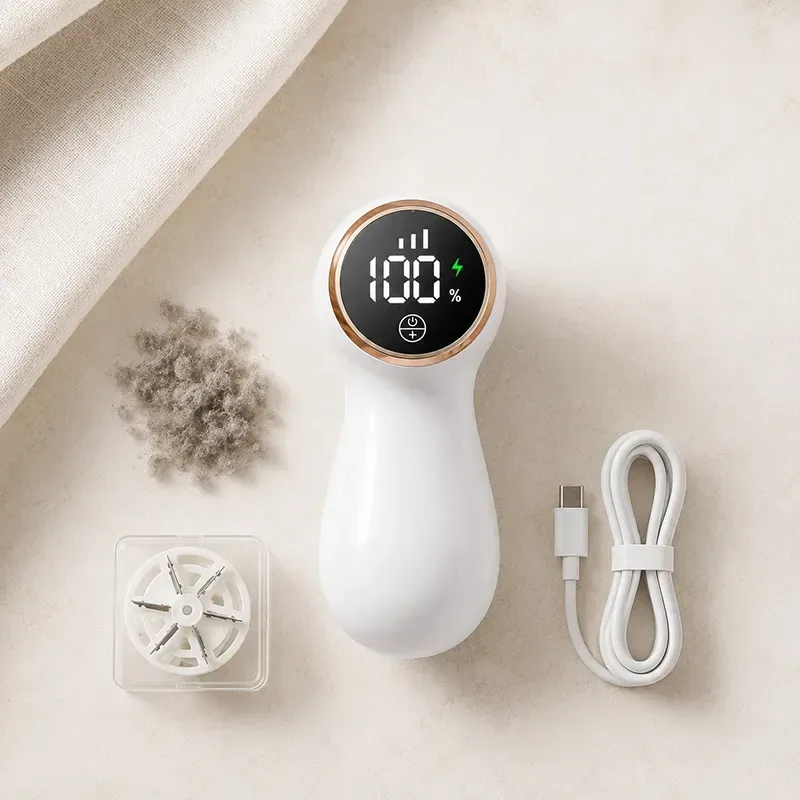
The example currently leading this group on our board is NoFuzz, which declares three speeds, a mesh guard and USB-C charging, ships with a spare blade — and publishes no blade lifespan, motor spec or battery capacity. That is not unusual for the category; it is the category. The category rules, and how to shop them, are in our fabric shaver buying guide, and the mechanism behind why any of this works is in why clothes pill.
Frequently asked questions
Why are restoration gadgets growing now?
Because the comparison got easier to make. When replacement costs rise, the gap between fixing and rebuying widens, and a tool that visibly restores something is an easy purchase to justify. It also helps that this category's results are immediate and photographable, which is exactly what performs on the platforms where these products are discovered.
Is this just a repackaging of old products?
Largely, and that is not a criticism. Fabric shavers, garment steamers and lint tools have existed for decades. What is new is the packaging — rechargeable batteries, digital displays, direct-to-consumer pricing — rather than the mechanism. The upside is that the mechanism is proven; the downside is that a screen is easier to add than a better blade.
What should a buyer watch for in this wave?
The consumable. Almost every tool in this group depends on a part that wears out — a blade, a pad, a filter — and almost no product page states its lifespan or whether replacements are sold. That single unanswered question separates a device you own for years from one that works beautifully for one season.
Related reading
More news & trends →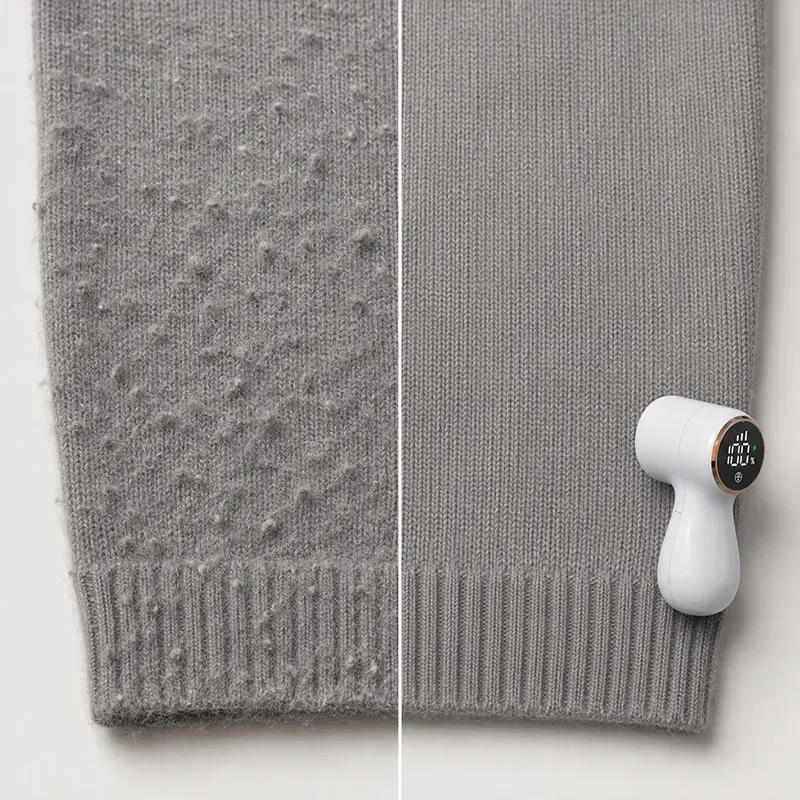
NoFuzz Review: the Fabric Shaver That Buys Your Knitwear Another Winter
NoFuzz is a rechargeable fabric shaver with three speeds and an LCD, at $49.95. The mechanism is real — here's what the page never publishes about it.
Fabric Shaver Buying Guide 2026: How to Revive Knitwear Without Wrecking It
How to choose a fabric shaver: blade guards, speed control, blade replacement and the specs that decide whether a jumper survives. The category, explained.
Why Clothes Pill — and Why Shaving Them Actually Works
Pilling is broken fibre that has tangled on the surface. Here's why some fabrics pill and others don't, and why cutting the pills off is the right fix.