Fabric Shaver Buying Guide 2026: How to Revive Knitwear Without Wrecking It
A fabric shaver is one of the few gadgets in this category whose mechanism is beyond argument — which is exactly why the marketing is so noisy. This guide sets out what actually separates a good one from a bad one: the guard, the speed range, the chamber, and the single spec almost nobody publishes.
Published · Facts checked against the official product page
Key takeaways
- The guard matters more than the motor. A fine mesh lets pills through and keeps the weave out; a coarse one lets the blade reach fibre that should have stayed in the garment.
- Speed control is a safety feature, not a spec-sheet extra. One speed means the setting chosen for upholstery is the setting applied to cashmere.
- Blade life is the running cost of the category, and almost no page publishes it. A dull blade does not underperform gently — it pulls instead of cutting, which damages fabric.
- Chamber size decides how often you stop. A full chamber stops feeding fuzz to the blade and starts dragging it across the surface.
Fabric shavers sit in an unusual position for a trending category: the mechanism is not in question. A blade cuts pills off fabric. It works, everyone can see that it works, and no amount of marketing changes the outcome either way. Which means the marketing has to compete somewhere else — on screens, on speed counts, on battery language — and that is precisely where it stops being useful.
Here is what actually separates a good fabric shaver from one that will cost you a jumper.
The guard is the product
Between the blade and your garment sits a perforated guard. Its holes are sized to let pills poke through to the blade while keeping the woven surface out of reach. A fine mesh is protective; a coarse one is a liability, because a hole wide enough to admit a pill is also wide enough to admit a loop of yarn.
This is the single most important part of the tool, and it is the part least likely to be specified. If a page talks about the motor and not the guard, it has told you what it wants you to look at.
Speed control is a safety feature
A single-speed shaver applies one setting to everything. That setting was chosen so the tool feels powerful on the demo footage, which means it was chosen for upholstery. Applying an upholstery setting to a fine knit is how a cashmere jumper becomes thinner than it was.
Multiple speeds let you match the tool to the fabric — low for delicates, high for a sofa arm that has been sat on for six years. If a device has only one, treat everything fine as off-limits.
The spec nobody publishes
Blades dull. That is not a defect, it is how blades work, and a fabric shaver's blade meets thousands of fibres per garment. A dull blade is worse than no blade: instead of cutting a pill off it catches and pulls, dragging the fibre and widening the damage that created the pill in the first place.
So the running cost of this category is blades, and the question that decides ownership is how long one lasts and whether you can buy another. Most pages ship a spare in the box — which quietly confirms blades are consumable — and then say nothing at all about replacements. Ask before you buy. It is a short email and it is the difference between a tool and a disposable.
Chamber, charging and the rest
Chamber size decides how often the job stops. A small chamber fills within one jumper, and a full chamber does not simply stop collecting — it stops lifting fuzz into the blade and starts pushing it around the fabric. Bigger is genuinely better here.
Charging is mostly a convenience question, with one exception: USB-C over a proprietary barrel plug means the device survives losing its cable. Battery percentage readouts are pleasant and largely decorative, particularly when the capacity of the battery is not published anywhere on the page.
How to use one without regret
Lay the garment flat on a hard surface. Start on the lowest speed. Test on a hem or an inside seam before touching a sleeve. Keep the head flat and let its weight do the work rather than pressing. Empty the chamber often. Work in short passes rather than long sweeps, and stop when the surface stops shedding rather than continuing until it looks perfect — the last five percent of pills is where the damage happens.
What we're seeing on the board
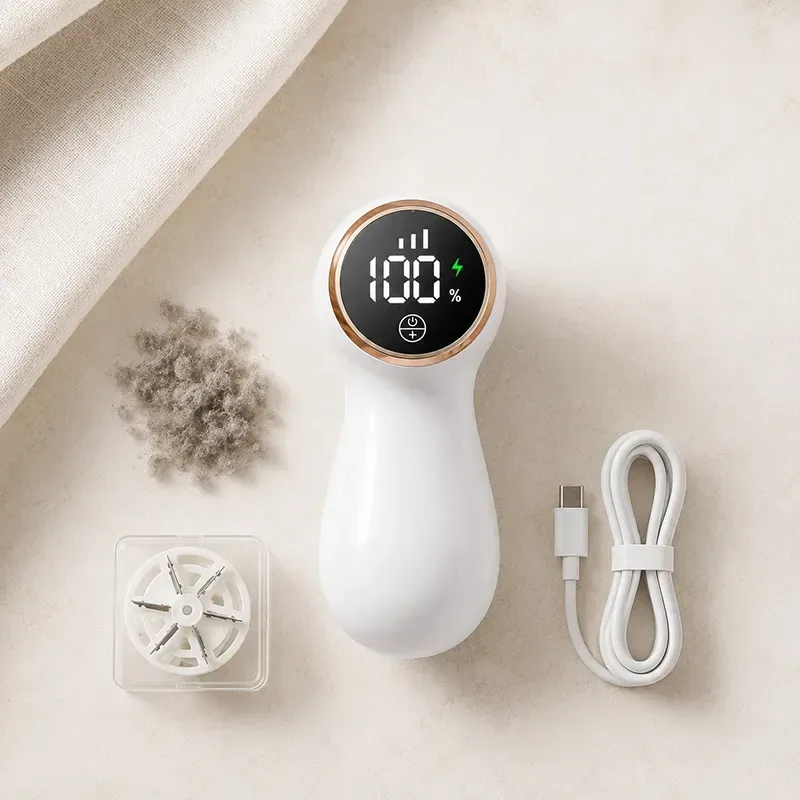
The trending example in this category right now is NoFuzz, which declares three speeds, a fine-mesh guard, a twist-empty chamber, USB-C charging and a spare blade in the box — a sensible feature set for the job. It also publishes no motor spec, no battery capacity and no blade lifespan, which puts it in the same position as almost everything else here: judge it on the guard and the speeds, and get the blade answer from the seller in writing.
Frequently asked questions
Do fabric shavers damage clothes?
A sharp blade used flat on a laid-out garment removes surface pills and very little else. Damage comes from three things: a blunt blade that pulls instead of cutting, too much speed on a fine knit, and shaving a garment while it hangs so the weave is under tension. All three are avoidable, and all three are user-side rather than product-side.
Fabric shaver, comb, or stone?
A comb and a pumice-style stone cannot reach a speed that damages anything, which makes them the right answer for hand-knits, very loose weaves and anything irreplaceable. They are also slow. An electric shaver clears a jumper in minutes and a sofa in an afternoon, at the cost of needing a little judgement. Most households want the shaver and keep a comb for the two or three garments they would not risk.
What should I check before buying one?
Four things, in order: whether the guard is fine mesh, whether there is more than one speed, how big the chamber is, and whether replacement blades are sold. The fourth is the one you will search for and usually not find, and it is the one that determines whether the device lasts more than one wardrobe.
Related reading
More buying guides →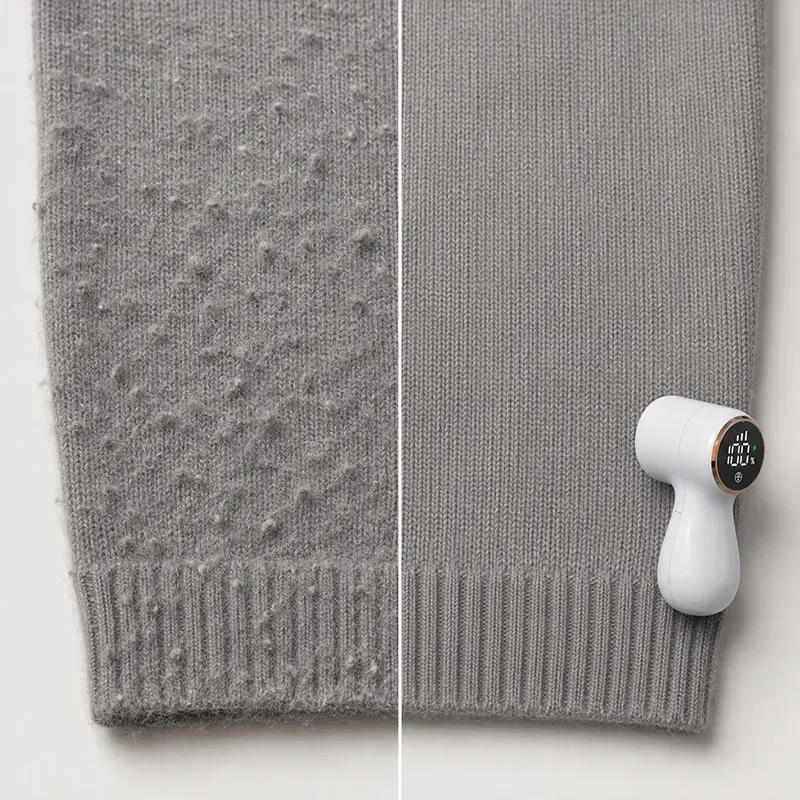
NoFuzz Review: the Fabric Shaver That Buys Your Knitwear Another Winter
NoFuzz is a rechargeable fabric shaver with three speeds and an LCD, at $49.95. The mechanism is real — here's what the page never publishes about it.
Why Clothes Pill — and Why Shaving Them Actually Works
Pilling is broken fibre that has tangled on the surface. Here's why some fabrics pill and others don't, and why cutting the pills off is the right fix.
Restore-Don't-Replace Is the Quiet Growth Story in US Home Gadgets
Fabric shavers, steamers and repair tools are climbing US e-commerce as replacement costs rise. The forces behind the restore-don't-replace wave.