Serum vs Moisturiser vs Retinol: Which One Is Doing the Work
A serum, a moisturiser and a retinol get layered together and credited interchangeably. They do different jobs at different depths, one of them has the strongest evidence in all of skincare, and the expensive one is often not it.
Published · Facts checked against the official product page
Key takeaways
- Retinoids have the deepest evidence base in topical skincare for changing skin structure over months. Nothing else in a normal routine competes with that, and it is usually the cheapest item in it.
- A moisturiser supports the barrier and holds water in the outer layer. That produces a real, visible improvement within days — and it is what most people are actually seeing when they credit a serum.
- A serum is a delivery format, not a category of effect. What it does depends entirely on the active inside, and «proprietary peptide complex» tells you nothing you can check.
- The most under-used item in anti-aging routines is daily sunscreen, which prevents more visible ageing than the other three reverse.
Three products get layered on the same face every night and credited more or less interchangeably. They work at different depths, on different timescales, with wildly different amounts of evidence behind them.
Round 1: what each layer is
A moisturiser supports the skin barrier and holds water in the outer layer. Effect within days: skin looks plumper, fine lines soften, texture improves. That is real and it is also temporary in the sense that it depends on continued use.
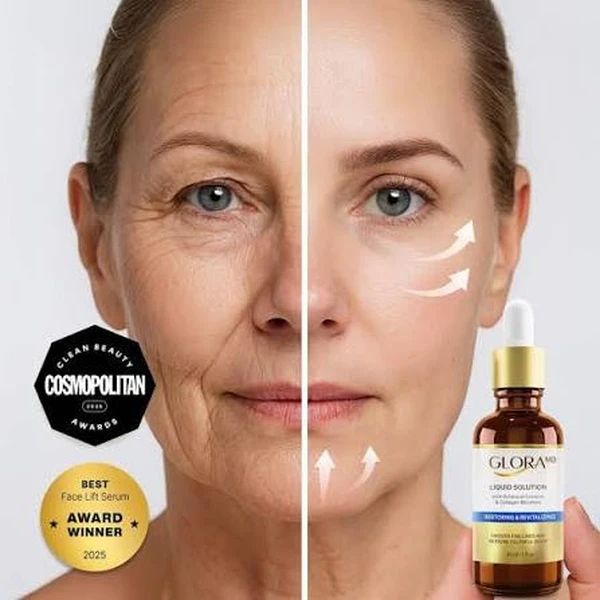
A serum is a format — thin, fast-absorbing, designed to carry an active. It is not a category of effect. What a serum does is entirely a question of what is in it, which is why an unnamed «proprietary peptide complex» is a problem rather than a mystique. Our GloraMD review covers a current example of exactly that gap.
A retinoid speeds cell turnover and, over months, influences collagen production. It is the one with decades of published evidence for structural change.
Round 2: what people are actually seeing
Here is the uncomfortable part. When someone starts an expensive serum and reports results in two weeks, the effect they are describing is almost always hydration — plumping in the outer layer, which softens the look of fine lines.
That effect is real. It is also what a competent moisturiser does, for less money, and it is why the two-week before-and-after is the most oversold image in the category. Structural change takes months and does not photograph in a fortnight.
Round 3: cost against evidence
The ranking inverts the price list. Retinoids are typically the cheapest item in a routine and carry the strongest evidence. Moisturisers are cheap and reliably deliver a modest, immediate effect. Serums span the widest price range and vary the most in whether they contain anything checkable.
Which is not an argument against serums — a serum with a named, dosed active is a sensible purchase. It is an argument against buying a serum because it is expensive, or because the page implies the complexity is the point.
Round 4: the one nobody wants to hear
Daily sunscreen prevents more visible ageing than the other three reverse. Most of what an anti-aging routine is fighting is photoageing, and photoageing is preventable in a way that it is not reversible.
It is the least interesting recommendation in skincare and it has the most evidence behind it. That combination should be familiar by now.
How to actually build the routine
In order of return
- Sunscreen, every morning — prevention beats correction
- Retinoid at night, introduced slowly, two or three nights a week to start
- Moisturiser over it, which also blunts the early irritation
- Serum with a named active, if you want a specific extra
Warning signs on a serum page
- «Proprietary complex» with no named ingredient
- A percentage improvement from the seller's own study
- Two-week before-and-after photographs
- No INCI list anywhere on the site
The verdict on GloraMD
If you buy one thing, buy sunscreen. If you buy two, add a retinoid and give it three months. The serum is the layer to buy last and to interrogate hardest, because it is the only one of the three whose effect you cannot predict from the category name — and «we won't tell you what's in it» is an answer, just not a good one. The anti-aging serum buying guide covers what a checkable label looks like.
Frequently asked questions
Is an expensive serum better than a cheap moisturiser?
Not necessarily, and often not. A serum is a thin, fast-absorbing format — its effect depends on the active it carries. If that active is hyaluronic acid and ceramides, a good moisturiser delivers the same ingredients for less. If the page names no active, or names only a proprietary complex, there is nothing there to be better.
What does retinol actually do?
It speeds cell turnover and, over months, influences collagen. That is the mechanism with the strongest and longest evidence base in topical skincare for structural change. It also causes irritation and dryness at the start, and increases sun sensitivity — which is why it is used at night and introduced slowly.
Can I use all three together?
Yes, with sequencing. Retinoid at night; moisturiser over it to blunt the irritation; serum whenever its active suits — vitamin C in the morning, hydrating actives either time. Introduce one product at a time, so your skin can tell you what disagrees and you can tell what worked.
What is the single highest-return item?
Daily sunscreen, by a distance, and it is not close. Most of what people are trying to reverse with the other three is photoageing, which sunscreen prevents. It is the least interesting recommendation in skincare and the one with the most evidence behind it.
Related reading
More comparisons →
GloraMD Review: What an Anti-Aging Serum Can (and Can't) Actually Do
GloraMD is marketed with dramatic wrinkle claims. What the named ingredients realistically do, why the 'proprietary' gaps matter, and the guarantee facts.
Anti-Aging Serum Buying Guide 2026: Ingredients That Work vs Marketing That Doesn't
Which anti-aging ingredients have real evidence, which claims are red flags, why 'proprietary' is a warning, and how to shop serums without overpaying for hype.
Do Anti-Aging Serums Actually Work? The Skin Science, Explained
How skin ages, what serums can genuinely change at the surface, what they can't reach, and why 'fills wrinkles in hours' claims outrun the biology.