Smart Bird Feeder Buying Guide 2026: Cameras, AI and the Specs That Matter
The smart bird feeder is backyard tech's fastest-rising category — and like every young category, it mixes genuinely working technology with claims that need calibration. This guide walks the six specs that decide the purchase (camera, AI, power, weatherproofing, storage fees, returns), exposes the subscription trap that defines lifetime cost, and settles the solar question honestly.
Published · Facts checked against the official product page
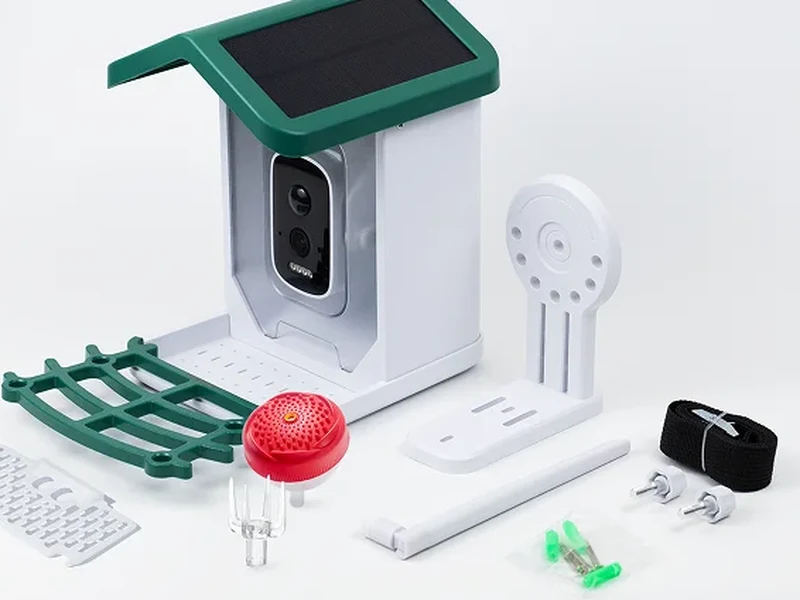
Key takeaways
- Six specs decide a smart feeder purchase: camera resolution (5MP/2K-class is the current standard), species-ID AI, solar + battery capacity, IP-rated weatherproofing, storage model, and returns terms.
- The subscription model is the spec that decides lifetime cost: many smart cameras charge monthly for cloud history. A no-fee app with cloud + SD options (the model Happy Birdy declares) keeps the sticker price the whole price.
- Solar claims are real physics with one hidden variable: your mounting spot's sun exposure. A '365-day' runtime figure assumes good sun; plan placement before believing the number.
- Species-count figures ('10,000+') describe the AI's catalog, not per-sighting accuracy — expect strong IDs on common regional visitors and occasional lookalike confusion, in every brand.
The smart bird feeder is backyard tech's fastest riser — a camera, a feeder and an AI in one housing, promising a nature channel in your garden. Like every young category it mixes genuinely working technology with numbers that need adult reading. This guide walks the specs that decide the purchase, exposes the cost trap the category hides, and settles the solar question honestly.
The six specs that decide it
- 1. Camera class. 5MP stills with 2K-class video is the current standard worth buying; the subject is close and stationary, so resolution translates directly into the photos you'll actually share. A wide motion-sensor angle (110° is the benchmark) decides how reliably visits trigger captures.
- 2. Species-ID AI. The feature that separates the category from a plain camera. Calibrate catalog claims: «10,000+ species» describes the database, not per-sighting accuracy — every brand's AI nails the regulars and occasionally confuses lookalikes.
- 3. Power system. Solar panels plus a stated battery capacity — 4000mAh is the current benchmark. The runtime claim is real physics with one hidden variable: your mounting spot's sun (more below).
- 4. Weatherproofing. This device lives outside in rain and snow; IP66 is the floor, IP67 the mark. No stated rating, no purchase.
- 5. The storage model. The lifetime-cost spec — see the next section.
- 6. Returns terms. Some pages in this category declare a window; others route warranty to the official retailer without stating one. Either way, the terms at checkout are the terms you own — read them before paying.
The subscription trap
The quiet tax of the smart-camera world is the monthly cloud fee: a feeder that costs less at checkout but charges for video history quickly becomes the expensive option over two or three seasons. The model to prefer — and the one the current leader on our board, Happy Birdy, declares — is a free app with no monthly fees plus cloud and SD storage options. When comparing models, do the two-year math, not the checkout math: sticker price plus 24 months of whatever the cloud plan costs. That single calculation reorders most of the category.
The solar question, settled
Solar self-sufficiency claims («operates 365 days a year») are physically plausible — the loads are small and the panels are dual on serious units — but they carry one assumption the marketing never states: your mounting spot gets real sun. Panels under a dense tree canopy or on a north wall force the battery to carry the system. So invert the buying order: pick the sunny, visible, squirrel-aware spot first, then trust the runtime figure. If your only viable placement is deep shade, this category will ask for occasional USB top-ups — livable, but not the set-and-forget the page sold.
Reading the offer page
The category's pages share the pattern we flag everywhere: self-published ratings («4.8/5 from 10,000+ reviews»), rotating discounts («up to 60% off»), and scarcity lines. Marketing furniture, all of it. The evidence on the page is the spec table, the storage model and the warranty route — weight those, and apply the full method from our trending-product research playbook. The mechanism itself — how the camera, AI and solar loop actually work — is unpacked in our AI bird feeder explainer.
The short version
Buy the camera class and the storage model, not the discount: 5MP/2K, 110° sensor, IP67, 4000mAh solar — and a no-subscription app, because the two-year math beats the checkout math. Place it in real sun before trusting runtime claims. Read catalog-size AI figures as database size, not accuracy. And read the checkout warranty terms, because in this category they're often the only returns terms that exist.
Frequently asked questions
What should I look for in a smart bird feeder?
Six things, in order: camera resolution of at least 5MP/2K-class video; on-device or app AI species identification; solar panels with a stated battery capacity (4000mAh is the current benchmark); IP66/IP67 weatherproofing for a device that lives outside; the storage model — no-subscription with SD backup beats monthly cloud fees over a lifetime; and the returns terms, read before checkout.
Do smart bird feeders need a subscription?
Some charge monthly for cloud video history — the quiet tax of the smart-camera world. Others, including the current leader on our board, declare a free app with no monthly fees plus cloud and SD storage options. Over two or three years, this single spec often outweighs the sticker-price difference between models.
How accurate is bird species identification?
Genuinely good on the birds you'll actually see: common regional visitors, photographed close and well-lit — exactly what a feeder camera produces. Catalog-size claims ('identifies 10,000+ species') describe the database, not per-photo accuracy; every brand's AI will occasionally confuse lookalike species. Treat IDs as a delightful strong guess, not a lab result.
Where should I mount a solar bird feeder?
Where the panels get real direct sun — the entire 'set and forget' promise rests on it. Shaded, north-facing or under-eave placements force the battery to carry the load. Secondary considerations: 1.5–2m height, some shelter from driving rain, visibility from the window you actually look out of, and squirrel geometry (away from launch points).
Related reading
More buying guides →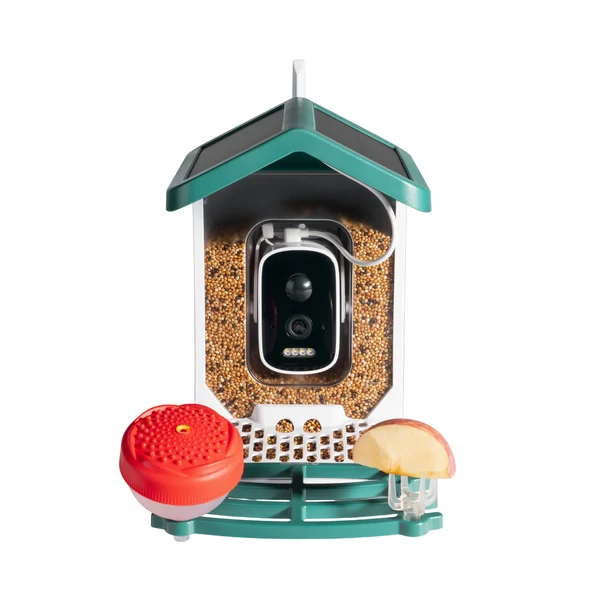
Smart Bird Feeder vs Trail Camera vs a Plain Feeder: What You're Paying For
Three ways to watch garden birds, at three prices. Which one identifies species, which one survives winter, and which one the birds prefer.
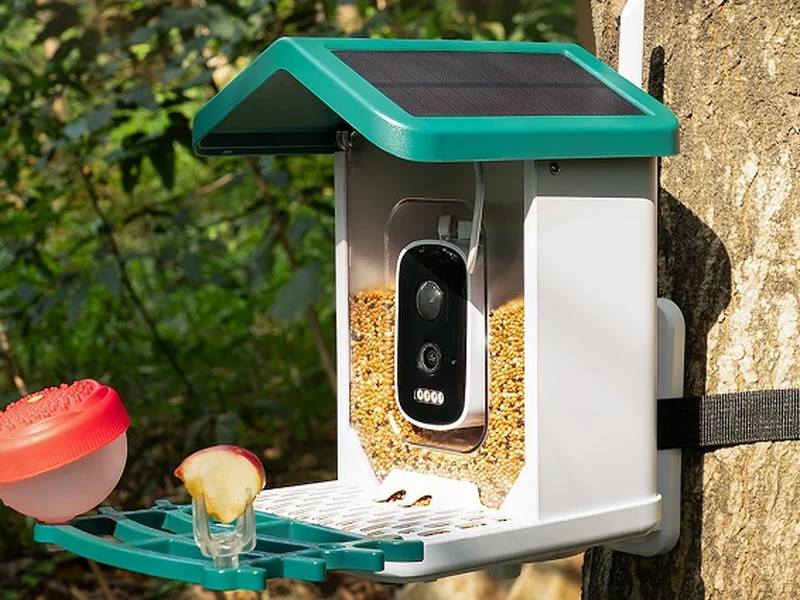
Happy Birdy Review: Does an AI Bird Feeder Actually Know Who's Visiting?
Happy Birdy pairs a solar feeder with a 5MP camera and species-ID AI. What the tech honestly delivers, the claims to calibrate, and the checkout fine print.
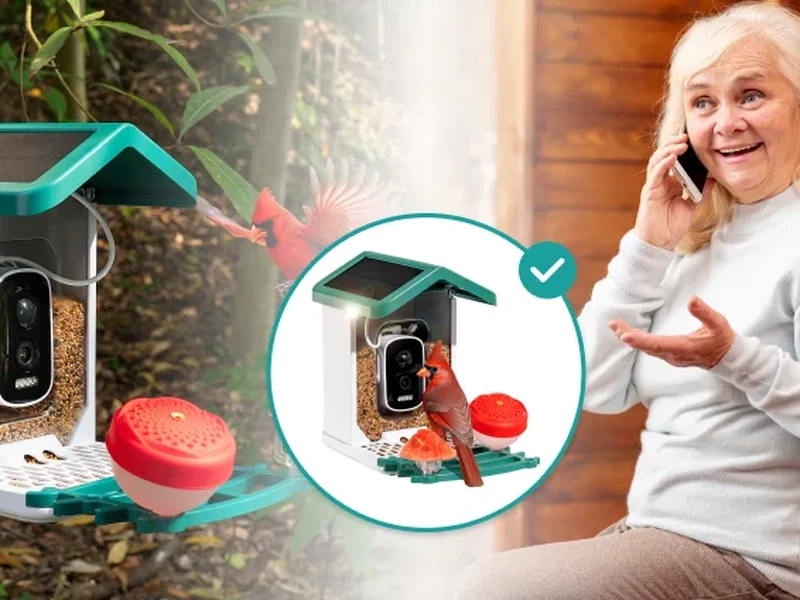
How Do AI Bird Feeders Actually Work? Cameras, Species ID and Solar, Explained
Motion sensors, species-ID AI, solar budgets — the technology inside camera bird feeders, what it genuinely does well, and where its limits honestly sit.