How Do AI Bird Feeders Actually Work? Cameras, Species ID and Solar, Explained
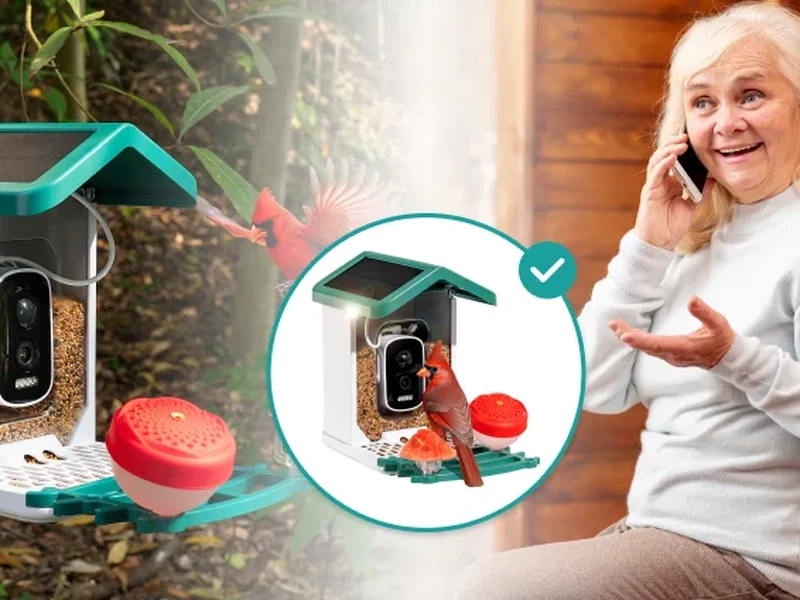
The AI bird feeder is one of the few viral gadgets whose core technology genuinely works — because it stacks three mature techs on the easiest possible subject: a close, lit, stationary bird. This explainer covers the capture loop, how species identification actually happens, why the solar budget usually balances, and the honest limits every brand in the category shares.
Published · Facts checked against the official product page
Key takeaways
- The capture loop is simple and robust: a motion sensor (110°-class) detects a landing, the camera shoots stills and video of a close, lit, stationary subject, and the AI classifies the images — the easiest job in consumer computer vision.
- Species ID works like face recognition for birds: the AI compares plumage, shape and markings against a catalog (10,000+ species in current systems). Catalog size is a database figure; real-world accuracy is highest on common regional visitors and softer on lookalikes, juveniles and molting birds.
- The solar budget balances because the loads are tiny: the camera sleeps until motion wakes it, so dual panels plus a 4000mAh battery can genuinely sustain year-round operation — if the mounting spot delivers real sun.
- The honest limits shared by every brand: the feeder attracts with food, not electronics; lookalike species confuse every AI; shade breaks solar math; and cloud subscriptions, where present, define the real lifetime cost.
Most viral gadgets ask you to believe a stretch. The AI bird feeder is the rarer case: a product whose core technology genuinely works, because it stacks three mature technologies on the easiest subject computer vision has ever been handed — a close, well-lit, stationary bird that returns every day. Here's how the loop actually works, why the solar math balances, and the honest limits every brand in the category shares.
The capture loop
A passive motion sensor — 110°-class field of view on current units like Happy Birdy — watches the perch at near-zero power. A landing wakes the camera, which shoots 5MP stills and 2K-class video of a subject sitting inches away in daylight. The clips route through the app to your phone, with cloud or SD storage keeping the archive. That's the whole machine: sleep, wake, shoot, notify. Its robustness comes from its simplicity — there's very little to go wrong between the perch and your pocket.
How species ID actually happens
The identification step is face recognition pointed at plumage. The AI is trained on millions of labeled bird photographs, learning each species' visual signature — color pattern, beak geometry, size cues, wing markings. Each capture is compared against the catalog (over 10,000 species in current systems, per the makers) and returns the closest match. Two honest readings follow. First, catalog size is a database figure — it tells you the model's coverage, not its per-photo accuracy. Second, accuracy is genuinely high exactly where a feeder points the camera: common regional visitors, up close. The soft spots are nature's lookalikes — house finch vs purple finch, downy vs hairy woodpecker — plus juveniles and molting birds. Every brand's AI shares these; being the tiebreaker is part of the hobby.
Why the solar budget balances
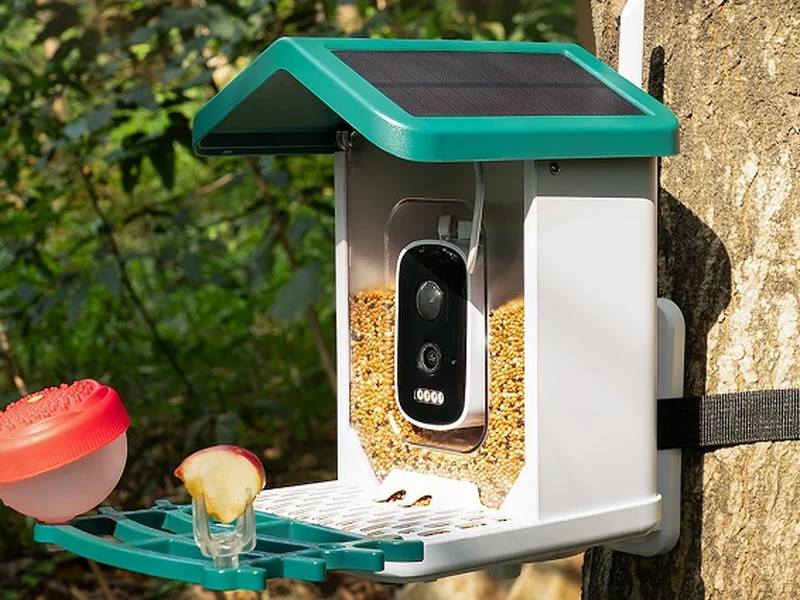
The counter-intuitive spec is a camera running year-round on two small panels — and here the physics genuinely cooperates. The system spends nearly all its life asleep, drawing almost nothing; a visit costs a few seconds of camera time. Daily energy use is tiny, so dual panels trickle-charging a 4000mAh battery can honestly sustain the claimed year-round operation. The one variable the marketing omits: the panels must see real sun. A shaded or north-facing mount shifts the load to the battery, and «set and forget» degrades into «mostly set, occasionally USB». Placement is the spec you control.
What the electronics don't do
The camera doesn't attract birds — the food does. A smart feeder obeys every rule of a dumb one: seed choice, cleanliness, placement and season drive the traffic; the technology just means you finally see it. That reframing is the honest heart of the category — you're not buying more birds, you're buying the sightings you were already missing. The buying rules that follow — camera class, the subscription trap, IP ratings, checkout terms — live in our smart bird feeder buying guide.
Frequently asked questions
How does the AI actually identify a bird species?
The same way face recognition works, pointed at plumage: the AI is trained on millions of labeled bird photos, learning the visual signatures of each species — color patterns, beak shape, size cues, markings. When your feeder photographs a visitor, the model compares the image against its catalog and returns the closest match with a confidence level. Close, well-lit, stationary subjects — exactly what a feeder produces — are the best-case input for this technology.
Why does the AI sometimes get the species wrong?
Because nature is full of lookalikes: house finch vs purple finch, downy vs hairy woodpecker, juveniles that don't yet look like adults, molting birds mid-costume-change. Every brand's model confuses these occasionally — it's a property of the problem, not a defect of one product. Treat IDs as a strong, delightful guess and enjoy being the tiebreaker.
How can a small solar panel power a camera all year?
Because the camera barely runs. The system sleeps at near-zero draw until the motion sensor wakes it for a few seconds of capture; total daily energy is tiny. Dual panels trickle-charging a 4000mAh battery can genuinely cover that budget year-round — provided the panels see real sun. Shade is the variable that breaks the math, not the electronics.
Do AI bird feeders attract more birds?
The camera doesn't — the food does. A smart feeder is still a feeder: seed choice, placement, cleanliness and season drive traffic exactly as they do for a $15 feeder. What the technology changes is that you finally see the traffic you were already getting, which is the entire delight of the category.
Related reading
More explainers →
Smart Bird Feeder vs Trail Camera vs a Plain Feeder: What You're Paying For
Three ways to watch garden birds, at three prices. Which one identifies species, which one survives winter, and which one the birds prefer.
Happy Birdy Review: Does an AI Bird Feeder Actually Know Who's Visiting?
Happy Birdy pairs a solar feeder with a 5MP camera and species-ID AI. What the tech honestly delivers, the claims to calibrate, and the checkout fine print.
Smart Bird Feeder Buying Guide 2026: Cameras, AI and the Specs That Matter
Camera feeders promise a nature channel in your garden. The specs that matter, the subscription trap, solar honesty and the checks before you buy.