Smart Bird Feeder vs Trail Camera vs a Plain Feeder: What You're Paying For
A smart feeder, a trail camera and an ordinary feeder answer the same wish differently. The camera sees more, the smart feeder names what it sees, and the plain feeder feeds more birds for less — and the subscription question decides more than any of them.
Published · Facts checked against the official product page
Key takeaways
- The smart feeder's real feature is not the camera — it is identification. A close-up clip with a species name attached is a different experience from footage you have to look up.
- A trail camera sees far more wildlife because it is not tied to a feeder, and it will show you the fox and the hedgehog a feeder camera never will. It identifies nothing.
- A plain feeder holds more food, costs a fraction, and is what actually determines how many birds visit. The camera does not attract anything.
- The subscription question outweighs the hardware. A free app with local storage is worth more over three years than any discount on the device.
Three ways to spend money on garden birds, and they are not competing for the same job. One feeds, one watches, and one watches and explains.
Round 1: what each one gives you
A plain feeder gives you birds. It holds more food than any camera-equipped model, costs a fraction, and it is the thing that actually determines how many visitors you get. No camera attracts anything.
A trail camera gives you a wider slice of the garden: the fox at 2am, the hedgehog, the cat you suspected. Mount it anywhere, and it sees everything that moves. It tells you nothing about what it saw.
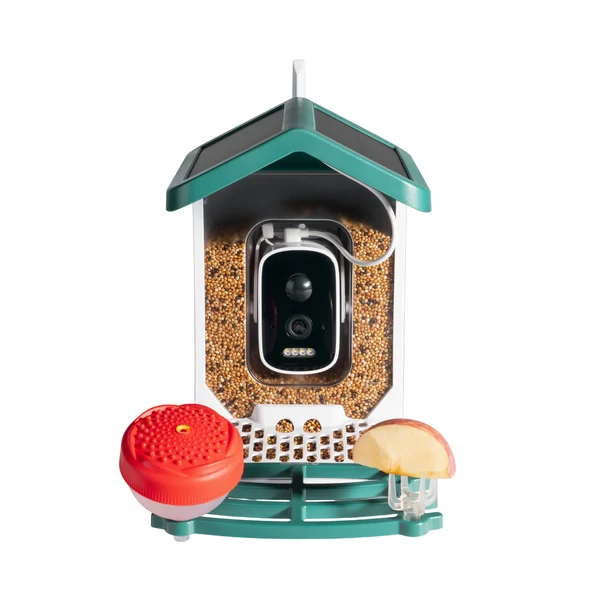
A smart feeder gives you a close-up of the bird with a name attached. That is the actual product — not the camera, the identification. Our Happy Birdy review covers a current example.
Round 2: the identification question
On-board recognition handles common garden species well and gets confused between visually similar ones. No maker publishes an independent accuracy figure, which is the state of the category rather than a fault of any one product.
What it changes is who this is for. If you already know your garden birds, the naming is a novelty. If you don't, it is the difference between watching birds and learning them — and that is a genuinely different experience, particularly with children.
Round 3: the cost that arrives later
This decides more than any hardware specification. Most cameras in the smart-home category eventually ask for a monthly fee — cloud storage, recognition, or both.
A device with a free app and local SD storage is worth more over three years than any discount on the purchase price. It is also the first thing to verify at checkout rather than assume, because it is the claim most likely to change after you have bought the hardware.
Round 4: what actually brings birds
Placement and food, in that order, and neither is electronic. A feeder in open ground with nowhere to retreat gets fewer visitors than one near cover. Fresh seed appropriate to your local species beats generic mix. Clean feeders reduce disease transmission, which matters more than anything in this article.
Buy the camera for your enjoyment. Buy the placement and the seed for the birds.
The answer, by what you want
Smart feeder
- You want to know what is visiting, by name
- Children in the house learning species
- Close-up footage matters more than breadth
- You have verified there is no subscription
Something else
- Want to see all garden wildlife → trail camera, cheaper and broader
- Want more birds, not more footage → plain feeder plus better placement
- Deeply shaded garden → solar models will need manual charging
- Already know your species → the naming is a novelty you'll stop using
The verdict on Happy Birdy
If the pleasure you're buying is knowing what just landed, the smart feeder is the only one of the three that delivers it, and it is worth the premium for that alone — provided you confirm the app is free and there is local storage. If you want to see more of your garden rather than more of one perch, a trail camera costs less and shows you the animals a feeder never will. And if the goal is simply more birds, spend the difference on placement and better seed. The smart feeder buying guide covers solar performance and storage in detail.
Frequently asked questions
Do smart feeders actually identify birds correctly?
For common garden species, generally well. For visually similar ones, expect occasional confusion, and no manufacturer in this category publishes an independent accuracy figure. Treat it as a delightful feature rather than a scientific instrument — and as a genuinely good way to learn what visits your garden.
Is a trail camera better value?
Different value. It costs less than most smart feeders, sees a much wider slice of wildlife, and works anywhere in the garden rather than at one feeding station. What it does not do is tell you what you are looking at, or give you close-up frontal shots — a feeder camera is inches from the bird, which no trail camera position matches.
Will a camera scare the birds?
Briefly, and then not at all. Garden birds habituate to static objects quickly. What matters more is placement and food: a feeder in the open with nowhere to retreat to gets fewer visitors than one near cover, regardless of what electronics are attached to it.
What should I check before buying a smart feeder?
Whether the app is free and whether there is local storage. «Free cloud» is the feature most likely to acquire a fee later, and an SD card slot is cheap insurance against a policy change. Over three years that question is worth more money than the hardware discount that made you click.
Related reading
More comparisons →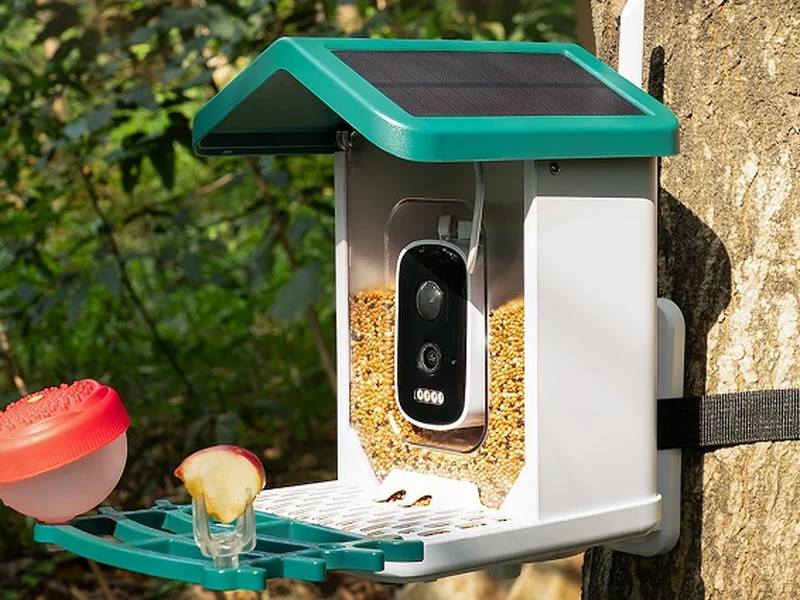
Happy Birdy Review: Does an AI Bird Feeder Actually Know Who's Visiting?
Happy Birdy pairs a solar feeder with a 5MP camera and species-ID AI. What the tech honestly delivers, the claims to calibrate, and the checkout fine print.
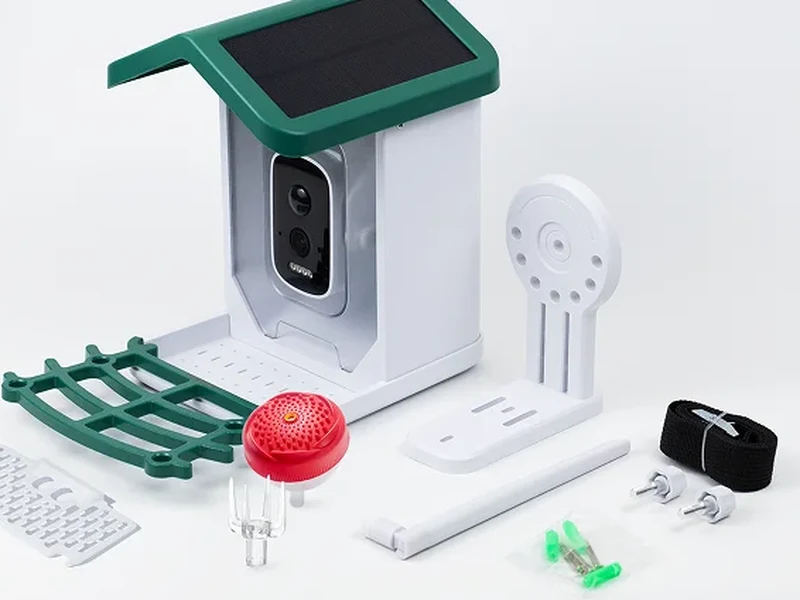
Smart Bird Feeder Buying Guide 2026: Cameras, AI and the Specs That Matter
Camera feeders promise a nature channel in your garden. The specs that matter, the subscription trap, solar honesty and the checks before you buy.
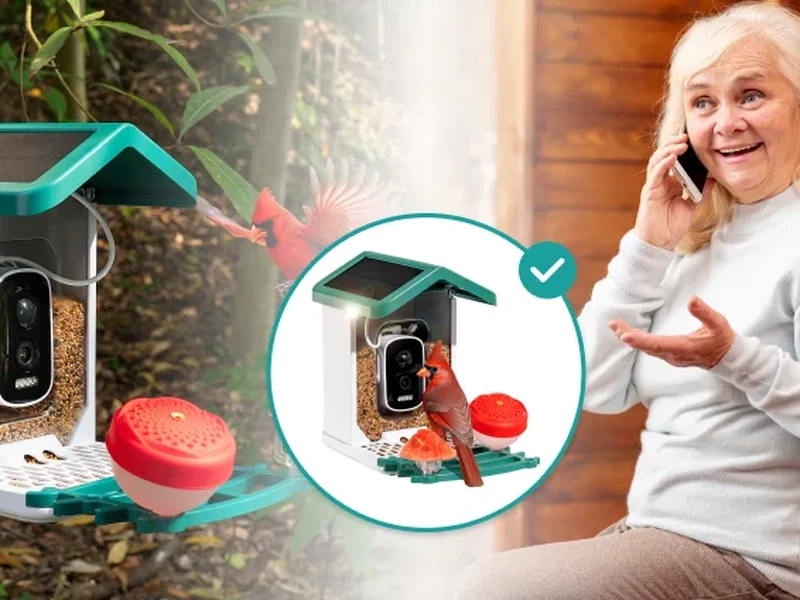
How Do AI Bird Feeders Actually Work? Cameras, Species ID and Solar, Explained
Motion sensors, species-ID AI, solar budgets — the technology inside camera bird feeders, what it genuinely does well, and where its limits honestly sit.