Vital Shoulder Massager Review: Real Comfort, and an Advertorial That Overreaches
The Vital Shoulder Massager combines three things that genuinely make a sore shoulder feel better — warmth, compression and vibration — in a wrap you can wear hands-free. The device is unremarkable in the good sense. The page selling it is the problem: an advertorial written as a personal escape from surgery, with two prices, two ratings and no specifications.
Published · Facts checked against the official product page
Key takeaways
- The three mechanisms are real and well understood. Warmth relaxes tissue and raises local blood flow, compression supports a joint and dampens the sense of instability, and vibration is a recognised way to reduce how much pain the nervous system reports. Combining them in a wearable wrap is sensible engineering, not a breakthrough.
- The trademarked name for that combination is branding, not a distinct technology — the page does not describe anything the three parts don't already do individually.
- The page does not publish a single measurable specification: no temperature range, no compression pressure, no motor spec, no battery capacity, no sessions per charge. For a device whose whole proposition is heat and pressure, that is the gap that matters.
- It contradicts itself twice: the header shows 4.5 stars and the breakdown below shows 4.8, both citing 3,758 reviews; and the advertorial quotes A$69.99 for one unit while the checkout charges A$77.77.
Strap a warm, gently vibrating compression wrap onto a sore shoulder and it will feel better. That is not a claim in dispute, it is most of what a physiotherapist's heat pack and a decent massage do, and the Vital Shoulder Massager puts all three into something you can wear while doing something else.
The device is fine. The page selling it is where this review spends its time.
What the three mechanisms actually do
Heat raises local blood flow and reduces the protective muscle guarding that makes a sore shoulder feel stiffer than it is. Compression gives the joint a sense of support, which measurably changes how stable people report a shoulder feeling. Vibration works on pain signalling — competing input at the spinal level, the same reason rubbing a knock helps. All three are established, all three are modest, and all three are temporary.
The maker groups them under a trademarked name. That name is branding: nothing on the page describes the combination doing anything the three parts do not already do separately. Which is fine — a convenient package of three useful things is a real product. It is just not a new mechanism, and the page implies it is.
The specification is empty
Here is what the official page publishes about a heated, motorised, compressive device worn against skin: nothing measurable. No temperature range in degrees. No compression pressure. No motor specification. No battery capacity. No sessions per charge. No weight, no sizing, no maximum circumference.
Two of those blanks are more than pedantry. Temperature matters because heat therapy has a useful band and a burn risk above it, and anyone with diabetes, neuropathy or reduced sensation needs the number before deciding. Sizing matters because a compression wrap that does not fit provides neither compression nor comfort, and shoulders vary more than the marketing photography suggests.
Where the page loses us
The official page is an advertorial — it says so itself, in a label at the top and a disclaimer at the bottom stating it is not a news article. Between those two admissions sits a first-person story: a shoulder that gave out, a physical therapist's tip, surgery avoided, hands free within 48 hours.
That format is legal and common. What we object to is the specific framing, because it inverts the order of operations for a body part where the order matters. You establish what is wrong, then choose what helps. Persistent shoulder pain is commonly a rotator cuff tear, impingement, adhesive capsulitis or osteoarthritis — conditions with different treatments, different timelines, and in some cases a genuine cost to waiting. A device that makes the shoulder feel better while a tendon tear progresses is not a bargain.
Two smaller things, both on the checkout. The header shows 4.5 stars; the ratings breakdown below it shows 4.8, both citing the same 3,758 reviews. And the advertorial's headline price of A$69.99 is not what a single unit costs — that is the two-pack per-item price. One unit is A$77.77.
Strengths and trade-offs
What works in its favor
- Three mechanisms that genuinely relieve symptoms, in one thing you strap on and forget.
- Hands-free and cordless — the reason a wrap beats a handheld massager for anything longer than a minute.
- Drug-free, which for anyone managing long-term pain alongside medication is a real consideration.
- A stated 30-day window, which is more than enough to know whether it helps you.
Honest limitations
- No published specification of any kind — temperature, pressure, power, battery, sizing.
- The page is an advertorial framed as an alternative to surgery, which is the wrong order for shoulder pain.
- Two ratings and two single-unit prices on the same funnel.
- Relief is temporary by design — nothing here repairs tissue.
The verdict on Vital Shoulder Massager
If you already know what is wrong with your shoulder and you want warmth, compression and vibration in something you can wear while working, this is a reasonable A$77.77 and the thirty days make it testable. If you do not yet know what is wrong, buy the appointment before you buy the wrap — not because the device is bad, but because the page is selling it as a substitute for the one thing it cannot substitute for. Ask the seller for the temperature range and the sizing before ordering, and ignore the countdown.
Frequently asked questions
Does a heat and vibration wrap actually help shoulder pain?
For symptom relief, yes, and the mechanisms are not in dispute. Warmth increases local blood flow and reduces the guarding that makes a sore shoulder feel stiff. Compression gives the joint a sense of support. Vibration competes with pain signalling at the spinal level, which is why rubbing something that hurts helps. What none of the three does is repair tissue. Expect a shoulder that feels better for a while after each session, not a shoulder that is structurally different.
Should I use this instead of seeing a doctor?
No, and this is the part of the official page we would push back on hardest. The advertorial is built around a story of avoiding surgery, and that framing gets the order backwards: you find out what is wrong first, then decide what helps. Persistent shoulder pain is commonly a rotator cuff tear, impingement, frozen shoulder or arthritis — conditions with different treatments and, for some, a real cost to waiting. A device that relieves symptoms can mask a problem while it progresses.
What temperature does it reach?
The page does not say, and we will not estimate. That is a meaningful blank on a heated device worn against skin for twelve minutes at a time — heat therapy has a useful range and an uncomfortable one, and the difference matters to anyone with reduced sensation. Ask the seller for the figure before ordering if that applies to you.
Why do the price and the rating not match?
We noticed both. The advertorial says A$69.99 for a single unit; the checkout charges A$77.77 for one, with A$69.99 being the two-unit per-item price. And the checkout header shows 4.5 stars while the ratings breakdown a few centimetres below shows 4.8, both against the same 3,758 reviews. Neither is fatal on its own; together they tell you how carefully the page was assembled.
What does the guarantee cover?
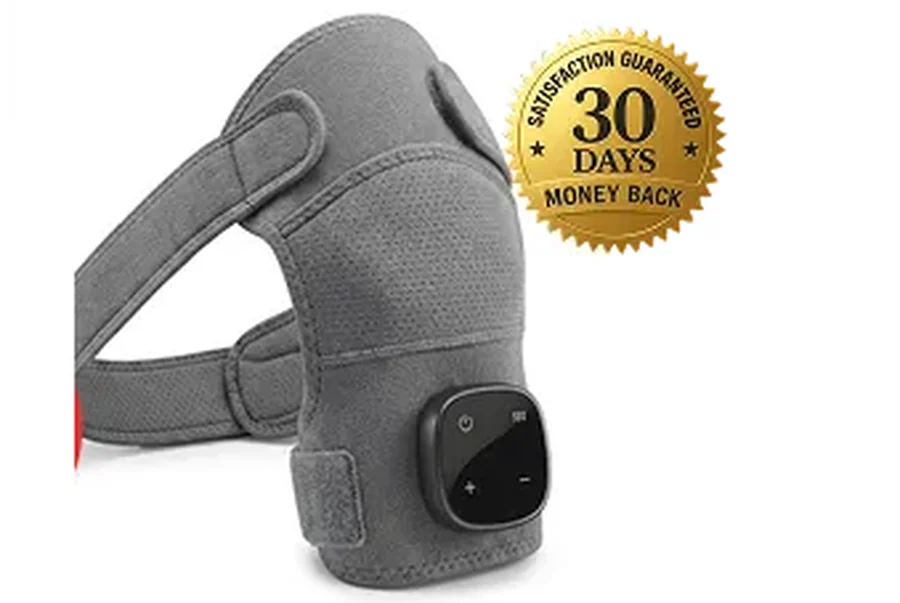
A 30-day money-back guarantee, shown on the checkout badge. Thirty days is a fair window for this kind of product, because if warmth and vibration are going to help your shoulder you will know within two weeks of daily use. Keep the confirmation email.
Related reading
More reviews →
Shoulder Massager Buying Guide 2026: What to Check Before You Strap Anything On
Heat, compression, vibration and percussion do different jobs. How to match the format to your shoulder — and the specs sellers in this category keep quiet.

Why Heat, Compression and Vibration Make a Sore Joint Feel Better
Three mechanisms behind almost every wearable pain device — what each one does in the tissue, why relief is temporary, and where the marketing overreaches.
The Advertorial Is Back, and It's Selling Pain Devices
Long-form advertorials are now the main channel for wearable pain relief. How the format works, and the four checks to run before believing one.