The Advertorial Is Back, and It's Selling Pain Devices
The fastest-growing sales channel for wearable pain devices is not a product page — it's a long-form story about someone who nearly had surgery. The format works because it answers a real question badly served elsewhere. Here's how to read one, and the four checks that separate a decent product from a well-written page.
Published · Facts checked against the official product page
Key takeaways
- Long-form first-person advertorials are now the dominant channel for wearable pain relief, particularly in Australia and the US.
- The format works because it answers a question conventional retail answers badly: what do I do about this, right now, without an appointment I can't get.
- Its structural problem is the same everywhere: the story arc requires a villain, and the villain is usually the medical option the reader has not yet had properly assessed.
- Four checks separate a decent product from a well-written page: does the page publish specifications, does the price match the checkout, does the rating match itself, and does it tell you when to see a doctor.
The fastest-growing sales channel for wearable pain relief in 2026 is not a product page. It's a story: 1,500 words in the first person about a shoulder that gave out, a surgery narrowly avoided, and the device that made the difference. Australia and the US are where the format is thickest, and shoulder, knee and back wraps are what it sells.
Why the format works
Because it answers a question that conventional retail answers badly. Someone with a shoulder that has hurt for three months is not browsing for a device — they are asking what do I do about this, at an hour when nobody is available to ask, with a specialist appointment weeks out.
A first-person account of the same problem meets that person exactly where they are. That is a genuine service, and it is why the format converts where a spec sheet does not.
Where it breaks
The structural problem is the story arc. A personal-escape narrative needs an antagonist, and in this category the antagonist is almost always the medical option the reader has not yet had properly assessed. Injections, physiotherapy and surgery get compressed into a single expensive fate that the device lets you dodge.
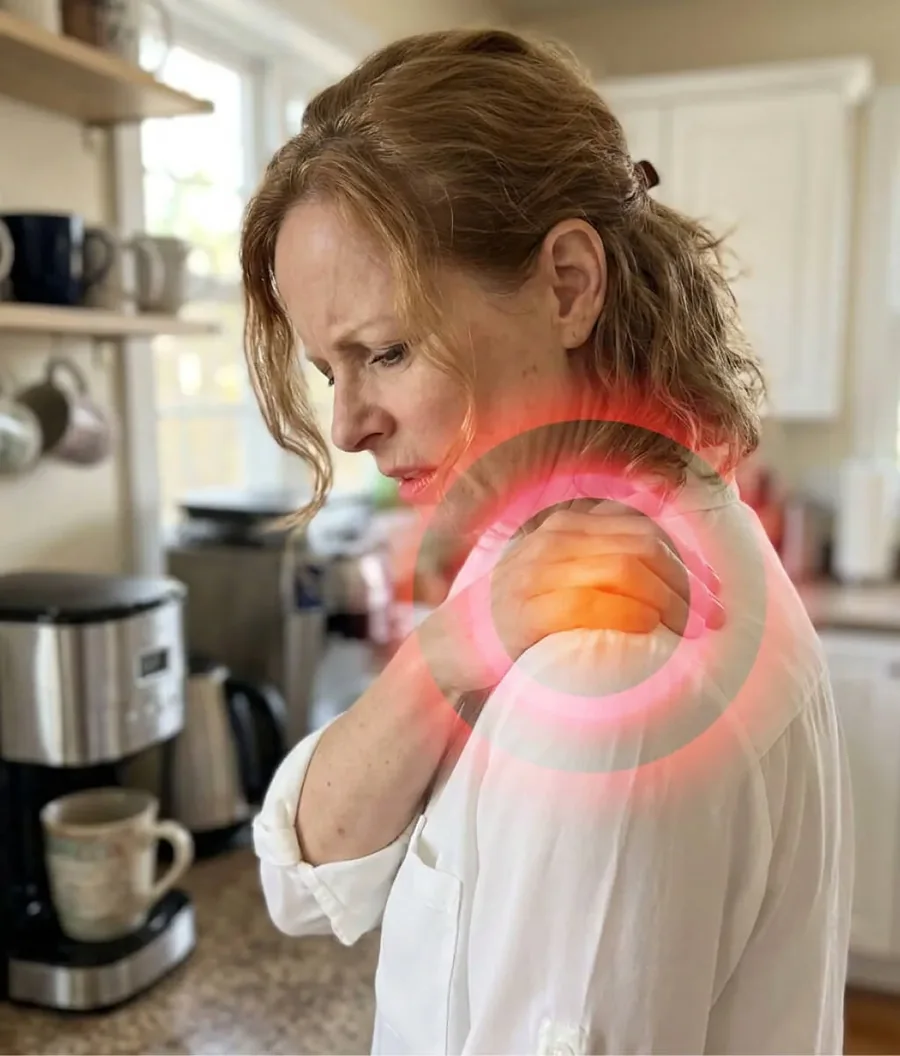
For a shoulder specifically, that inversion has a cost. Persistent shoulder pain is commonly a rotator cuff tear, impingement, adhesive capsulitis or arthritis — conditions with different treatments and, for some, a real penalty for waiting. Relief that arrives before a diagnosis can quietly buy time the shoulder doesn't have.
The four checks
Does the page publish a specification? Any measurable number — temperature, pressure, power, runtime. The current example on our board publishes none.
Does the headline price match the checkout? On the page we examined, the advertorial's A$69.99 turned out to be the two-unit per-item price; one unit is A$77.77.
Does the rating match itself? The same checkout showed 4.5 stars in the header and 4.8 in the breakdown below, both citing 3,758 reviews.
Does it tell you when to see a clinician? This is the one that separates a seller who expects repeat customers from one who doesn't.
How we're covering it
Not by dismissing the products. Heat, compression and vibration relieve symptoms and the devices that deliver them are often perfectly reasonable purchases — our review of the Vital Shoulder Massager says exactly that about the hardware while taking apart the page that sells it.
The mechanisms are unpacked in why heat, compression and vibration work, and the format-by-symptom decision is in the shoulder massager buying guide. The device and the page it arrives on are two separate purchases, and only one of them has a return window.
Frequently asked questions
What is an advertorial, legally?
An advertisement written in the style of editorial content. It's legal in most markets provided it's labelled, and the better ones label clearly — the page we looked at carries both a header label and a footer disclaimer stating it is not a news article. The labelling is what makes it legitimate; the framing inside is what deserves reading carefully.
Why does the format sell so well?
Because it answers a question conventional retail doesn't. Someone with a sore shoulder at 11pm isn't shopping for a device — they're asking what to do. A first-person story about the same problem meets them where they are, which is a real service, right up to the point where the story's arc requires the medical option to be the antagonist.
How do I check one quickly?
Four things. Does the page publish any measurable specification? Does the headline price match what the checkout charges? Does the rating in the header match the rating in the breakdown? And does it tell you when to see a clinician instead? A page that fails all four isn't necessarily selling a bad product, but it is telling you how much care went into the claims.
Related reading
More news & trends →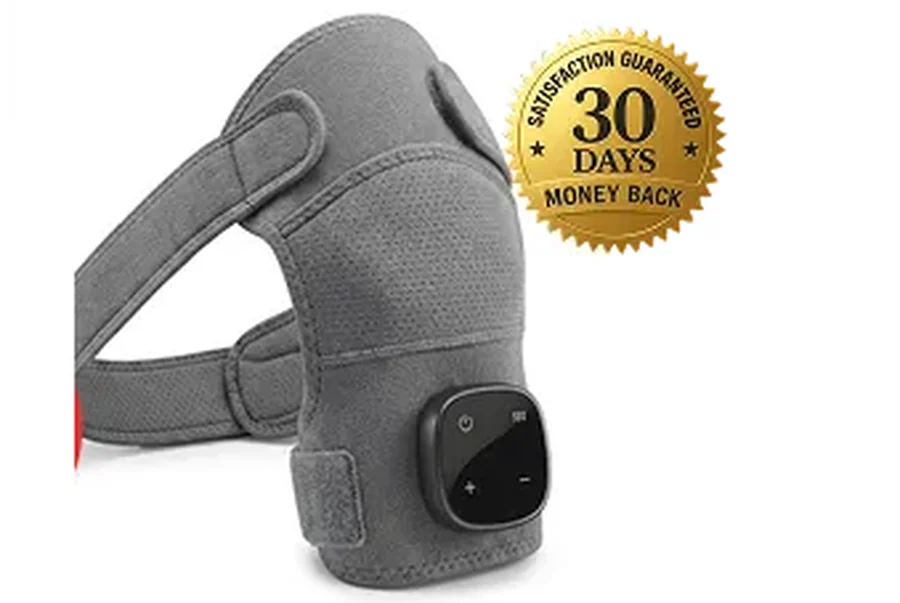
Vital Shoulder Massager Review: Real Comfort, and an Advertorial That Overreaches
Heat, compression and vibration in a strap-on wrap, from A$54.44. The mechanisms are real; the page that sells them is not a news article. What to check first.

Shoulder Massager Buying Guide 2026: What to Check Before You Strap Anything On
Heat, compression, vibration and percussion do different jobs. How to match the format to your shoulder — and the specs sellers in this category keep quiet.
Why Heat, Compression and Vibration Make a Sore Joint Feel Better
Three mechanisms behind almost every wearable pain device — what each one does in the tissue, why relief is temporary, and where the marketing overreaches.