Why Heat, Compression and Vibration Make a Sore Joint Feel Better
Almost every wearable pain-relief device sold today is some combination of warmth, pressure and vibration. Each has a real, understood effect, and none of them repairs anything. Understanding what each does explains both why these devices feel good and why the claims built on top of them tend to outrun the evidence.
Published · Facts checked against the official product page
Key takeaways
- Heat widens local blood vessels and reduces protective muscle guarding. That is why a warm shoulder moves more easily — not because anything healed, but because the muscle stopped bracing.
- Compression changes proprioception: the joint reports more position information, which the brain reads as stability. The effect is real and largely perceptual.
- Vibration works through gate control — competing sensory input reduces how much pain the spinal cord passes upward. It is the same reason rubbing a knock helps.
- All three are symptomatic and temporary by design. A device that makes tissue feel better is not evidence that the tissue changed, which is the exact gap most marketing in this category papers over.
Take apart almost any wearable pain device sold in 2026 and you find the same three ingredients: something that warms, something that squeezes, something that buzzes. The branding differs. The mechanisms do not.
Each of the three has a genuine, understood effect. None of them repairs anything. That combination — real but modest, and temporary — is what makes this category both worth buying and easy to oversell.
Heat: fewer brakes, not more repair
Applied warmth dilates the small vessels in the area, so more blood reaches the tissue. It also reduces muscle guarding — the involuntary bracing that accompanies pain and makes a sore joint feel stiffer than the joint itself is.
That second effect is doing most of the work people attribute to the first. A warm shoulder moves more easily largely because the muscles around it stopped protecting it, not because anything in the joint changed in twelve minutes. The improvement is real, and it is a release of brakes rather than a repair.
Compression: your shoulder reporting in more detail
Compression's main effect is not mechanical. It is proprioceptive — pressure on the skin increases the sensory information the joint sends about its own position, and the nervous system reads richer position data as greater stability.
This is why a compression sleeve can make a shoulder feel substantially more secure while changing nothing structural. It is also why the effect appears immediately, which no genuinely mechanical support would do.
Vibration: interference, not distraction
The relevant idea is gate control: pain signals travel on relatively slow fibres, and non-painful sensation travels on faster ones. When both arrive, the spinal cord passes less of the pain signalling upward. Vibration is an efficient way to flood the fast channel.
So the relief is not psychological distraction. It is interference below the level of conscious attention — the same reason you rub a knocked elbow without deciding to.
Why the three get sold together
Because they stack conveniently, not because they multiply. Warmth releases guarding, compression adds a sense of stability, vibration dampens the signal. A wearable that does all three saves you from owning and holding three things, which for a shoulder — a joint you cannot easily reach with your own hand — is a genuine practical win.
What none of them does is change tissue. This matters because the marketing in the category routinely slides from «feels better» to «is healing», and those are different claims with different evidence behind them. The current example on our board is the Vital Shoulder Massager, sold through an advertorial that presents the combination as an alternative to surgery. The mechanisms are sound; the leap is not.
The honest way to use any of them
Treat relief as relief. If warmth and vibration let you sleep, work or move more, that is worth the money on its own terms, and easier movement genuinely helps recovery over time. What the relief does not tell you is what is causing the pain — and a device that makes a torn tendon comfortable is not a device that fixed it. That is the whole reason the buying guide starts with symptoms rather than products.
Frequently asked questions
Does heat actually heal anything?
It changes conditions rather than structure. Warmth dilates local vessels, so more blood reaches the area, and it reduces the reflexive muscle guarding that accompanies pain. Both make movement easier and more comfortable, and easier movement genuinely helps recovery over time. But the heat itself is not repairing a tendon or resolving inflammation in the way the word «healing» implies.
Why does compression feel so good on a sore joint?
Largely because of proprioception — your sense of where your body is. A compressive sleeve increases the sensory information coming from the joint, and the nervous system interprets richer position data as greater stability. That is why a compression sleeve can make a shoulder feel dramatically more secure without changing anything mechanical about it.
Is vibration just a distraction?
It's more specific than that. Gate control theory describes how non-painful input travelling on fast fibres reduces how much pain signalling the spinal cord passes on. Vibration is a very efficient way to generate that competing input. So it is not distraction in the psychological sense — it's interference at the level of the spinal cord.
If the relief is temporary, is it worthless?
No — temporary relief that lets you move, sleep or work is worth having, and easier movement often does help recovery indirectly. The problem is only when temporary relief is sold as repair, because then it becomes a reason to postpone finding out what is actually wrong.
Related reading
More explainers →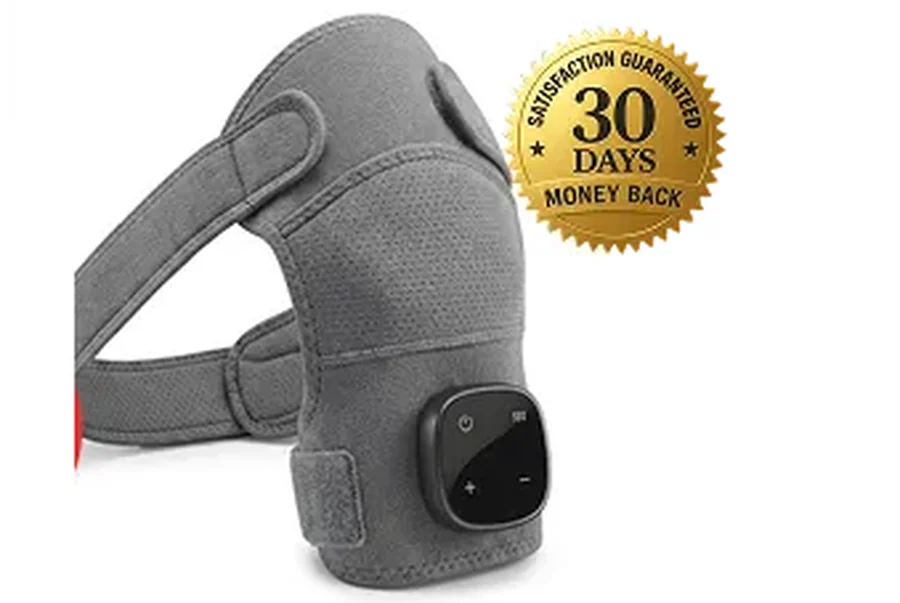
Vital Shoulder Massager Review: Real Comfort, and an Advertorial That Overreaches
Heat, compression and vibration in a strap-on wrap, from A$54.44. The mechanisms are real; the page that sells them is not a news article. What to check first.

Shoulder Massager Buying Guide 2026: What to Check Before You Strap Anything On
Heat, compression, vibration and percussion do different jobs. How to match the format to your shoulder — and the specs sellers in this category keep quiet.
The Advertorial Is Back, and It's Selling Pain Devices
Long-form advertorials are now the main channel for wearable pain relief. How the format works, and the four checks to run before believing one.