What Actually Causes a Bunion — and Why the Bump Isn't the Problem
A bunion looks like something growing on the side of the foot. It is actually the first metatarsal drifting outward while the big toe angles in — a skeletal change with a strong hereditary component. Understanding that explains both why the condition progresses and why the devices sold to reverse it can only do part of the job.
Published · Facts checked against the official product page
Key takeaways
- A bunion is not a growth. It is the head of the first metatarsal becoming prominent as that bone drifts outward and the big toe angles inward — a change in bone position, not an addition of tissue.
- Foot shape is substantially hereditary. Footwear influences progression and symptoms; it is not the sole cause, and people who have never worn narrow shoes still get bunions.
- It progresses because the deformity is self-reinforcing: as the angle increases, the tendons that cross the joint start pulling the toe further off line rather than holding it straight.
- That self-reinforcement is why external support relieves symptoms but rarely reverses the angle in adults — the pull continues every time you walk, and a night splint isn't there for it.
The word «bunion» suggests something added to a foot. It isn't. It's the visible edge of a joint that has moved, and once you see it that way the entire category of products sold around it makes more sense — including their limits.
What the bump actually is
Your big toe meets the foot at the first metatarsophalangeal joint. In hallux valgus, the first metatarsal drifts outward, away from the other toes, while the big toe angles inward, toward them. The joint between them ends up pointing sideways, and its head becomes prominent under the skin.
That prominence is the bump. It is bone, in a position it did not start in. Nothing has grown; something has moved.
Why it happens
Foot structure is substantially hereditary — the shape of the joint surfaces and the flexibility of the forefoot are largely inherited, which is why bunions run in families and why they appear in people who have never worn a narrow shoe.
Footwear is real but secondary. A narrow toe box pushes the big toe inward for every hour it's worn, which accelerates a tendency that was already there and makes an existing bunion hurt more. That makes shoes the most useful lever you control, without making them the cause.
The part that explains everything else
Bunions progress because the deformity becomes self-reinforcing. The long tendons that run to the big toe cross the joint. While the toe is straight, they pull along its axis and hold it in line. Once the angle passes a point, those tendons no longer run straight over the joint — they cut across it, like a bowstring across a bent bow.
From then on, every step that flexes the toe pulls it further off line rather than holding it straight. The deformity generates its own deforming force, and that force is present with every stride.
What this means for splints and spacers
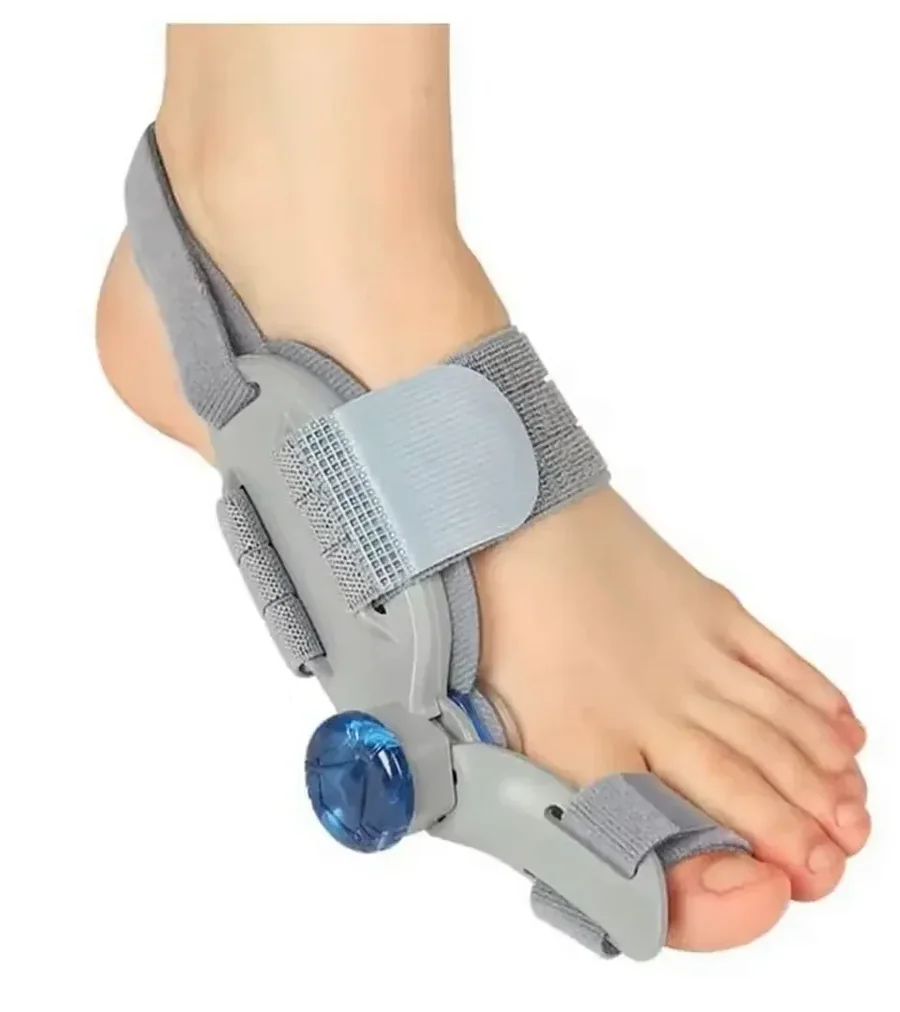
It explains the honest ceiling on the whole category. A night splint applies gentle corrective pressure for eight hours while you are still. The bowstring pull applies for every one of the thousands of steps you take while you are not. External support relieves pressure and reduces irritation, and both are genuinely worth having — but it is working against a force that outlasts it.
That is why podiatric and orthopaedic guidance describes conservative treatment as symptom management, and why claims of realignment «in one week» sit so far outside the mechanics. The Hallux Bunion Corrector review works through a current example, and the buying guide sorts the formats by what each is actually for.
What genuinely helps
A wide toe box, because it removes force for every standing hour rather than adding it for eight lying-down ones. Padding or a spacer where the rubbing happens. Splinting at night if it helps you sleep. And an assessment — a weight-bearing X-ray shows the angles that determine what is actually available to you, which is information no product page contains.
Frequently asked questions
Did narrow shoes cause my bunion?
They probably contributed to how fast it progressed and how much it hurts, but foot shape is substantially inherited, and bunions occur in populations that have never worn constricting footwear. The useful framing is that shoes are the variable you control — not that they are the sole cause and therefore your fault.
Why does it keep getting worse?
Because the deformity changes the mechanics that hold the joint together. Once the big toe angles far enough inward, the long tendons crossing the joint no longer run in a straight line over it — they cut the corner, and every step pulls the toe further off line. The condition supplies its own driving force.
Can exercises fix it?
They can improve strength and comfort, and they're worth doing. They do not restore the bone angle in an adult, for the same reason a splint doesn't: the structural change is already there and the deforming force is present every step.
What decides whether I need surgery?
Pain and function, not appearance — and that judgement needs imaging and an examination. A weight-bearing X-ray shows the angles that determine which procedures apply. That's the assessment worth having before spending money on devices, not after.
Related reading
More explainers →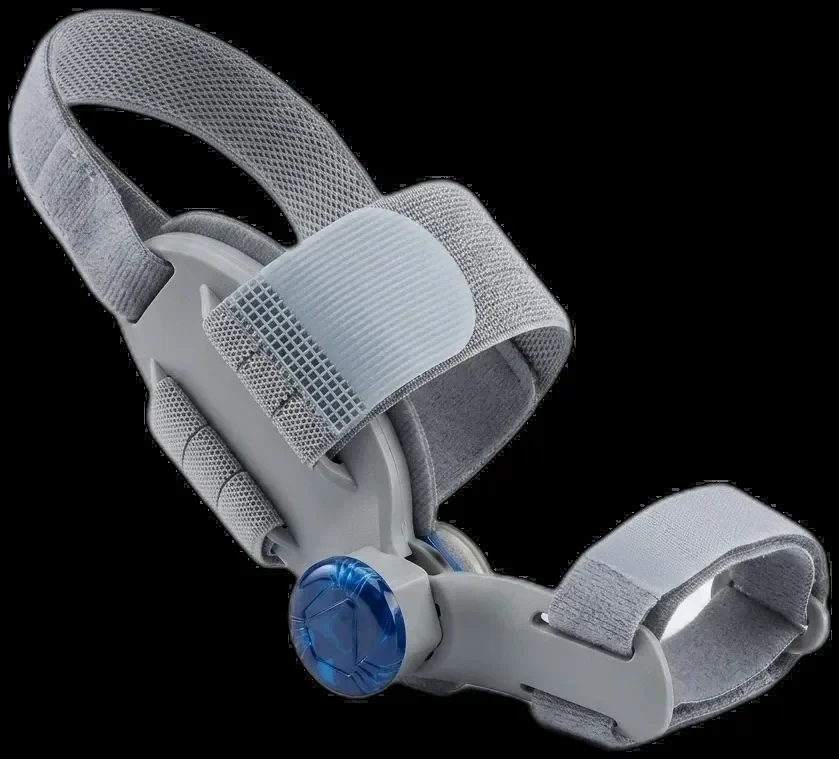
Hallux Bunion Corrector Review: What a Night Splint Can and Cannot Do
A hinged bunion splint with a tension dial, sold as at-home realignment. What the evidence supports, and what «one week» cannot mean.
Bunion Corrector Buying Guide 2026: Relief Is Real, Correction Is Marketing
Splints, spacers, sleeves and pads do different jobs. How to pick by symptom, what the evidence supports, and the claims that should make you close the tab.
Foot-Care Advertorials Have Found a New Target: Your Bunion
Non-surgical bunion devices are the fastest-growing foot-care category in US e-commerce, sold almost entirely through advertorials. How to read one.