Fabric Shaver vs Comb vs Stone: Which One Your Jumper Actually Wants
Three tools remove pills, and they fail in completely different ways. An electric shaver is fast and can damage a fine knit; a comb is slow and effectively cannot; a stone sits in between and is unpredictable on synthetics. This comparison decides between them by garment rather than by score.
Published · Facts checked against the official product page
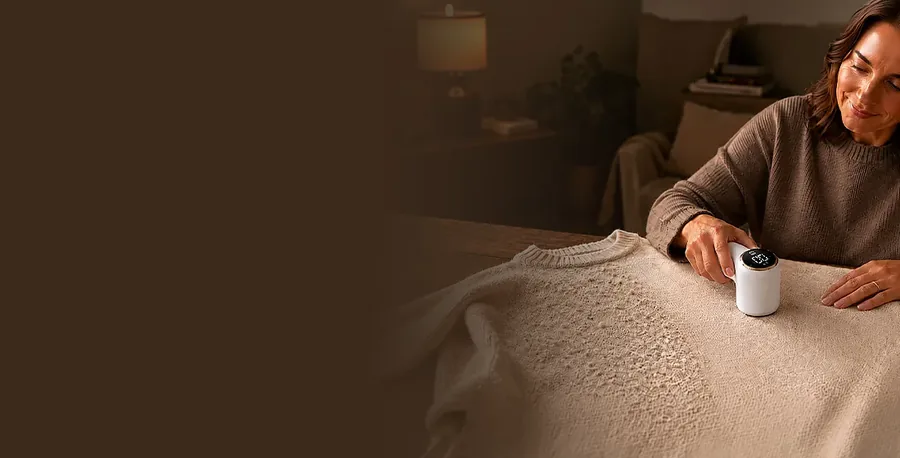
Key takeaways
- Electric shaver: fastest by a wide margin, the only realistic option for upholstery, and the only one of the three that can damage a garment in a second of inattention.
- Sweater comb: slow, cheap, and effectively incapable of causing harm — the correct tool for hand-knits and anything irreplaceable.
- Pumice or fabric stone: quick on chunky knits and sofa arms, unpredictable on smooth synthetics where it can catch rather than abrade.
- Most households want a shaver for volume and a comb for the two or three garments they would not risk. That pairing costs less than a second shaver.
Three tools do the same job and fail in three different ways. Choosing between them is not about which is best — it is about which failure you can afford on a given garment.
Round 1: speed
The electric shaver wins this and it is not close. A pilled jumper takes a few minutes; a two-seater sofa is an afternoon. A comb takes that same jumper through most of an evening. A stone sits in between on chunky knits and closer to the shaver on upholstery.
If the job is volume — a whole wardrobe, or furniture — the other two are not really contenders. That is the honest case for the powered tool and it is a strong one.
Round 2: risk to the fabric
The order reverses completely. A comb is a row of fine teeth dragged by hand; the worst it can do is not remove a pill. A stone abrades, which is fine on a dense chunky knit and unpredictable on a smooth synthetic where it can catch a loop instead of wearing down a ball. A shaver is a spinning blade, and a spinning blade behind a coarse guard, on a hanging garment, at upholstery speed, will thin a fine knit in seconds.
Note that every part of the shaver's risk is user-controllable: guard quality is a purchase decision, speed is a setting, and laying the garment flat is a habit. But the risk exists, and on a hand-knitted jumper from someone who is no longer around, "controllable" is not the same as "acceptable".
Round 3: running cost
The comb wins outright — it has no consumable and no failure mode, and it will outlive you. A stone wears down and is replaced for very little. The shaver's blade dulls, and this is the one running cost in the group that is both real and almost never published: pages ship a spare blade, which confirms blades wear out, and then say nothing about buying more.
Over one wardrobe refresh, none of this matters. Over five years, it is the difference between the three.
Round 4: what it can reach
Upholstery is the shaver's territory and effectively no one else's — the area is too large for a comb and the surface usually too dense for a stone to clear efficiently. Conversely, ribbing, cuffs, cable knits and anything with texture favour the comb, which follows the surface instead of skating across the high points the way a flat spinning head does.
The answer, by garment
Reach for the shaver
- Machine-made jumpers, cardigans and jersey in lambswool, cotton or blends
- Sofa arms, seat cushions and any large upholstered area
- Coats, scarves and blankets where the surface is flat and dense
- Any job where the volume makes hand tools unrealistic
Reach for the comb
- Hand-knits and anything irreplaceable
- Mohair, angora and other long-fibre yarns
- Loose or open weaves where a guard can admit the fabric itself
- Cables, ribbing and heavy texture the shaver head skates over
The verdict on NoFuzz
Buy a shaver for the wardrobe and the furniture, and keep a comb in the drawer for the handful of garments where no amount of speed is worth a bad outcome. That pairing costs less than the second unit in most bundle ladders and covers every case properly. If you are choosing a powered one, the guard and the speed range are what to judge it on — our fabric shaver buying guide sets out why, and the NoFuzz review works through a current example, including the specs its page leaves out.
Frequently asked questions
Can I use a shaver on everything?
On most machine-made knits and upholstery, yes, at a speed matched to the fabric. The exceptions are worth respecting: loose hand-knits, very long-fibre yarns like mohair and angora, anything with a raised or brushed surface, and any garment you would genuinely mourn. Those want a comb, where the worst possible outcome is that nothing happens.
Is a stone better than a comb?
Faster, and rougher. A stone abrades the surface, which clears a chunky knit or a sofa arm quickly. On smooth synthetics it can catch a loop instead of abrading a pill, and it sheds grit that you then have to deal with. A comb is slower and has no bad mode.
Do I need more than one tool?
Most people are best served by two: a shaver for the wardrobe and the sofa, and a comb for the small number of garments where speed is not worth any risk at all. That combination costs less than the second unit in most bundle offers.
Related reading
More comparisons →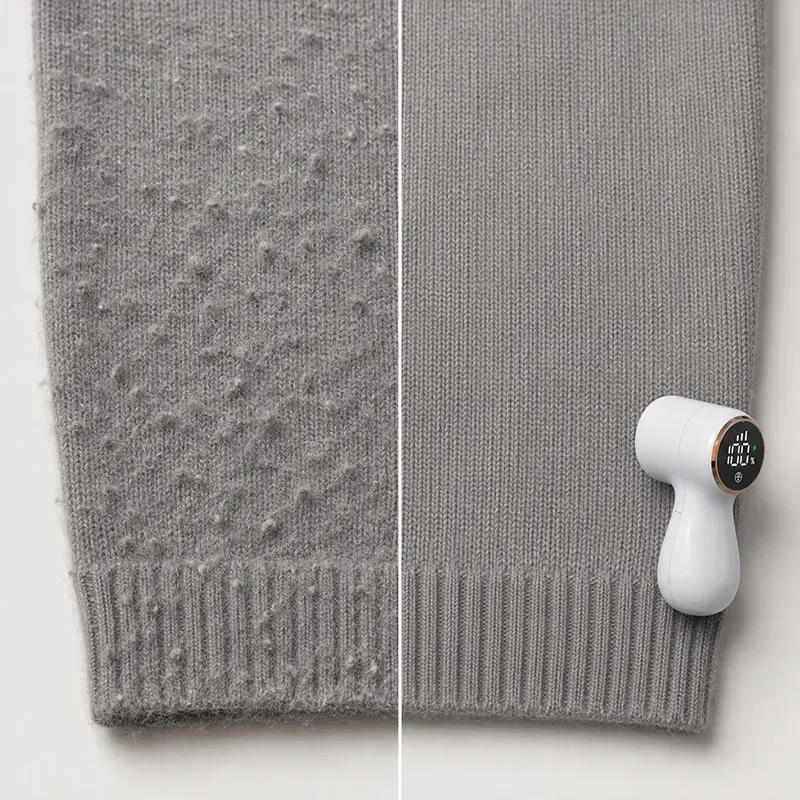
NoFuzz Review: the Fabric Shaver That Buys Your Knitwear Another Winter
NoFuzz is a rechargeable fabric shaver with three speeds and an LCD, at $49.95. The mechanism is real — here's what the page never publishes about it.
Fabric Shaver Buying Guide 2026: How to Revive Knitwear Without Wrecking It
How to choose a fabric shaver: blade guards, speed control, blade replacement and the specs that decide whether a jumper survives. The category, explained.
Why Clothes Pill — and Why Shaving Them Actually Works
Pilling is broken fibre that has tangled on the surface. Here's why some fabrics pill and others don't, and why cutting the pills off is the right fix.