Contoured vs Wedge vs Cervical: Which Anti-Snore Pillow Shape Fits You
The pillows marketed at snoring come in three distinct shapes, and they do not do the same job — which is why buying the wrong one feels like the whole category is a scam. This comparison breaks down contoured, wedge and cervical designs by mechanism, ideal sleeper, honest limitation and price band, then places Melara Max in that field so you can judge whether its shape matches your problem.
Published · Facts checked against the official product page

Key takeaways
- The three shapes attack different mechanisms. Contoured pillows encourage side-sleeping, wedges elevate the whole upper body, and cervical rolls target neck support. If snoring is the goal, the shape has to match why you snore.
- Contoured is the sensible first try for positional snorers — loud on the back, quiet on the side. It is also the most comfortable of the three for ordinary nightly sleeping, which matters because a pillow you abandon helps nobody.
- A wedge is the better tool when congestion or acid reflux drives the snoring, because elevating the torso works on drainage and reflux rather than on tongue position. It is also the hardest of the three to get used to.
- None of the three treats sleep apnea. If breathing stops, gasping wakes you, or daytime sleepiness is heavy, the comparison that matters is not between pillow shapes — it is between doing nothing and booking a sleep study.
People who conclude the anti-snoring pillow category is a scam have usually bought the wrong shape. The three designs on the market target genuinely different mechanisms, and a wedge bought by someone who needed a contour will fail for reasons that have nothing to do with the product's quality. Here is how they actually differ.
The three shapes, side by side
| Contoured (butterfly) | Wedge | Cervical roll | |
|---|---|---|---|
| What it does | Centre channel plus raised edges make side-sleeping comfortable and stable | Elevates head, neck and torso on an incline | Firm roll supports the neck's natural curve |
| Mechanism for snoring | Keeps tongue and palate from falling backward by keeping you off your back | Gravity assists drainage and keeps reflux down | Indirect — better neck posture, no direct airway effect |
| Best for | Positional snorers; side sleepers; neck ache from a flat pillow | Snoring tied to congestion or acid reflux | Neck pain first, snoring second |
| Honest limit | Does nothing for nasal or anatomical causes | Hard to adapt to; side sleepers slide down it | Barely a snoring intervention at all |
| Typical price | $40–$90 | $40–$120 | $30–$70 |
How to pick between them
One diagnostic question does most of the work: does your snoring change when you roll onto your side? If it goes quiet, the snoring is largely positional and a contoured pillow is the right first try. It is also the most comfortable of the three for ordinary nightly sleeping, which matters more than people expect — the pillow you stop using helps nobody.
If side-sleeping changes little but you are stuffy at night or deal with reflux, a wedge targets your mechanism better. Elevation improves nasal drainage and keeps stomach acid where it belongs, and both feed snoring. Be realistic about the adjustment: sleeping on an incline is genuinely strange for a week or two, and side sleepers tend to slide.
If your headline problem is waking with a stiff neck and snoring is secondary, a cervical pillow addresses the thing you actually have. Do not buy it expecting a snoring result. Our explainer on snoring anatomy covers why these mechanisms diverge.
Where Melara Max lands
Melara Max is squarely a contoured pillow: butterfly profile, centre channel, side arm cut-outs, memory foam, 62 cm long by 36.5 cm wide. That makes it a positional-snoring and side-sleeper proposition — not an elevation solution and not a dedicated cervical one. At $69.95 plus $14.95 shipping, it sits in the upper-middle of the contoured band, with steep bundle pricing if a partner needs one too.
Two caveats carry over from our review. The marketing promises to end snoring at the root, which overstates what any contoured pillow does — position is one contributing factor, not the root. And the page advertises a risk-free trial without stating a day window in the material we reviewed, so confirm the return terms before ordering. In a category that needs one to two weeks of adaptation, that window is the spec that protects you. The buying guide covers loft, the spec that decides fit.
The short version
Test yourself first: if rolling onto your side quiets the snoring, buy contoured. If congestion or reflux drives it, buy a wedge and give it two weeks. If neck pain leads and snoring follows, buy cervical and treat any snoring change as a bonus. And if breathing stops, gasping wakes you, or you are exhausted all day, skip the comparison entirely — that is a sleep study, not a pillow purchase.
Frequently asked questions
Which anti-snore pillow shape is best?
The one that matches your mechanism. If you snore loudly on your back and go quiet on your side, the snoring is positional and a contoured pillow is the sensible first try. If congestion or acid reflux drives it, a wedge that elevates your whole upper body does more, because it works on drainage and reflux rather than tongue position. If you also wake with neck pain, a cervical pillow addresses that directly. There is no best shape in the abstract, only a best match.
Is a wedge pillow better than a contoured one for snoring?
For some causes, yes. A wedge raises your entire head, neck and torso, which helps when snoring is tied to nasal congestion or reflux — elevation improves drainage and keeps stomach acid down, and both can aggravate snoring. The cost is comfort: sleeping on an incline takes real adjustment, side sleepers often slide down it, and partners rarely both want one. A contoured pillow is easier to live with, which is why it is the more common starting point.
Where does Melara Max fit among these?
It is a contoured pillow, in the mainstream of that category: butterfly profile with a centre channel and side arm cut-outs, memory foam, 62 cm long by 36.5 cm wide. That places it as a positional-snoring and side-sleeper option rather than an elevation or dedicated cervical solution. Listed at 69.95 dollars plus 14.95 shipping, it sits in the upper-middle of the contoured band. Our full assessment, including the claim we would ignore, is in the Melara Max review.
Related reading
More comparisons →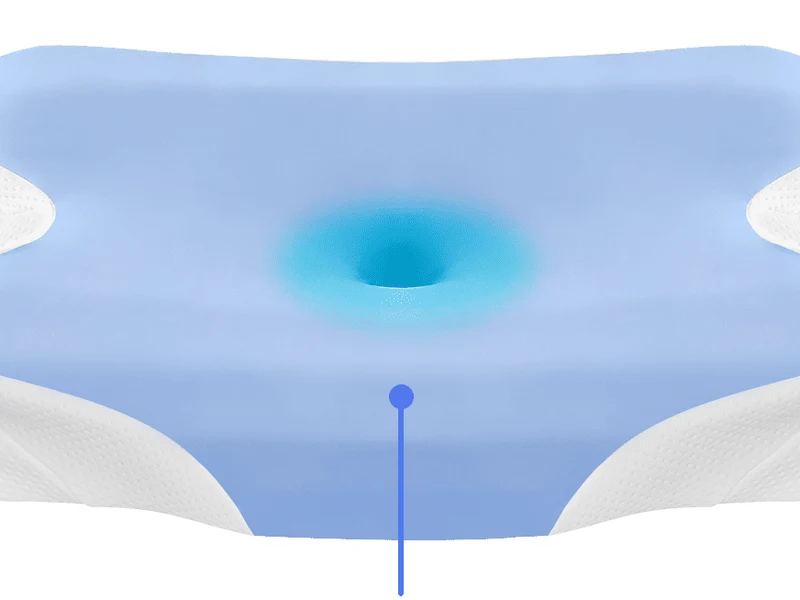
Melara Max Review: Can a Pillow Actually Stop Snoring?
Melara Max promises to end snoring through posture. What a contoured pillow can realistically do, the sleep-apnea signs it can't fix, and the price facts.

Anti-Snoring Pillow Buying Guide 2026: What Works, What's Marketing, When to See a Doctor
Which anti-snoring pillow features have real reasoning behind them, which claims are red flags, and the sleep-apnea signs that mean skip the pillow entirely.
Do Anti-Snoring Pillows Work? The Airway Science, Explained
Why snoring happens, how head position changes the airway, what a contoured pillow can genuinely alter, and the hard line between snoring and sleep apnea.