Sleep Patch Buying Guide 2026: What Actually Matters (and What's Marketing)
Sleep patches went from curiosity to a shelf category of their own in 2026 — and like every young category, it mixes one genuine benefit with plenty of decoration. This guide sorts the shelf: the four decisions that matter, the label red flags, and the honest expectation for the format.
Published · Facts checked against the official product page
Key takeaways
- The first buying decision isn't the brand — it's the category: melatonin or melatonin-free. If morning grogginess or vivid dreams sound familiar, or you'd rather not wear a hormone nightly, shop melatonin-free.
- Read the ingredient list like a label, not a promise: fully named ingredients (magnesium glycinate, L-theanine, valerian, chamomile) are a quality signal; a "proprietary sleep complex" with no individual amounts named is a signal to walk away.
- You buy the patch format for adherence and all-night delivery — not because transdermal is "stronger". Per-ingredient skin absorption is an open research question no manufacturer cleanly quantifies.
- Two checks before any purchase: interactions (valerian and ashwagandha belong in a pharmacist conversation if you take medication) and the real per-night price across bundle sizes — not the sticker price.
Sleep patches went from curiosity to a shelf category of their own in 2026 — and like every young category, it mixes one genuine benefit with plenty of decoration. This guide sorts the shelf: the four decisions that matter, the red flags on the label, and the honest expectation to bring to the format.
Decision 1: melatonin or melatonin-free
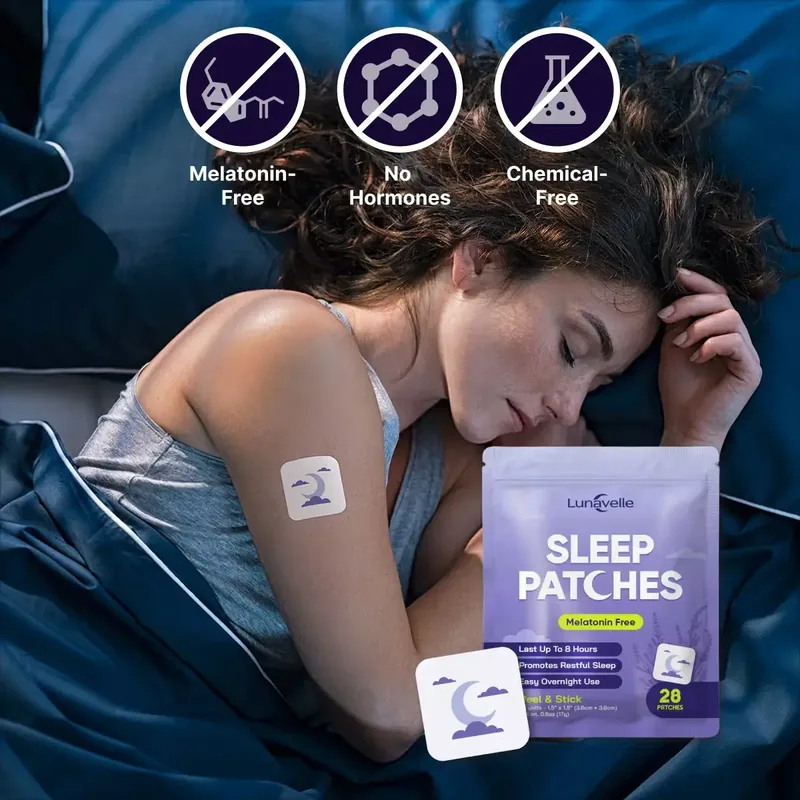
This is the fork where the category splits. Melatonin patches deliver the sleep hormone itself — familiar and widespread, but carrying the two complaints that triggered this entire counter-movement: next-morning grogginess and unusually intense dreams. Melatonin-free patches work the relaxation pathway instead, with calming botanicals and minerals. They're the right pick if melatonin treats you poorly, if you'd rather not dose a hormone nightly, or if your sleep problem reads more like "mind won't switch off" than "body clock is shifted". The current trend leader of that school is Lunavelle — eleven botanicals, zero melatonin, shipping to the US, Canada and now Germany.
Decision 2: read the label like a skeptic
Good formulas name every ingredient: magnesium glycinate (the sleep aisle's well-absorbed magnesium form), L-theanine (calm alertness, from tea), valerian and hops (the classic European pairing), chamomile, passionflower, lavender — plus, depending on the formula, GABA, ashwagandha, tart cherry or jujube. Evidence strength varies by ingredient, but all of them carry genuine tradition or research.
The red flags: a "proprietary sleep complex" with nothing named individually (you're asked to buy what you can't inspect), medical claims ("treats insomnia" — a supplement may not say that), and pages that argue with manufactured urgency instead of ingredients. Our desk's rule of thumb: the more a product page talks about mechanism and the less about miracles, the more it deserves your money.
Decision 3: why a patch at all?
Honest answer: not because transdermal is magic. Skin absorption is proven for some molecules and merely assumed for others — and hardly any manufacturer publishes clean numbers. You buy the patch for two other things. First, adherence: an under-ten-second bedtime ritual survives real life, where pills get forgotten and powders taste like punishment. Second, all-night delivery instead of a single digestive pulse — the format's argument for staying asleep, not just falling asleep. Add zero sugar (the gummy aisle's quiet problem) and trivial dose control: patch off, dose over.
Decision 4: safety and the real price
Two checks before checkout. Interactions: valerian and ashwagandha are the two names to clear with a pharmacist or doctor first if you take medication, are pregnant or manage a condition — that applies brand-independently across the category. Per-night price: divide the pack price by the nights it covers and compare bundle sizes; like filter cartridges, this category lives on repetition. Check the official page's bundle pricing and treat promotional prices as a snapshot.
The honest expectation
A botanical patch smooths the transition into sleep — it doesn't sedate. The fair yardstick: two to three weeks of consistent use, the same bedtime routine, honest notes. It supports the evening wind-down; no sticker on earth fixes sleep apnea, shift work or the midnight news-scrolling habit. And the unprofitable truth still stands: a fixed wake time, a cool dark room and a screen-free bed beat any product — patches work best on top. We take the category apart in our melatonin alternatives explainer, and the trending product itself in the Lunavelle review.
The short version
Buy melatonin-free if morning fog is your enemy. Buy only fully declared formulas. Buy the patch for the ritual and the all-night delivery, not for miracles. Clear interactions before the first night — and give the experiment three honest weeks.
Frequently asked questions
Are sleep patches better than melatonin pills?
Different, not universally better. Melatonin delivers the sleep hormone itself — effective for many, but with the category's two famous complaints: morning fog and vivid dreams. Melatonin-free patches lean on calming botanicals that work alongside your natural cycle; gentler by design, with results that vary by person. If melatonin treats you well, there's little reason to switch — if you're trying to quit it, this category exists for you.
How do I recognize a good sleep patch?
By its transparency: every ingredient named individually (rather than a "complex"), no invented medical claims, clear usage instructions, and a product page that also tells you what the product can't do. Fully declared formulas like Lunavelle's eleven named botanicals are the pattern to look for.
How long should I test a sleep patch?
At least two to three weeks of consistent use with a stable bedtime routine — botanicals are a "gradual" category, not anesthesia. Keep honest notes (time to fall asleep, night wakings, how mornings feel), or memory will end up judging instead of experience.
Can I combine sleep patches with medication?
Not without asking. Several common ingredients — valerian and ashwagandha in particular — can interact with medications or health conditions. If you take prescription drugs, are pregnant or manage a condition, run the ingredient list past a pharmacist or doctor before the first patch. That's our fixed rule for the entire category.
Related reading
More buying guides →
Sleep Patch vs Melatonin vs Fixing Your Evenings: What Each One Can Do
Melatonin signals timing. Patches deliver botanicals through skin. Neither treats what keeps most people awake — how to tell which is your problem.
Melatonin Alternatives: What Actually Helps You Fall Asleep
Why people quit melatonin, and what the alternatives really offer — botanicals like valerian and chamomile, magnesium, behavioral fixes, and new delivery formats.
Lunavelle Sleep Patches Review: A Melatonin-Free Route to Better Nights?
Lunavelle sleep patches pack 11 botanicals and zero melatonin. Our review covers the ingredients, how the patch format works and who should be cautious.