Portable Camping Shower Buying Guide 2026: Pumps, Bags and What Actually Matters
The portable shower category spans three genuinely different formats — gravity bags, foot-pump units and rechargeable pump showers — and most buyer disappointment comes from picking the wrong one for the trip. This guide compares the formats honestly, walks the six specs that matter (flow time, weight, submersion rating, water compatibility, charging, returns), and settles the heating question the marketing avoids.
Published · Facts checked against the official product page

Key takeaways
- Three formats, three physics: gravity bags (free pressure from height, slow and weak), foot pumps (your leg is the battery), and rechargeable pump showers (real pressure, needs charging). Match the format to the trip before comparing brands.
- The six specs that decide the purchase: continuous flow time per charge, total kit weight, pump submersion rating (IPX7 is the mark), water compatibility (freshwater-only is standard), charging connector (USB-C beats proprietary), and the returns window.
- No mainstream portable shower heats water — 'temperature display' means it shows your source water's temperature. Warm showers come from sun-warmed or stove-heated water; any listing implying otherwise deserves skepticism.
- Ratings published on sellers' own pages are marketing assets. In a young category, the honest protections are a real money-back window (30 days is the current standard, e.g. AquaTrail) and one real trip inside it.
«Portable shower» is a retail label covering three genuinely different machines, and most of the category's disappointment traces to buying the wrong one for the trip. This guide sorts the formats honestly, walks the specs that matter, and settles the heating question the marketing prefers to leave foggy.
The three formats, honestly
Gravity bags — a dark bag, a hose, a tree. Free pressure from height, zero batteries, minimal weight; but flow is weak, hanging spots are never where you need them, and the «solar heating» is real yet slow. The backpacker's compromise.
Foot-pump showers — a reservoir and a pedal; your leg is the battery. No charging, decent bursts of pressure, but continuous showering means continuous stepping. Honest, tiring middle ground.
Rechargeable pump showers — a battery-driven submersible pump in any bucket, hose, shower head. Real, steady pressure without effort; the cost is a battery you must charge and a device you must keep to fresh water. This is the format currently surging in US e-commerce, led on our board by AquaTrail.
The six specs that decide it
- 1. Continuous flow time. The category benchmark is up to 45 minutes per charge. Discount any maker figure modestly for real conditions, and remember most uses are short rinses — a weekend fits in one charge.
- 2. Kit weight. Under 500g means the kit lives permanently in the car bin. Over a kilo, it starts competing with things you'd rather pack.
- 3. Submersion rating. The pump works underwater; IPX7 is the spec that says it survives its own job. No stated rating, no purchase.
- 4. Water compatibility. Freshwater-only is the category standard — salt corrodes pump internals. Beach plans mean a fresh jug in the trunk.
- 5. Charging connector. USB-C charges from the brick you already carry. Proprietary connectors are a future failure point.
- 6. The returns window. In a young category with self-published ratings, a real 30-day money-back guarantee is the spec that converts marketing into a testable claim.
The heating question, settled
No mainstream portable shower heats water. A «temperature display» — a genuinely useful feature on units like AquaTrail — shows your source water's temperature; it doesn't set it. Warm showers at camp come from strategy, not hardware: a dark jug left in the sun all afternoon, water heated on the stove and mixed to comfortable in the bucket, or the campground's facilities. Any product implying built-in heating at pump-shower prices is either a different (mains-powered) category or a claim to distrust on sight. Our portable shower explainer covers the physics in full.
Reading the offer page like an adult
The category's sales pages share a pattern: a page-published star rating («4.9, thousands of verified reviews»), a rotating discount («70% off today»), and stock-scarcity lines. None of these are evidence; all of these are marketing furniture. The parts of the page that are evidence: the spec table, the guarantee terms, and the dispatch promise. Weight them accordingly, and run the one test that matters — a real trip inside the returns window. The general method lives in our trending-product research playbook.
The short version
Match the format to the trip: gravity for grams, pedal for independence, rechargeable pump for real pressure at camp. Demand the six specs — 45-minute flow, sub-500g, IPX7, freshwater clarity, USB-C, 30-day returns. Accept that warm water is a strategy, not a feature. And let one real trip inside the guarantee window, not a page-published rating, deliver the verdict.
Frequently asked questions
Which type of portable shower is best for camping?
It depends on the trip. Backpacking counts grams: a gravity bag wins despite weak pressure. Car camping and family trips: a rechargeable pump shower delivers real pressure and any-bucket flexibility at a small weight cost. Foot-pump units sit between, trading effort for independence from charging. There is no universal best — only a best-for-this-trip.
Do any portable showers heat the water?
Mainstream portable showers move water, they don't heat it. A 'temperature display' shows your source water's temperature — useful information, not a thermostat. Warm water strategies: leave a dark jug in the sun, heat water on the camp stove and mix, or use campground facilities. Products implying built-in heating at pump-shower prices deserve hard skepticism.
What does IPX7 mean on a portable shower pump?
IPX7 means the unit survives full submersion (typically 1 meter for 30 minutes) — which for a pump that works submerged in a bucket is the spec that matters. Pumps without a stated submersion rating are a gamble in exactly the conditions the product exists for.
What should I check before buying any portable shower?
Six things: minutes of continuous flow per charge (45 is the current benchmark), total weight (under 500g travels well), IPX7 submersion rating, freshwater-only compatibility (standard — plan around salt water), USB-C charging, and a genuine money-back window of at least 30 days with return terms you've actually read.
Related reading
More buying guides →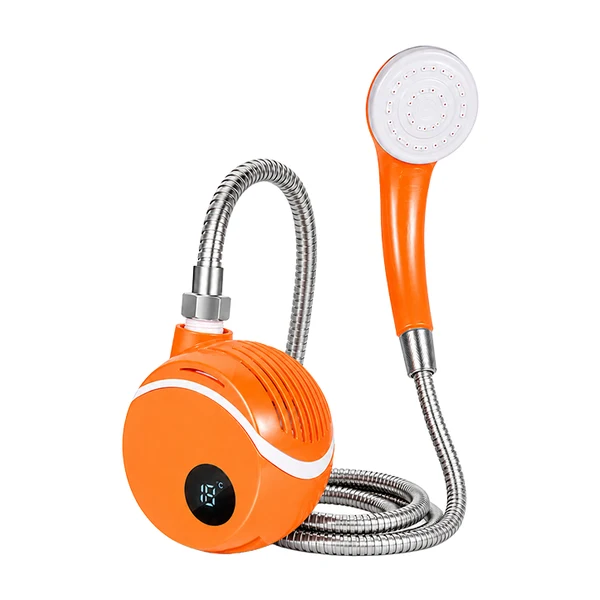
Pump Shower vs Solar Bag vs Gravity Rig: What Actually Rinses You Off
Three ways to shower away from plumbing, compared on the thing that decides it — pressure, warmth and whether you'll actually pack it.
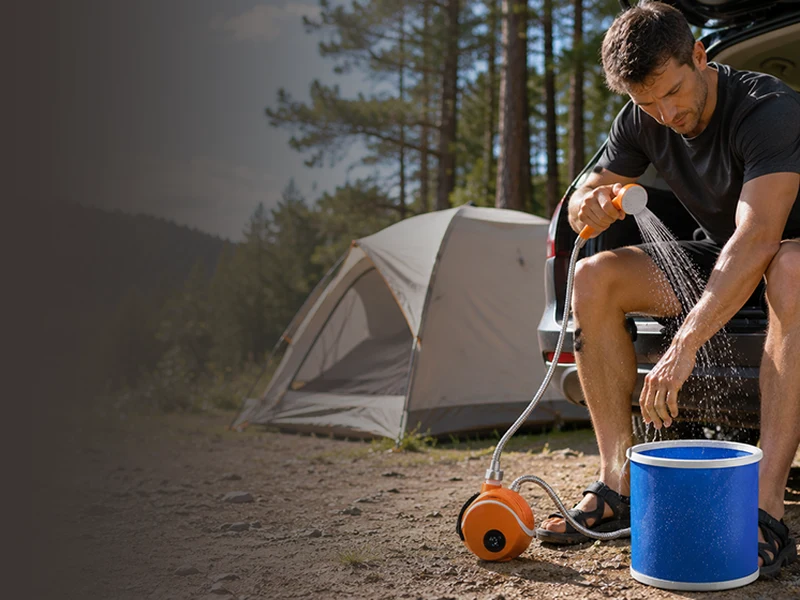
AquaTrail Review: Can a Rechargeable Pump Really Give You a Shower Anywhere?
AquaTrail turns any bucket into a pressurized shower — 45 minutes per charge, under 500g, IPX7. What it honestly delivers, its limits, and the fine print.
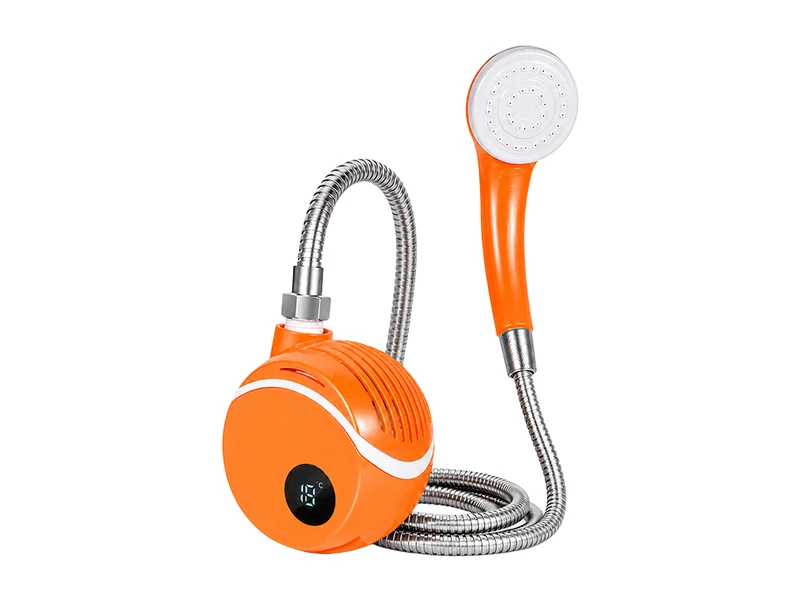
How Do Portable Showers Actually Work? Pressure, Power and the Heating Truth
Gravity, foot pumps, battery pumps — the three ways portable showers make pressure, what IPX7 really means, and why none of them heat your water.