How Do Portable Showers Actually Work? Pressure, Power and the Heating Truth
Every portable shower answers one physics question — where does the pressure come from? — in one of three ways: height, your leg, or a battery-driven pump. This explainer covers how each works, what the specs on a pump-shower listing actually mean (IPX7, flow minutes, temperature display), and the heating truth the category's marketing tiptoes around.
Published · Facts checked against the official product page
Key takeaways
- All shower pressure is an energy story: gravity bags spend height, foot pumps spend your effort, rechargeable units spend a battery. Each choice sets the format's strengths and its chores.
- A battery pump shower is a small submersible impeller: drop it in water, and the motor pushes water up the hose at steady pressure — the reason the format feels like 'real' showering while bags and pedals feel like compromises.
- The spec decoder: IPX7 = survives submersion (essential, the pump works underwater); flow minutes = battery life at continuous run; temperature display = shows your source water's temperature, it is not a heater.
- Nothing in a battery pump heats water — heating takes roughly 100x more energy than pumping. Warm outdoor showers come from solar-warmed or stove-heated source water, in any format.
Every shower — the one in your bathroom and the one at a campsite — answers a single physics question: where does the pressure come from? Portable showers answer it three ways, and the answer you buy determines everything about the experience. Here's how each one works, what the listing specs actually mean, and the heating truth the category's marketing tiptoes around.
Pressure is an energy story
Gravity bags spend height: hang water above your head, and weight does the rest. Free and silent — but pressure is proportional to height, and a bag two meters up delivers a trickle compared to household plumbing. Foot pumps spend your effort: each pedal press pressurizes a reservoir, delivering decent bursts for as long as your leg cooperates. Rechargeable pump showers spend a battery: a submersible impeller pump pushes water up the hose at steady, motor-driven pressure. That's the whole taxonomy — height, leg, or battery — and each choice sets the format's strengths and chores.
Inside the battery pump
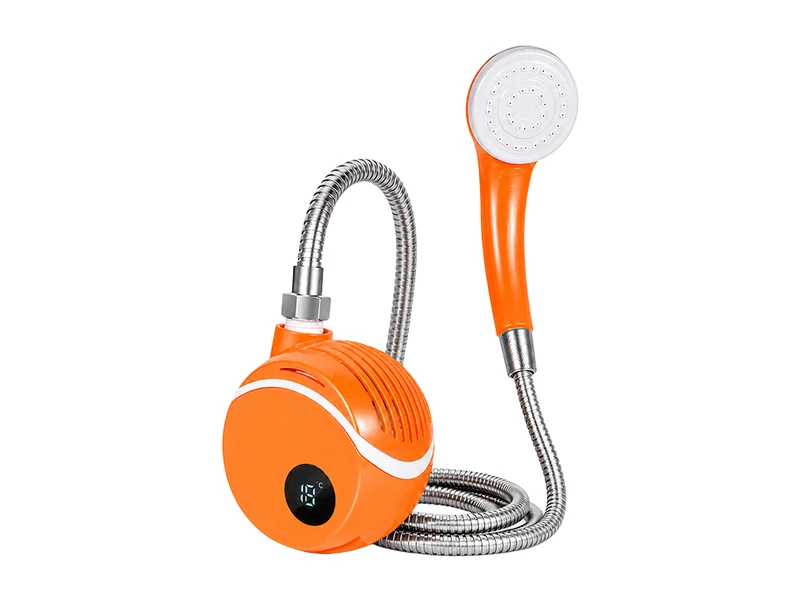
The rechargeable format — the one currently surging in US e-commerce, led by units like AquaTrail — is mechanically simple: a sealed motor spins a small impeller inside a submerged housing, pushing water up a hose to a shower head. It's the aquarium-pump principle tuned for flow, with a battery sized for the job (the category benchmark is up to 45 minutes of continuous run per USB-C charge). Because the pump does the work, pressure is steady and hands-free — the reason this format feels like «real» showering while bags and pedals feel like camping compromises.
The spec decoder
IPX7 — survives full submersion (typically 1m for 30 minutes). For a device that operates underwater, this isn't a bonus feature; it's the spec confirming the electronics survive their own job. Flow minutes — battery life at continuous run; since real use is short rinses, 45 minutes typically covers a weekend. Temperature display — a thermometer showing your source water's temperature as it flows. Useful for mixing stove-heated water to a comfortable blend; it is not a heater. Freshwater only — the standard restriction, because salt corrodes pump internals; beach trips mean a fresh jug in the car.
The heating truth
Nothing in a battery pump heats water, and the reason is arithmetic, not corner-cutting: pumping takes a few watts, while heating shower-quantity water takes kilowatts — roughly a hundred times more energy. A battery that pumps for 45 minutes would heat for seconds. So every warm outdoor shower, in every format, starts with warm source water: a dark jug left in the sun, a pot heated on the camp stove and mixed in the bucket, an insulated container filled at home. The display on the pump tells you when you've mixed it right. Understanding this one paragraph prevents the category's most common disappointment — and the buying rules that follow from it live in our portable camping shower buying guide.
Frequently asked questions
How does a rechargeable portable shower create pressure?
A small battery-driven impeller pump sits submerged in your water source. The motor spins the impeller, which pushes water up the hose to the shower head at steady pressure — same principle as an aquarium pump, tuned for flow and portability. No height needed, no pedaling; the battery does the work.
Why can't a battery shower heat the water?
Energy budgets. Pumping water takes a few watts; heating shower-volume water takes kilowatts — roughly two to three orders of magnitude more. A battery that pumps for 45 minutes would heat water for seconds. That's why every warm outdoor shower, in any format, starts with warm source water: sun-warmed jugs, stove-heated pots, or insulated containers filled at home.
What does the temperature display on a pump shower do?
It reads and shows the temperature of the water passing through — helpful for mixing stove-heated and cold water to a comfortable blend, and for knowing what you're about to step into. It's a thermometer, not a thermostat: it reports, it doesn't change anything.
Is IPX7 necessary for a portable shower?
For the pump, effectively yes. The pump operates submerged — that's the design — so a submersion rating (IPX7: typically 1m for 30 minutes) is the spec confirming the electronics survive their own job description. An unrated pump in a bucket is a warranty claim waiting to happen.
Related reading
More explainers →
Pump Shower vs Solar Bag vs Gravity Rig: What Actually Rinses You Off
Three ways to shower away from plumbing, compared on the thing that decides it — pressure, warmth and whether you'll actually pack it.

AquaTrail Review: Can a Rechargeable Pump Really Give You a Shower Anywhere?
AquaTrail turns any bucket into a pressurized shower — 45 minutes per charge, under 500g, IPX7. What it honestly delivers, its limits, and the fine print.

Portable Camping Shower Buying Guide 2026: Pumps, Bags and What Actually Matters
Gravity bags, foot pumps, rechargeable showers — how the three formats compare, the specs that matter, heating honesty, and the checks before you buy.