How to Choose a Portable Air Cooler in 2026 (Without Wasting Money)
Half the disappointment in this category comes from buying the wrong technology for your climate and room. This guide gives you the five questions that sort every portable cooler on the market — before you spend anything.
Published · Updated · Facts checked against the official product page
Key takeaways
- Portable 'coolers' are three different technologies — evaporative (real temperature drop, hates humidity), airflow towers (feel cooler, work anywhere) and compressor AC (true refrigeration, real installation and cost).
- Match the device to the space: personal zone → USB unit; bedroom/office → evaporative or tower; sealed multi-person room → compressor AC, honestly.
- Noise specs are quoted at the lowest speed; assume you'll live one speed higher than the ad suggests.
- A 30-day money-back guarantee is the category's real spec sheet — it converts every claim into a testable one.
Every summer, the same cycle: a heatwave hits, a wave of "mini AC" gadgets goes viral, and a month later the review sections fill with people who bought the wrong thing. The gadgets aren't (usually) scams — they're mismatched. This guide is the sorting mechanism: five questions that place every portable cooler on the market, including the four currently trending on our own board.
Question 1: Which of the three technologies is this?
Ignore product names; identify the mechanism.
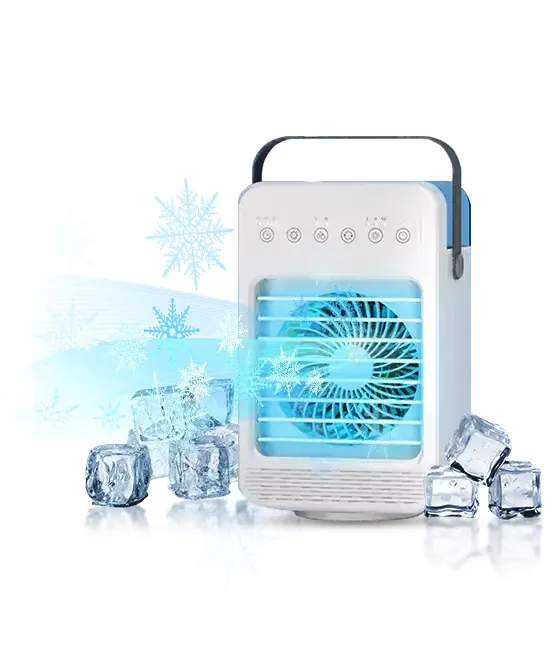
- Evaporative (water tank). A fan pulls air through a wet filter; evaporation absorbs heat; output air is genuinely cooler. Real temperature drop, best in dry heat, adds humidity. Example on our board: AiraBreeze.
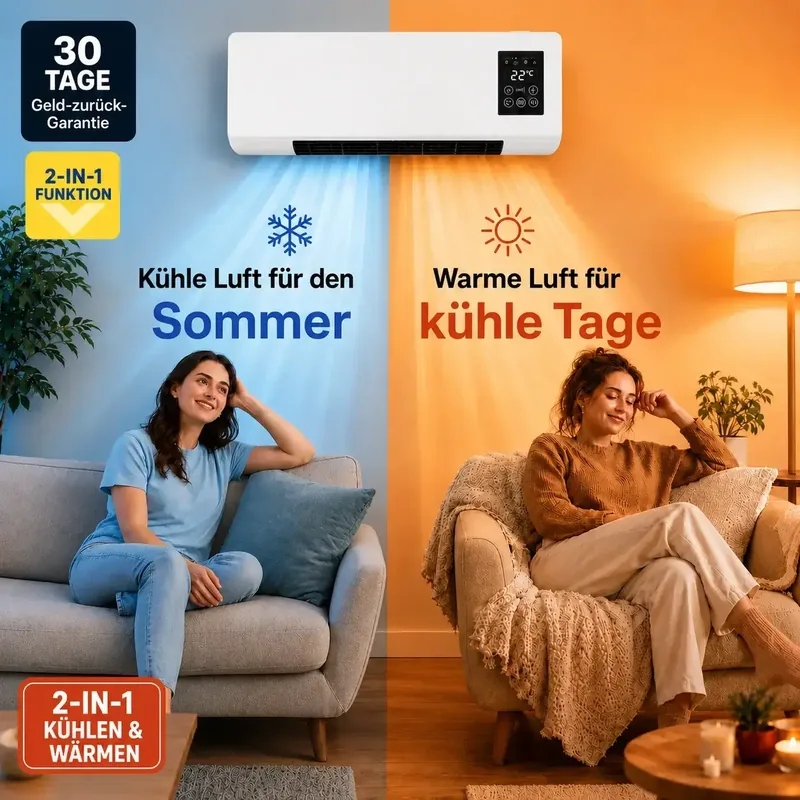
- Airflow tower (tankless). Optimized fan, sometimes with a heating element for winter. Cools by accelerating your body's own sweat-evaporation — feels cooler without changing the thermometer much. Works in any humidity. Examples: CoolJet, Vital Pro Breeze.
- Compressor AC (monobloc/split). True refrigeration of a sealed room. Also: hundreds of euros, real noise, a hose out the window or an installer. Not what this article is about — but knowing where the boundary sits stops you expecting it from a €60 device.
Question 2: What space are you actually cooling?
Be brutally specific. "Me, at this desk" is a USB personal unit like Froza AC. "My side of the bedroom, overnight" is evaporative-tabletop territory. "The home office I sit in all day" suits a tower. "The living room, for the family, with the door open" is where every device in this category disappoints — that's compressor country. Most buyer regret in this category is a space mismatch, not a product failure.
Question 3: What's your humidity?
The unglamorous question that decides evaporative performance. Rule of thumb: if summer air in your area regularly feels sticky, discount evaporative claims heavily and favor airflow devices. If your heat is dry — most UK, German and inland-French summers qualify — evaporative units deliver their advertised best.
Question 4: What will you tolerate at 3 a.m.?
Every product in this category advertises quiet, and every spec is quoted at minimum speed. Plan for the speed you'll really use: if the room is genuinely hot you'll run medium, so listen for (or read reviews about) that setting. The 2-in-1 towers on our board lean hardest into bedroom-quiet positioning, which matches what buyers in Germany especially reward.
Question 5: Can you test it risk-free?
The single most useful spec in this category is the return window. All four trending units we cover carry a 30-day money-back guarantee, which converts marketing into a home experiment: run the device in the exact room, at the real speed, during an actual hot week — and return it if the claims don't survive contact with your thermometer. Never buy a cooler without this.
The cheat sheet
| Your situation | Buy this type | Trending example |
|---|---|---|
| One person, one desk, tight budget | USB personal unit | Froza AC (FR) |
| Dry-heat bedroom, want a real temp drop | Evaporative tank unit | AiraBreeze (UK/DE) |
| Renter wanting one device all year | 2-in-1 airflow tower | CoolJet (UK) / Vital Pro Breeze (DE) |
| Sealed room, several people, deep heat | Compressor AC | — (different category, different budget) |
For the head-to-head details on the four trending units, our full 2026 portable cooler comparison runs the matchups round by round.
Frequently asked questions
What's the difference between an air cooler and an air conditioner?
An air conditioner uses a refrigerant compressor to remove heat from a sealed room — powerful, but loud, expensive and usually needing a window hose. An air cooler lowers the temperature of the air passing through it (evaporative) or increases airflow over your skin (tower/USB units). Coolers cost less to buy and pennies to run, but they condition a zone, not a sealed room.
Do evaporative coolers work in humid climates?
Poorly. Evaporation slows as humidity rises, so the temperature drop shrinks and the unit adds moisture to already-damp air. Dry-heat climates get the full effect; muggy ones should pick airflow devices or real AC.
How much does a portable cooler cost to run?
USB personal units draw around 5 W — practically free. Evaporative tabletop units and airflow towers are fan-class consumers, a small fraction of compressor AC. Heating mode on 2-in-1 units is the exception: electric heat is targeted with these devices, but never cheap in absolute terms.
Is a 2-in-1 cooler-heater worth it?
If you'd otherwise buy a fan and a space heater separately — which describes most renters — yes, the consolidation is real value. If you only ever need summer cooling, a dedicated evaporative unit gives you more per euro in July.
Related reading
More buying guides →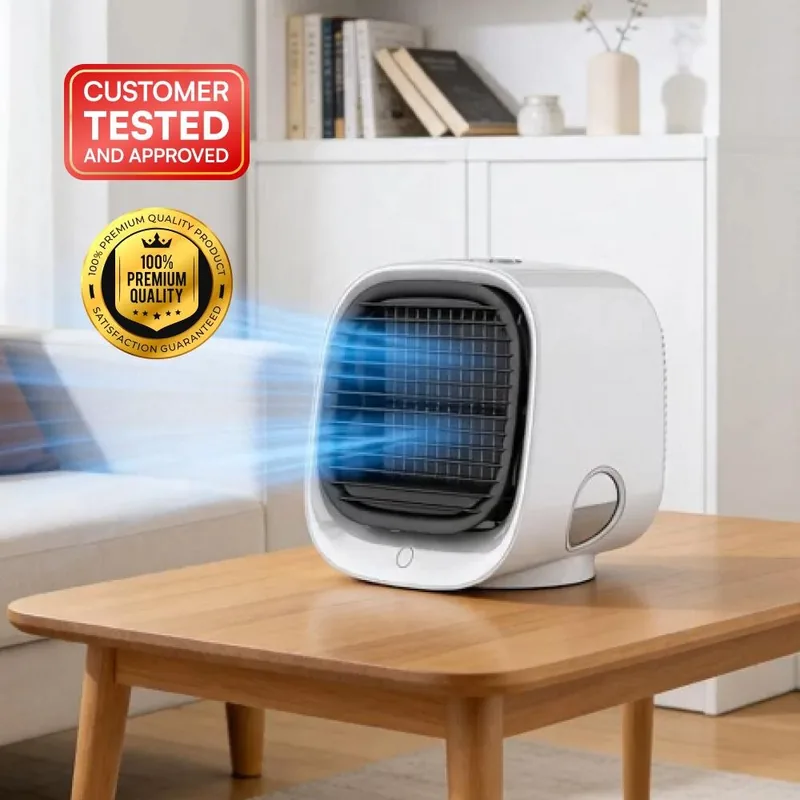
How Evaporative Air Coolers Work — and When They Don't
Evaporative air coolers drop the temperature with water, not refrigerant. How the physics works, real cooling limits, and the humidity rule that decides everything.
Why Portable Cooling Became 2026's Breakout E-Commerce Category
Heatwaves, rental housing and plug-and-play design collided to make portable coolers 2026's defining viral category. The market forces, explained.
Best Portable Air Coolers of 2026: AiraBreeze vs CoolJet vs Froza AC vs Vital Pro Breeze
We compare 2026's four trending portable coolers — AiraBreeze, CoolJet, Froza AC and Vital Pro Breeze — by cooling method, market, guarantee and best use case.