Why Portable Cooling Became 2026's Breakout E-Commerce Category
Portable climate devices dominate our trend board — that's not a coincidence, it's a structural story. Europe's un-air-conditioned housing stock, hotter summers and renter economics built this category; here's how, and where it goes next.
Published · Facts checked against the official product page
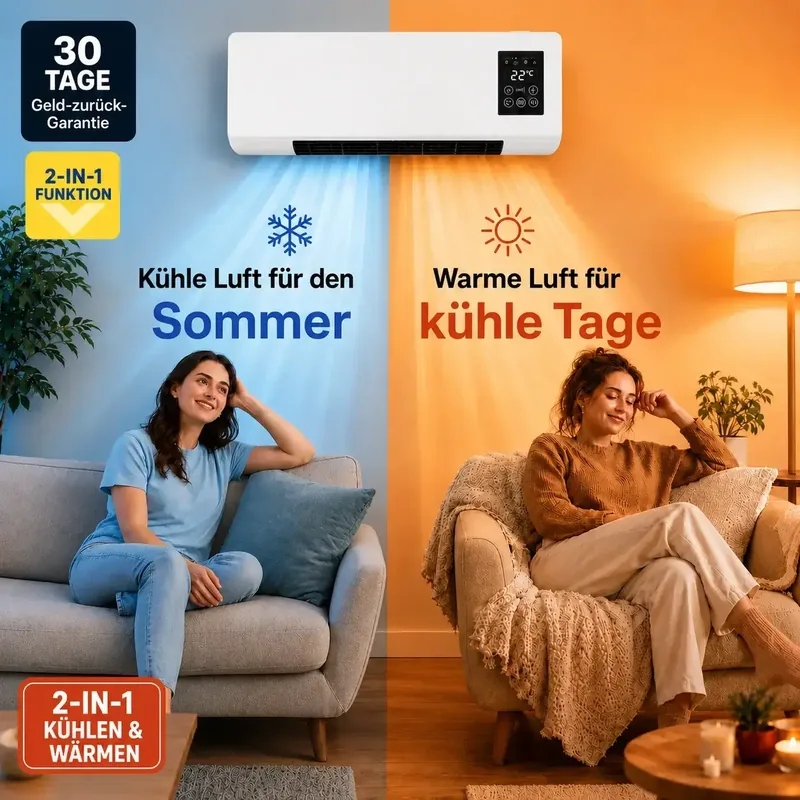
Strip the ad creative away from 2026's viral-product economy and one category is left standing on structure rather than novelty: portable cooling. Climate devices crowd the top of our current board. Category-level search demand keeps setting summer records across the UK, Germany and France. And unlike most viral waves, this one has fundamentals.
Fundamental #1: Europe never installed air conditioning
The single number that explains the category: home air-conditioning penetration in most of northern and western Europe remains a small fraction of the near-universal US rate. That was a rational historical choice — until summers changed. Each recent heat season has pushed temperatures that the housing stock was never designed for, and a permanent retrofit is slow, expensive, and, for the enormous share of Europeans who rent, frequently impossible without a landlord's blessing.
Into that gap steps a product class that requires no permission: plug in, cool the room you're in, take it with you when the lease ends. The category's defining features — no hose, no drilling, no technician — read like a direct answer to European rental law, because commercially speaking, they are.
Fundamental #2: heat demand is spiky, and spiky demand loves e-commerce
Cooling demand doesn't build; it detonates. A UK amber heat alert or a French canicule warning converts into search-volume spikes within hours — faster than any retail shelf can restock, but exactly the tempo direct-to-consumer funnels are built for. It's no accident that the category's winners are sold through fast product pages with same-week delivery promises: the buying window for a cooler is measured in sweaty days.
Fundamental #3: the seasonality problem found its fix
The category's classic weakness was October: a summer-only gadget amortizes badly. The 2-in-1 format — cooling plus heating in one tower — is the market's answer, and its geography is telling. It performs strongest in Germany, where our data consistently shows buyers weighting year-round value and quiet operation over peak summer power. Vital Pro Breeze and the UK's CoolJet are the same thesis localized twice; expect the format to spread.
Where the category goes next
Three predictions we're comfortable putting a date on. Segmentation hardens: the market is already splitting into personal USB units (Froza), evaporative room units (AiraBreeze) and 2-in-1 towers — the "one mini AC fits all" era is ending. Honesty becomes a feature: the pages winning now increasingly state their limits (personal zone, not whole house), because refund windows make overpromising expensive. The calendar flips the category, not the demand: come October, watch the same funnels pivot to heating mode as the lead promise — the 2-in-1s were built for exactly that rotation.
Shopping the category today? Start with the buying guide, then the four-way comparison — fifteen minutes of reading that prevents the category's one classic mistake: buying the wrong technology for your room and your weather.
Frequently asked questions
Why are portable coolers trending more in Europe than the US?
Infrastructure. US homes are overwhelmingly air-conditioned; most European homes are not, and permanent AC is expensive, regulated and often landlord-blocked. When heatwaves hit un-air-conditioned housing, the plug-and-play cooler is the only same-week solution — so demand concentrates exactly there.
Are 2-in-1 cooler-heaters a fad?
The opposite pattern, in our read: 2-in-1 units answer the category's structural weakness (seasonality) and are strongest in Germany, the market that most rewards year-round value. Expect more products to copy the format, not fewer.
What should shoppers watch out for in this category?
Technology mismatch — buying airflow expecting refrigeration, or evaporative cooling in a humid climate. Our portable cooler buying guide covers the five questions that prevent it.
Related reading
More news & trends →
How Evaporative Air Coolers Work — and When They Don't
Evaporative air coolers drop the temperature with water, not refrigerant. How the physics works, real cooling limits, and the humidity rule that decides everything.

The Products Trending Across US, UK, French and German E-Commerce Right Now
Our July 2026 trend board: the physical products gaining the most momentum across US, UK, German and French e-commerce — and why each one is moving.
Best Portable Air Coolers of 2026: AiraBreeze vs CoolJet vs Froza AC vs Vital Pro Breeze
We compare 2026's four trending portable coolers — AiraBreeze, CoolJet, Froza AC and Vital Pro Breeze — by cooling method, market, guarantee and best use case.