Vagus Nerve Stimulator Buying Guide 2026: What Matters (and What's Hype)
Vagus nerve stimulators went from clinic to consumer shelf in 2026, and the category mixes a legitimate mechanism with a lot of wishful marketing. This guide draws the honest lines: what to check before buying, the safety groups who must ask a doctor first, and how to read benefit claims when the devices themselves carry FDA disclaimers.
Published · Facts checked against the official product page
Key takeaways
- Start with the mechanism, not the marketing: non-invasive vagus nerve stimulation is a real research field, but a consumer device's benefit claims are the maker's to substantiate — check whether the page reaches for evidence or for urgency.
- Safety is the first filter, not the last: cardiac conditions, pacemakers or implanted devices, epilepsy and pregnancy are standard reasons to get medical clearance before any nVNS device.
- Judge the practical build: session length, an app with real controls (intensity, program selection, tracking), what's in the box (electrode gel, charging), and how the device is worn and cleaned.
- Insist on an exit: a subjective effect like calm needs a real return window. A 30-day money-back guarantee — which the current trend leader offers — is the benchmark, ideally paired with a multi-year warranty.
Vagus nerve stimulators are the calm-tech breakout of 2026 — a category that jumped from clinical settings to social feeds fast, carrying a legitimate mechanism and a lot of wishful marketing in the same box. This guide sorts the shelf: what genuinely matters, the safety checks that come first, and how to read the claims.
Check 1: the mechanism vs. the marketing
The good news is that the foundation is real. The vagus nerve is the body's master relaxation switch, and non-invasive vagus nerve stimulation (nVNS) is an active, credible research field — the full mechanism is unpacked in our vagus nerve explainer. The catch: a real mechanism doesn't make every consumer-device claim proven. The tell is on the page itself — serious products explain how they work and disclose their limits (most carry an FDA disclaimer); weaker ones lean on countdown timers and "miracle" language. The more a page talks mechanism and the less it talks miracles, the more it deserves your money.
Check 2: safety first, not last
This is the check that comes before price. Non-invasive vagus nerve stimulation has standard caution groups: people with cardiac conditions, a pacemaker or other implanted electronic device, epilepsy or seizure history, and those who are pregnant. If any applies, medical clearance comes before purchase — full stop. And because these are wellness rather than medical devices, none of them is a substitute for treating a diagnosed condition.
Check 3: the practical build
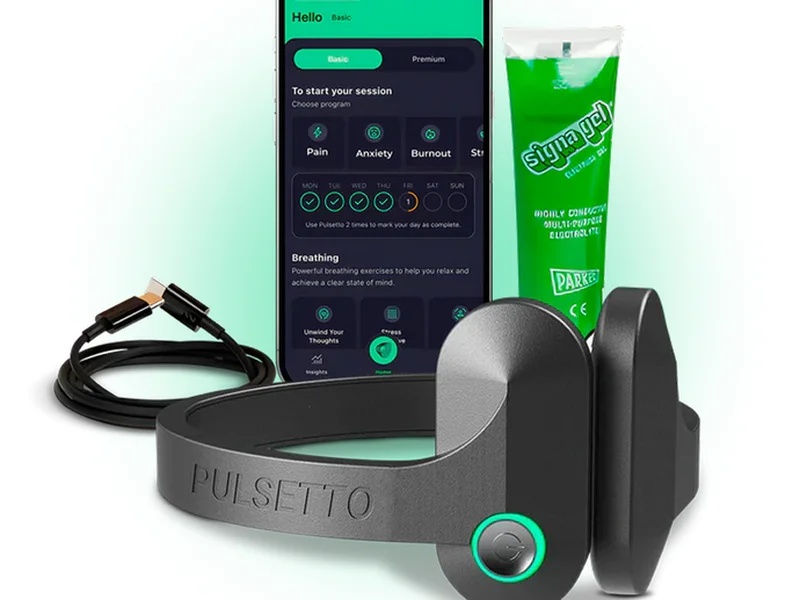
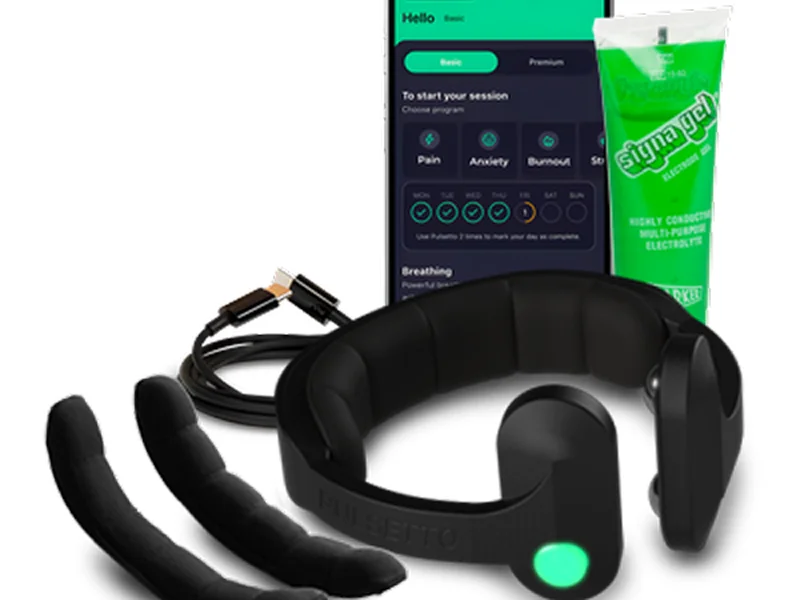
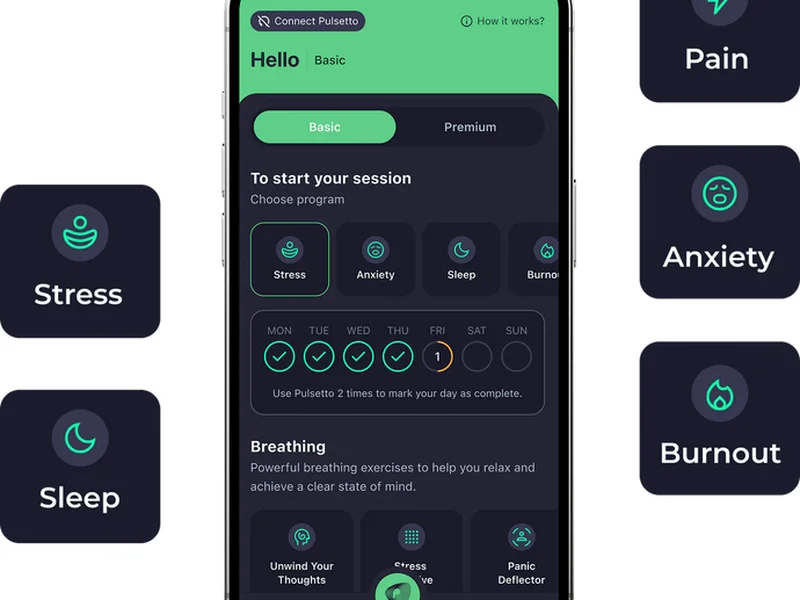
Session length you'll realistically keep to — the trend leader's 4 minutes is the kind of number that survives a busy week. The app should offer real controls: intensity, distinct programs and session tracking, not just an on-switch. What's in the box matters for running cost and convenience — electrode gel and a charging cable should be included and easy to replace. And know how it's worn and cleaned, since a neck-worn, gel-contact device is a daily-hygiene item.
Check 4: the exit and the warranty
Calm is subjective, so the return window is not optional — it's the mechanism by which you find out whether you respond. A 30-day money-back guarantee is the benchmark this category should meet, and the current trend leader pairs it with a stated 2-year warranty. Price the bundles on the official page and treat any "summer sale" countdown as the marketing device it is; the underlying guarantee is what actually protects an impulse purchase.
The short version
Buy on mechanism and disclosure, not on urgency. Clear the safety groups with a doctor first. Check session length, a real app, what's in the box, and hygiene. Then insist on a 30-day exit and a warranty — and treat the device as a personal experiment in relaxation, which is the only honest way to shop this shelf.
Frequently asked questions
Do vagus nerve stimulators really work?
The mechanism is legitimate — the vagus nerve genuinely governs the body's relaxation response, and non-invasive stimulation is a real research field. What's less settled is the size and consistency of the effect from consumer devices used at home, which is why most reputable devices carry an FDA disclaimer. Buy one as a personal experiment with a return window, not as a guaranteed treatment.
Who should not use a vagus nerve stimulator?
Standard caution groups include people with a heart condition, a pacemaker or other implanted electronic device, epilepsy or a seizure history, and those who are pregnant. Anyone in these groups — or managing a diagnosed condition — should get medical clearance before use. These devices are for general wellness, not medical treatment.
What should I look for when buying one?
Four practical things: a sensible session length you'll actually keep to, a companion app with genuine controls (intensity, programs, session history), a clear picture of what's included (electrode gel, charging cable) and how it's worn, and above all a real returns window plus warranty. Transparency about limitations is itself a quality signal.
Which vagus nerve device is trending in 2026?
Pulsetto is the breakout on our US board — a neck-worn device with 4-minute sessions, five app programs, a 30-day money-back guarantee and a stated 2-year warranty, from $296. Our full review covers what the science supports and where the honest limits are.
Related reading
More buying guides →
Pulsetto Review: Can a 4-Minute Vagus Nerve Zap Really Calm You Down?
Pulsetto is a neck-worn vagus nerve stimulator promising calm in 4 minutes across five app programs. What the science supports, the limits, and the fine print.
What Is Vagus Nerve Stimulation? The Science Behind the Calm-Tech Trend
The vagus nerve is the body's relaxation switch, and stimulating it is the idea behind 2026's calm-tech devices. What science supports and what's emerging.
Calm Tech Goes Mainstream: Why Vagus Nerve Devices Are Trending in 2026
Vagus nerve stimulators jumped from clinic to consumer shelf this year. The forces driving the calm-tech trend, what's real, and the caution alongside.