What Is Vagus Nerve Stimulation? The Science Behind the Calm-Tech Trend
Suddenly every wellness feed is talking about the vagus nerve. Behind the trend is real physiology: the vagus nerve is the backbone of the body's 'rest-and-digest' system, and stimulating it non-invasively is a legitimate research field. This explainer separates the established science from the consumer-device claims that ride on top of it.
Published · Facts checked against the official product page
Key takeaways
- The vagus nerve is the longest cranial nerve and the main highway of the parasympathetic 'rest-and-digest' system — the physiological counterweight to the fight-or-flight stress response.
- Non-invasive vagus nerve stimulation (nVNS) applies gentle electrical pulses through the skin, usually at the neck or ear, to nudge that relaxation system — an approach with established clinical uses in specific medical contexts.
- The consumer-wearable version borrows a real mechanism, but at-home evidence is younger and thinner than clinical data; benefit claims belong to the maker, and reputable devices carry FDA disclaimers.
- Judge any device by three questions: does the page explain the mechanism or just promise miracles, does it disclose safety cautions, and does it give you a real return window to test a subjective effect.
Scroll any wellness feed this year and you'll hit the phrase within a minute: the vagus nerve. It's the mechanism behind the calm-tech devices climbing our board, and unlike a lot of wellness vocabulary, it points at something real. Here's the physiology, and the honest line between what's established and what's still being sold ahead of the evidence.
The nerve itself
The vagus nerve is the longest cranial nerve, wandering (its name shares a root with "vagabond") from the brainstem down through the neck to the heart, lungs and digestive system. It's the primary channel of the parasympathetic nervous system — the "rest-and-digest" mode that slows your heart and deepens your breathing once a stressor passes. When people talk about being "stuck in fight-or-flight," they're describing a nervous system that isn't shifting back into that vagal, parasympathetic state easily. That's the switch the whole category is aiming at.
What "stimulation" actually means
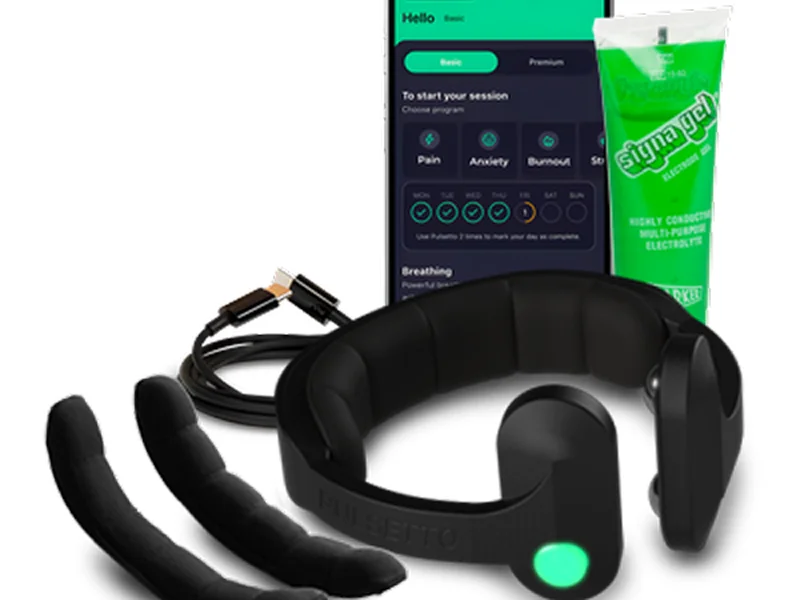
Non-invasive vagus nerve stimulation (nVNS) applies gentle electrical pulses through the skin — usually at the neck or the ear — to activate the nerve without any implant or surgery. It's the non-surgical descendant of implanted vagus nerve stimulators, which have established clinical uses in specific medical contexts. Devices like Pulsetto translate that idea into a consumer wearable: a neck-worn band, a conductive gel, a short session, an app to pick a program.
Where the science is solid — and where it thins
Solid ground: the vagus nerve's role in the relaxation response is textbook physiology, and nVNS as an approach is a legitimate, actively researched field with real clinical applications. Thinner ground: the leap from clinical stimulation to a wearable used at home is where consumer evidence gets younger and more mixed. The mechanism being real doesn't automatically transfer every claimed at-home benefit into proven fact — which is exactly why reputable consumer devices carry an FDA disclaimer noting their statements aren't FDA-evaluated and they're not intended to diagnose, treat, cure or prevent disease. That disclaimer isn't a red flag; it's the honest boundary of the category.
How to judge a device
Three questions cut through the noise. Does the page explain the mechanism or just promise a miracle? Serious products teach; weak ones use countdown timers. Does it disclose safety cautions? Cardiac conditions, pacemakers and implants, epilepsy and pregnancy are the standard groups who need medical clearance first. Does it give you a real exit? Because the effect is subjective, a 30-day return window is how you discover whether you personally respond. Our buying guide turns these into a full checklist, and the Pulsetto review applies them to the device currently leading the trend.
Frequently asked questions
What is the vagus nerve, in plain terms?
It's the longest cranial nerve, running from the brainstem down through the neck to the heart, lungs and gut. It's the main channel of the parasympathetic nervous system — the 'rest-and-digest' mode that calms heart rate and breathing after stress. That central role is why it's the target of the current calm-tech trend.
How does non-invasive vagus nerve stimulation work?
nVNS applies gentle electrical pulses through the skin — commonly at the neck or ear — to stimulate the vagus nerve without any implant or surgery. The intent is to activate the body's relaxation response. It's the non-surgical cousin of implanted vagus nerve stimulators used in certain clinical settings.
Is vagus nerve stimulation proven to reduce stress?
The mechanism is well established and there's genuine research interest, with some supportive findings — but the evidence for consumer devices used at home is younger and more mixed than the marketing suggests. The honest position: promising and mechanism-backed, not a settled, guaranteed outcome. That's why these devices carry FDA disclaimers.
Is vagus nerve stimulation safe for everyone?
No. Standard caution groups include people with cardiac conditions, a pacemaker or other implanted device, epilepsy or seizure history, and those who are pregnant. Anyone in these groups should get medical clearance first, and no consumer device should be treated as a replacement for medical care.
Related reading
More explainers →
Pulsetto Review: Can a 4-Minute Vagus Nerve Zap Really Calm You Down?
Pulsetto is a neck-worn vagus nerve stimulator promising calm in 4 minutes across five app programs. What the science supports, the limits, and the fine print.
Vagus Nerve Stimulator Buying Guide 2026: What Matters (and What's Hype)
Vagus nerve devices promise calm at the push of a button. How to tell a serious product from a placebo gadget, the safety checks that come first, and what to ignore.
Calm Tech Goes Mainstream: Why Vagus Nerve Devices Are Trending in 2026
Vagus nerve stimulators jumped from clinic to consumer shelf this year. The forces driving the calm-tech trend, what's real, and the caution alongside.