Personal & Desk Air Cooler Buying Guide 2026: Small Coolers, Honest Expectations
The palm-sized cooler is 2026's impulse purchase of the heatwave — cheap, instant and everywhere on social feeds. This guide draws the honest lines of the format: what a personal cooler genuinely delivers, where the physics stops, and the five checks that separate a good buy from a drawer-bound gadget.
Published · Facts checked against the official product page
Key takeaways
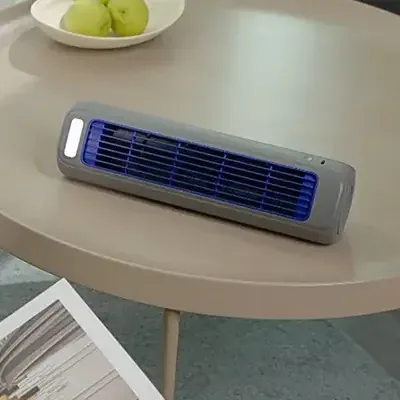
- Buy a personal cooler to cool a person, not a room — the honest job description is a cooler bubble around your chair, desk or bedside, with makers' claims in the up-to-8°C range for that zone.
- The five checks before buying: weight and footprint (is it genuinely portable?), power draw (USB-level means it runs anywhere), noise at the speed you'll actually use, mounting options for rented homes, and the returns window.
- Price the category honestly: a personal cooler is a complement to ventilation and shade, not a rival to a £400 air-conditioning unit — anyone selling it as an AC replacement is selling the wrong expectation.
- Guarantee terms vary widely in this category; the current UK trend leader declares a 30-day money-back window, which is the kind of exit every impulse heatwave purchase should have.
The personal cooler is the heatwave's impulse buy: palm-sized, plug-in, all over the feeds the moment temperatures hit the high twenties. It's also the category where expectations and physics part company fastest. This guide draws the honest lines — what the small format genuinely delivers, where it stops, and the checklist that separates a keeper from a drawer gadget.
The honest job description
A personal cooler cools a person. Not a lounge, not a bedroom — the bubble around your chair. Makers in this tier claim air up to 8°C cooler in that personal zone, and the credible ones say so in exactly those terms rather than promising room-level change. Held to that standard, the format performs; held to an air-conditioner's standard, it flunks — which is why the smartest line on the current UK trend leader's own page is the comparison it doesn't claim: cool in minutes without the £400 unit, not instead of it in every sense. The mechanism behind those limits is unpacked in our desk cooler explainer, and the broader room-cooler tiers in the portable air cooler guide.
The five-point checklist
1. Weight and footprint. Portability is the category's entire reason to exist. The trending benchmark is about half a kilogram — genuinely carry-it-in-one-hand territory; anything approaching two kilos is a small room cooler in disguise.
2. Power draw. USB-level power means the device runs from a laptop, a power bank or any phone charger — desk, garden, camper van. If it needs a dedicated mains brick, you've left the personal tier.
3. Noise at your real speed. Every cooler is quiet on speed one; ask what it sounds like on the speed you'll actually use through an afternoon. Three speeds with a usable middle is the pattern to look for.
4. Mounting for renters. The newest UK-market wrinkle: no-drill wall mounting, which turns a desk gadget into a bedside or kitchen fixture without a landlord conversation. If you rent, treat it as a genuine tiebreaker.
5. The exit. Heatwave purchases are impulse purchases; insist on a real returns window. The current UK leader declares 30 days money-back with 48-hour tracked dispatch — that's the shape of offer that respects an impulse buyer.
Who should buy one — and who shouldn't
Buy one if your problem is a hot desk, a stuffy home office, a bedside that needs airflow, or a rented flat where installation is off the table — especially as a low-power supplement in rooms that also have proper cooling. Skip it if your goal is lowering a whole room's temperature: that's the job of the room-cooler and AC tiers, and no palm-sized device will do it, whatever the advert implies.
The short version
Buy the personal tier for the person-sized job. Check weight, power, real-speed noise, renter-friendly mounting and the returns window. Expect a cooler bubble, not a cooler room — and at this category's prices, with a 30-day exit, that honest expectation is a perfectly good deal.
Frequently asked questions
Do personal desk coolers really work?
Within their honest job description, yes: they create a noticeably cooler personal zone — makers in this category claim air up to 8°C cooler right where you sit. What they don't do is lower a room's temperature the way refrigerant air conditioning does. Our explainer on how desk coolers work covers the physics.
What should I check before buying a personal cooler?
Five things: real weight and size (portability is the whole point), power requirements (USB-level draw means it runs from a laptop or power bank), noise at your actual working speed, mounting options if you rent, and the returns window — 30 days is the mark to look for.
Are personal coolers cheaper to run than air conditioning?
Dramatically — that's the format's core economic argument. A USB-level device draws a small fraction of an AC unit's power, which is why it wins as a personal supplement even in homes that also own proper air conditioning.
Which personal cooler is trending in the UK right now?
Froza, the 505-gram three-speed cooler that led our French board through canicule season, launched an official UK page in July 2026 with a 30-day money-back guarantee and 48-hour tracked dispatch. Our full review covers what it can and can't do.
Related reading
More buying guides →
How to Choose a Portable Air Cooler in 2026 (Without Wasting Money)
Evaporative vs airflow vs AC, the humidity rule, noise, running costs and guarantee fine print — the complete 2026 buying guide to portable air coolers.
Froza Lands in the UK: France's Viral Personal Cooler Goes British
Froza, the personal cooler behind France's canicule spikes, now has an official UK page — 30-day guarantee, 48-hour dispatch and a no-drill wall mount.
Do Personal Desk Air Coolers Actually Work? The Physics, Honestly
Palm-sized coolers claim cold air in minutes. What personal airflow genuinely does to perceived temperature, why the room stays warm, and how to judge the claims.