StopWatt Review: Can a $44 Plug-In Really Lower Your Power Bill?
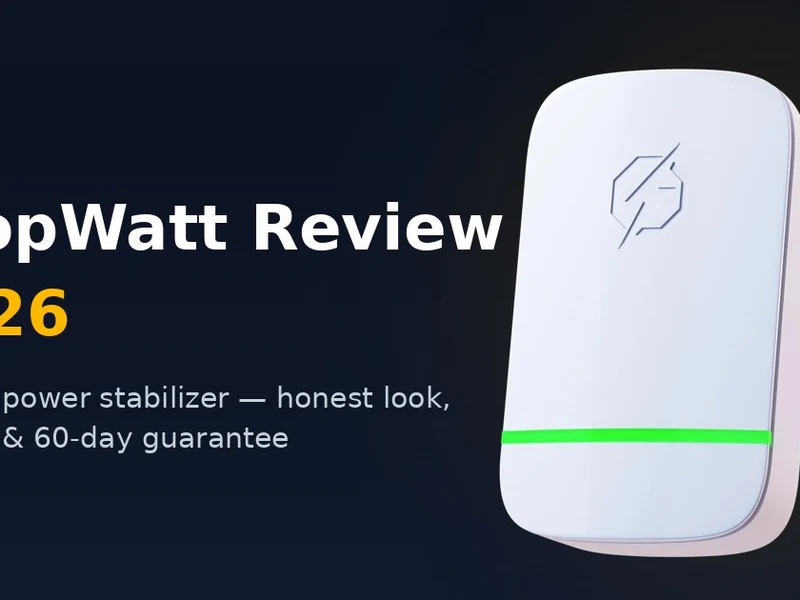
StopWatt is riding the US energy-gadget wave: a $44 plug-in promising to stabilize 'dirty' electricity and calm a rising power bill. This review is deliberately protective — what a plug-in device can and cannot do to a residential utility bill, why every savings figure here is a manufacturer claim, and why the 60-day money-back guarantee is the one spec that genuinely protects you.
Published · Facts checked against the official product page
Key takeaways
- StopWatt is a $44.10 plug-in marketed to 'stabilize rough current' and reduce wasted 'dirty' electricity, sized at one unit per 800–1,200 sq ft — silent, no fans, no app, no maintenance.
- The honest physics: residential utility meters bill real power (kWh). Devices in this category are not established to reduce what a household meter records — treat every savings figure as a manufacturer claim, not a measured outcome.
- The page's 4.6/5 rating is customer feedback published by the manufacturer — a self-published figure, not independent review data.
- The one spec that genuinely protects you is the 60-day money-back guarantee: measure your own bill before and after, and if the number doesn't move, send it back inside the window.
Few purchases feel as satisfying in theory as one small device that quietly pays for itself. That's the promise powering the US energy-gadget wave, and StopWatt — a $44.10 plug-in that claims to stabilize your home's «rough» current — is the product riding it hardest. Our job is to be useful to you before checkout, which in this category means being blunt about physics.
What it is, and what it claims
StopWatt is a compact device you plug into a wall outlet — the maker recommends one per 800–1,200 square feet. Its pitch: household electricity arrives uneven, some of it is wasted as «dirty» electricity, and the device smooths the flow so less is lost. It runs silently, with no fans, apps or upkeep. The offer: $44.10 per unit, rotating discounts up to 60%, and a 60-day money-back guarantee.
The physics, honestly
Here's the part a seller won't lead with. Your utility bills you for real power — the kilowatt-hours your appliances actually consume, measured at the meter. The phenomena this category invokes (power factor, harmonics, «dirty» electricity) are real electrical concepts, but correcting them at a wall outlet is not established to reduce what a residential meter records. Power-factor correction matters for industrial customers, who are billed differently; for a household, the meter simply doesn't charge you for the thing these devices claim to fix. That's why our default for the entire category is skepticism — not hostility to any one brand, but respect for how billing actually works. Our plug-in energy saver explainer walks through it in plain language.
Reading the offer like an adult
Two details on the page deserve calibrated reading. The 4.6/5 rating is customer feedback published by the manufacturer — a self-published figure, not independent review data, and worth exactly that much. The savings table (home sizes and dollar figures) is the maker's own modeling. Neither is dishonest by category standards; neither is evidence. What genuinely distinguishes this offer is the 60-day money-back guarantee — long enough to run the only experiment that matters: your own utility bill, before and after, nothing else changed.
The levers that actually move a power bill
Because you deserve the useful answer, not just the skeptical one: the proven ways to cut a residential bill are thermostat discipline on heating and cooling (the largest line in most homes), LED lighting, hunting phantom loads with an inexpensive kill-a-watt meter, shifting heavy appliances to off-peak windows where your utility prices them, and sealing air leaks. They're less fun than a $44 plug — and they work, which is the difference.
The verdict on StopWatt
StopWatt is honestly summarized as a low-cost experiment in a category where marketing routinely outruns physics. If the promise appeals, buy it the protective way: keep your last two utility bills, plug it in, change nothing else, and compare the next two. If the meter doesn't move, the 60-day guarantee is your exit — use it without guilt. And whatever you decide about the plug, spend an afternoon on the proven levers above; they're where the real savings live.
Frequently asked questions
How does StopWatt claim to work?
The maker's pitch is current stabilization: household electricity arrives 'rough', some is wasted as 'dirty' electricity, and the device smooths it so less is lost. That's the claimed mechanism as the page presents it. What the pitch doesn't change is how you're billed — see the next answer.
Will StopWatt actually lower my electricity bill?
We can't tell you it will, and the physics counsels skepticism. Residential meters bill real power — the kWh your appliances actually consume. Devices marketed on power-factor or 'dirty electricity' correction are not established to reduce that number for a household. If you try it, run the honest experiment: compare two or three utility bills before and after, changing nothing else, inside the 60-day returns window.
Is StopWatt a scam?
We don't use that word for a product we haven't lab-tested, and StopWatt's offer includes a real 60-day money-back guarantee, which scams typically avoid. What we can say: the category's savings claims routinely outrun established physics, the 4.6/5 rating on the page is manufacturer-published feedback, and your protection is the guarantee plus your own before-and-after bills — not the marketing.
What actually lowers a power bill?
The unglamorous, proven levers: heating and cooling settings (the biggest line item in most homes), switching to LED lighting, hunting phantom loads with a $15 kill-a-watt meter, running heavy appliances in off-peak windows if your utility prices them, and sealing air leaks. None of it fits in a $44 plug — which is exactly why the plug keeps selling.
Related reading
More reviews →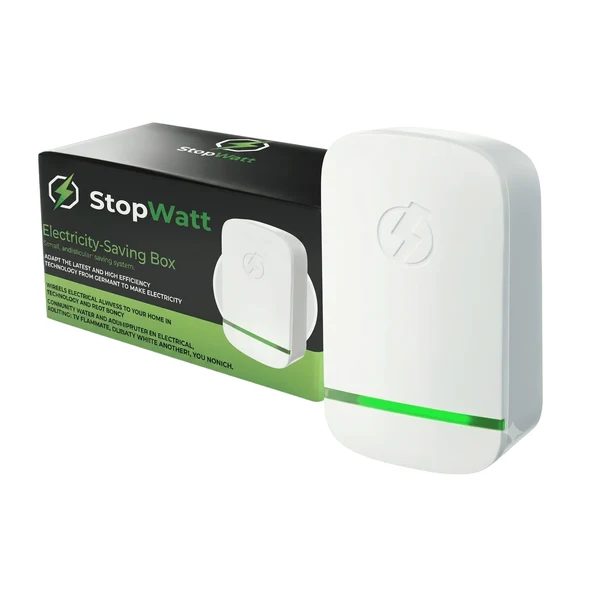
Plug-In Energy Device vs Smart Plug Monitor vs Actually Using Less
Three approaches to a high electricity bill. One is measurement, one is behaviour, and one has physics working against it. Which is which.
Plug-In Energy Saver Buying Guide 2026: How to Shop a Skeptical Category
Plug-in 'electricity savers' are booming again. How household billing really works, the claims to distrust, and the one test that settles it at home.
Do Plug-In Energy Savers Actually Work? The Electricity, Explained
Plug-in 'electricity savers' promise smaller bills from one outlet. How home billing works, what power factor really is, and why skepticism is the default.