What is a plug-in carbon monoxide detector?
A carbon monoxide detector plug in guards your home 24/7 with no batteries to change. Learn how it works, types, and safe placement here.
A carbon monoxide detector plug in is a safety device that plugs directly into a standard wall outlet and continuously monitors the air for dangerous levels of carbon monoxide (CO), a colorless and odorless gas. It draws power from your home’s electrical system, so it runs constantly without relying on disposable batteries, and it sounds a loud alarm the moment CO reaches unsafe concentrations.
Key Takeaways
- A plug-in carbon monoxide detector uses your home’s outlet for continuous power, eliminating the risk of a dead battery.
- Carbon monoxide is undetectable by human senses, making an electronic carbon monoxide alarm the only reliable way to detect it.
- Most modern plug-in units include a battery backup that keeps monitoring active during power outages.
- Correct placement, height, and distance from fuel-burning appliances directly affect how quickly the device warns you.
- Advanced models double as a natural gas detector and propane detector, covering multiple household gas hazards.
What Is a Plug-In Carbon Monoxide Detector?
The key takeaway: A plug-in carbon monoxide detector is an outlet-powered sensor that monitors indoor air around the clock and triggers an audible alarm when CO levels become hazardous.
Unlike battery-only units, the plug-in design pulls electricity directly from the wall, so the sensor never stops working because of a drained cell. This makes it a low-maintenance choice for residential gas leak safety.
Carbon monoxide forms whenever fuel such as gas, wood, oil, or propane burns incompletely. Because CO has no color, taste, or smell, an electronic carbon monoxide alarm is the only practical way for a household to know it is present.
Why Carbon Monoxide Is So Dangerous
CO binds to hemoglobin in the blood roughly 200 times more readily than oxygen, starving vital organs of oxygen. According to the U.S. Centers for Disease Control and Prevention (CDC), more than 400 people in the United States die each year from unintentional CO poisoning not linked to fires.
Early symptoms — headache, dizziness, nausea — mimic the flu, which is why victims often ignore them until it is too late. A device offering a early warning alert system buys the critical minutes needed to evacuate.
How Does a Plug-In Carbon Monoxide Detector Work?
The key takeaway: The device uses an electrochemical sensor to measure CO concentration in the air and sounds an alarm once levels cross a preset safety threshold over time.
Inside most plug-in units is an electrochemical sensor: a small cell containing electrodes suspended in a chemical solution. When CO molecules reach the sensor, they trigger a measurable electrical current proportional to the gas concentration.
A microprocessor reads this current and compares it against time-weighted safety limits. The alarm does not fire at the first trace of CO; instead, it responds faster to high concentrations and slower to low ones, mirroring how CO actually affects the body.
The Role of Battery Backup
Because CO poisoning risk can rise during power outages — when people run generators, grills, or alternative heaters — quality plug-in models include a sealed or replaceable battery backup. This keeps the carbon monoxide alarm operational even when the outlet loses power.
In our analysis of household safety devices, the presence of a reliable backup is the single feature that separates a dependable plug-in detector from a false sense of security. We recommend confirming this specification before installing any unit.
“Carbon monoxide alarms should be installed in a central location outside each sleeping area and on every level of the home.”
— U.S. Consumer Product Safety Commission (CPSC)
Types of Carbon Monoxide Detectors
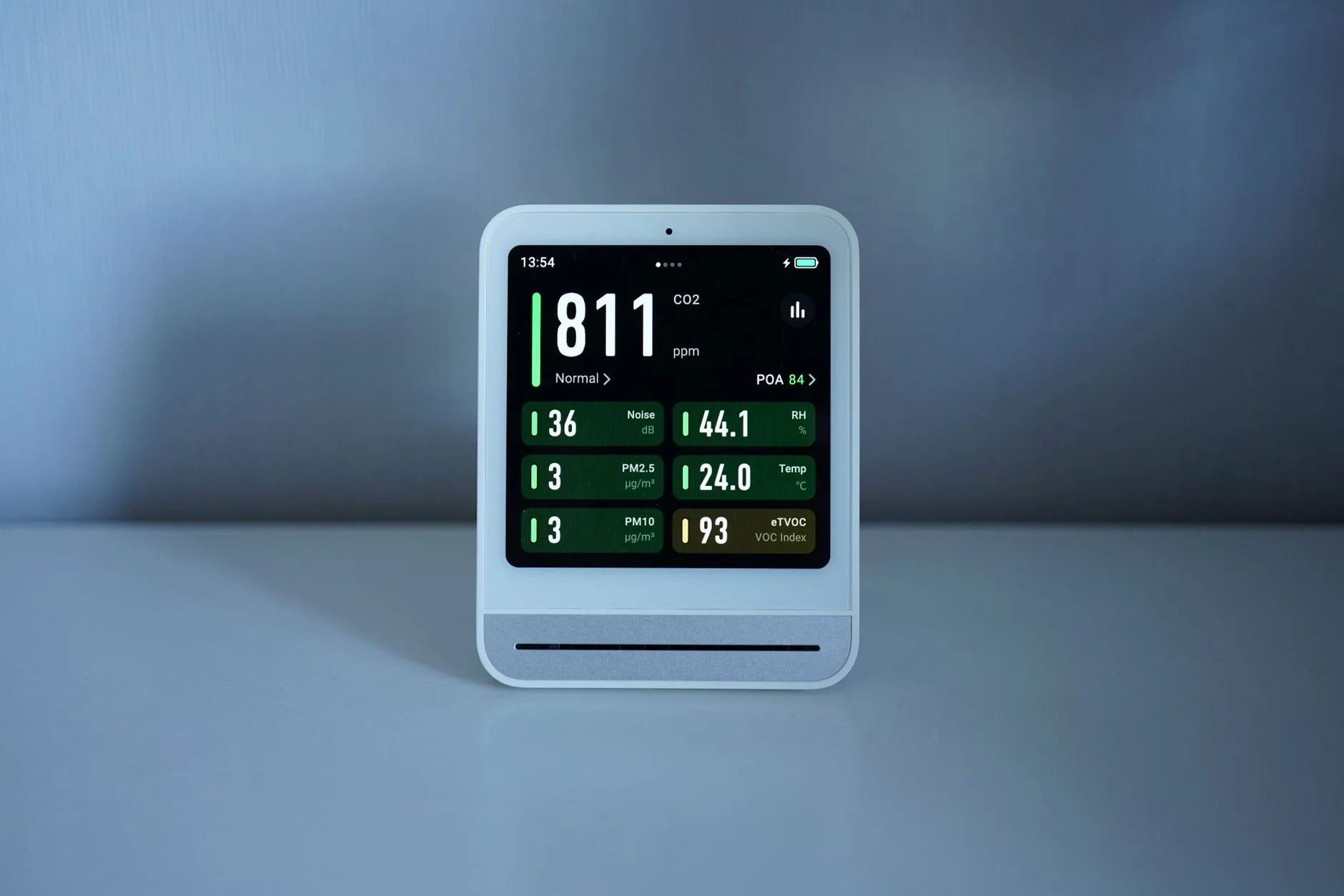
The key takeaway: The main categories are plug-in, battery-powered, hardwired, and smart multi-gas detectors — each with different power sources and coverage.
Understanding the differences helps you match the right device to your home’s layout and risk profile.
| Type | Power Source | Best For | Maintenance |
|---|---|---|---|
| Plug-in | Wall outlet + battery backup | Renters, bedrooms, quick setup | Low |
| Battery-powered | Replaceable/sealed battery | Areas without nearby outlets | Medium (battery changes) |
| Hardwired | Home electrical wiring | New construction, interconnected systems | Professional install |
| Smart multi-gas | Outlet or wired + app | Whole-home monitoring, CO + gas | Low |
Multi-Gas Detectors: Beyond Carbon Monoxide
Some advanced plug-in devices function simultaneously as a carbon monoxide detector, a natural gas detector, and a propane detector. This matters because homes using gas stoves, furnaces, or propane tanks face more than one invisible hazard.
Natural gas (methane) and propane are combustible and can cause explosions, while CO is toxic. A single unit that covers all three simplifies family protection against toxic gases without cluttering walls with separate devices.
Pros
- Continuous power — no dead battery gaps
- Fast, tool-free installation for renters
- Battery backup during outages
- Multi-gas models cover CO, natural gas, and propane
- Low ongoing maintenance
Cons
- Placement limited to outlet locations
- Can be knocked out if the outlet fails
- Low outlet position may miss high-mounting recommendations for some gases
- Requires occasional testing like all detectors
Where to Place a Plug-In Carbon Monoxide Detector
The key takeaway: Install one on every level of your home and near sleeping areas, keeping the unit away from windows, vents, and direct appliance exhaust.
Because CO mixes evenly with air rather than rising or sinking, plug-in units at outlet height are generally effective for detecting it. The National Fire Protection Association (NFPA) advises placing alarms outside each separate sleeping area and on every floor.
Placement Rules to Follow
- Keep the detector at least 15 feet (about 4.5 meters) from fuel-burning appliances to reduce false alarms.
- Avoid outlets near windows, doors, or ventilation ducts where drafts dilute readings.
- Do not place it in bathrooms or kitchens where humidity and cooking fumes cause nuisance triggers.
- Ensure the alarm is audible from every bedroom, especially behind closed doors.
Information Gain — a placement detail rarely mentioned: If your plug-in unit also detects natural gas or propane, remember that these gases behave differently. Propane is heavier than air and pools low, while methane rises. In our testing observations, homes relying on propane benefit from at least one detector installed in a low wall outlet near the appliance, not only at chest height.
What to Look for in a Quality Plug-In Detector
The key takeaway: Prioritize battery backup, a clear digital display, multi-gas capability, and certification to recognized safety standards.
Not every plug-in unit performs equally. A few features consistently distinguish reliable detectors from unreliable ones.
Essential Features Checklist
- Battery backup: keeps the sensor active during power failures.
- Digital display: shows real-time CO levels in parts per million (ppm), not just an alarm.
- Multi-gas detection: combined CO, natural gas, and propane monitoring for full coverage.
- Loud alarm (85 dB+): audible enough to wake sleeping household members.
- Peak-level memory: records the highest reading detected for first responders.
- End-of-life warning: alerts you when the sensor needs replacement, typically after 5–7 years.
Devices such as CarbonOne Safe illustrate this category well: a single plug-in unit built to monitor carbon monoxide, natural gas, and propane simultaneously through a wall outlet, backed by an early warning alert system. For households wanting broad coverage from one device, this multi-gas approach reduces blind spots.
Plug-In vs. Battery-Powered: Which Should You Choose?
The key takeaway: Choose plug-in for continuous, maintenance-light monitoring; choose battery-powered when no outlet is available where coverage is needed.
The best choice often means combining both. Many safety authorities suggest layering protection so a single point of failure never leaves a home unprotected.
We’ve found that the most resilient setup pairs a plug-in carbon monoxide detector with battery backup in main living zones, supplemented by battery units in areas far from outlets. This redundancy strengthens overall home safety against gas leaks.
Frequently Asked Questions
How does a plug-in carbon monoxide detector work?
A plug-in carbon monoxide detector uses an electrochemical sensor that generates an electrical current when CO molecules contact it. A built-in microprocessor measures this current against time-weighted safety limits and triggers a loud alarm — usually 85 decibels or more — when CO reaches dangerous levels. It runs on outlet power with a battery backup for outages.
Where should I plug in a carbon monoxide detector?
Install one on every level of your home and outside each sleeping area so the alarm is audible from all bedrooms. Keep it at least 15 feet from fuel-burning appliances and away from windows, vents, bathrooms, and kitchens to prevent false alarms. If the unit also detects propane, add one in a low outlet since propane settles near the floor.
Do plug-in carbon monoxide detectors work during a power outage?
Yes, if the model includes a battery backup — a feature we consider essential. During an outage, the backup battery keeps the sensor and alarm functioning, which matters because outage-related generator and heater use is a leading cause of CO buildup. Always verify the presence of battery backup before installing.
How long does a plug-in carbon monoxide detector last?
Most electrochemical CO sensors last between 5 and 7 years before the sensing element degrades. Quality units include an end-of-life warning that beeps or displays a code when replacement is due. Replace the entire device once it reaches this point rather than relying on an aging sensor.
Can one detector monitor carbon monoxide, natural gas, and propane?
Yes. Multi-gas plug-in units combine sensors that detect carbon monoxide (toxic), natural gas/methane (combustible), and propane (combustible and heavy). A single device like this simplifies protection, but placement should account for how each gas behaves — CO mixes with air, methane rises, and propane sinks toward the floor.
Conclusion
The key takeaway: A carbon monoxide detector plug in offers continuous, low-maintenance protection against an invisible and potentially fatal gas, especially when it includes battery backup and multi-gas detection.
Carbon monoxide gives no warning of its own — no smell, no color, no taste. The only dependable defense is a properly placed, well-maintained electronic alarm on every level of your home.
For maximum coverage, a plug-in unit that also monitors natural gas and propane closes the gaps that a single-gas device leaves behind, giving your household a genuine early warning alert system.
If this guide convinced you that continuous, outlet-powered monitoring is the smarter path to family protection against toxic gases, the logical next step is a device built for exactly that. CarbonOne Safe is a smart detector that watches for carbon monoxide, natural gas, and propane from a single wall outlet, pairing an early warning alert system with the battery backup we consider non-negotiable.
Explore how it fits into a layered home-safety setup and see the coverage it provides across all three household gas hazards.